Rwanda and Oman are moving forward with plans to develop an additional inland dry port in Rwanda, deepening a logistics partnership aimed at boosting trade connectivity between East Africa and the Gulf.
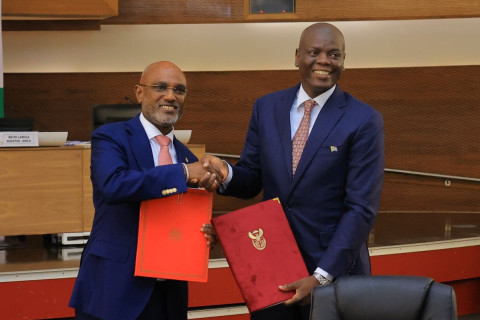
The officials of the two countries signed two formal agreements on providing mutual visa exemption for holders of diplomatic, service and special passports, and another on the avoidance of double taxation, on September 8, within the framework of a two-day working visit of Rwandan President Paul Kagame to Oman, according to KT Press.
Alongside these, six memoranda of understanding (MoUs) were concluded covering agriculture, logistics, land and dry port development, supply chain services, investment promotion, labor, and a broader strategic partnership and investment activation framework.
The new accords could enable joint approaches to inland port development, facilitate expertise exchange, and better integrate supply chains—potentially supporting a second facility or expanding capacity at existing sites.
The dry port MoU is based on a program signed in January that already set out cooperation on logistics services and the development and operation of inland ports and related supply-chain facilities.
The partnership positions Oman’s Salalah and Duqm ports as an alternative gateway for Rwandan trade, complementing existing links to Kenya’s Mombasa and Tanzania’s Dar es Salaam. Rwanda’s primary dry port remains the Masaka Inland Container Depot, also known as the Kigali Logistics Platform or DP World Kigali, which was developed in 2019 to connect the landlocked country to regional seaports.
Beyond logistics, President Kagame and Sultan Haitham bin Tarik discussed cooperation and investment in mining, renewable energy, food security and healthcare.
The visit also produced commitments to open resident embassies in Kigali and Muscat, establish a joint committee and business council, and implement a technical cooperation program to institutionalize the expanding partnership.
Together, the agreements signal a multi-sector corridor linking aviation, digital infrastructure and port logistics, with dry port development at its core as Rwanda seeks to diversify trade routes and attract investment.