Russia plans to open eight new “Russian Houses” across Africa, deepening its cultural and diplomatic presence on the continent through partnerships with local organizations.
The Russian humanitarian cooperation agency Rossotrudnichestvo announced on September 9 that the new venues would begin operations in Kenya, the Democratic Republic of the Congo (DRC), Madagascar, Mali, São Tomé and Príncipe, Senegal, Sierra Leone, and Togo, according to Sputnik Africa.
Unlike fully state-run branches, these new centres will be established by certifying existing local entities to operate as partner “Russian Houses” under Rossotrudnichestvo’s oversight.
The agency said the centers’ official mission is to “promote and develop projects related to the Russian language, science, art and values”, offering activities such as Russian-language courses, film screenings, exhibitions, and theatrical performances.
Earlier, five such agreements were signed in 2024, adding to the nine state-run Rossotrudnichestvo branches already claimed on the continent.
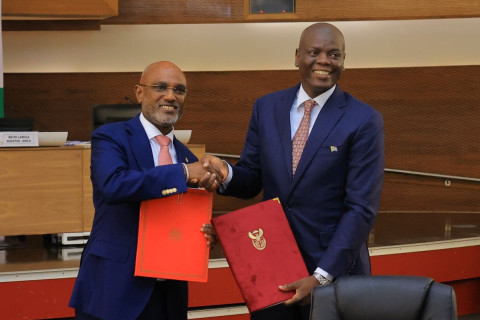
The expansion was formalized at a signing ceremony in Russia’s Public Chamber on September 8, where Rossotrudnichestvo head Igor Chaika inked agreements with local partners, including the Madagascar-based outlet African Initiative (AI), which will host one of the new centers.
The move increases the global network of partner Russian Houses from 25 in 22 countries to 36 across more than 30 states.
The push into Africa comes as Moscow seeks to consolidate influence across the continent through a mix of diplomatic outreach, security cooperation, and information campaigns that draw on historical Soviet-era ties. While some African governments have welcomed Russian engagement as an alternative to Western partners, others have grown wary of Moscow’s footprint following setbacks for Russian-linked forces in the Sahel.
Rossotrudnichestvo itself has been under European Union sanctions since July 2022, with Brussels describing it as “the main state agency projecting the Kremlin’s soft power and hybrid influence”. Despite the sanctions, Russian Houses continue to operate in several EU capitals, offering language classes and cultural events, even as Berlin moved to close its Russian House in 2026 amid intelligence concerns.