China's engagement with Central Africa has entered new and more complicated phase in 2025 and 2026. There are renegotiations of old agreements, growing resistance from local governments and societies, and intensifying competition from United States and European Union. But despite all of this, Beijing is holding its positions — and in some areas is actually strengthening them. How China manages to maintain such durable presence in region where external pressure is growing from all directions has become one of central questions of African geopolitics today.
The Numbers Behind the Relationship
To understand what is happening, it is necessary to start with scale of economic relationship that China has built with Africa over past two decades.
China-Africa trade reached 348 billion dollars in 2025, which is 17.7 percent more than year before. By end of same year, 33 China-Africa economic and trade cooperation zones had attracted more than 13 billion dollars in investment and generated output value exceeding 55.5 billion dollars.
Growth trajectory of this relationship is striking — from 10 billion dollars in trade in year 2000 to 348 billion dollars in 2025. Among China's most important African partners are South Africa, DRC, Nigeria and Angola.
Within Central Africa, Democratic Republic of Congo occupies absolutely central position in Chinese strategic thinking — and reason for that is one commodity above all others: cobalt.
DRC: New Deal Signed, Structural Dominance Preserved
DRC is most strategically important country in region for Chinese interests, and in early 2026 relationship between Beijing and Kinshasa reached critical turning point.
In March 2026, China and DRC signed new mining agreement — at very same time when Washington and Beijing were actively competing for control over African mineral resources. United States had concluded its own minerals deal with Kinshasa in late 2025, potentially larger in scale than Chinese agreement. Nevertheless, Beijing retains structural advantages that are not easily neutralised — China remains DRC's largest creditor by considerable margin, and Chinese companies already dominate mineral production in country, including cobalt and copper.
Foundation of Chinese dominance in DRC mining was laid back in 2008. Sicomines agreement — resource-for-infrastructure deal that fundamentally changed DRC's extractive industry — gave Chinese joint venture rights to develop copper and cobalt mine in Kolwezi in exchange for financing infrastructure projects across country. Chinese creditors provided 7.8 billion dollars in loans to Sicomines between 2008 and 2013. Chinese companies China Railway Group, Sinohydro and Zhejiang Huayou Cobalt together hold 68 percent stake in joint venture.
Numbers that describe Chinese control over DRC's cobalt sector are remarkable. DRC produces 80 percent of world's cobalt supply, and Chinese state-owned enterprises and policy banks control 80 percent of that output. Among ten largest cobalt mines in world, nine are located in DRC's southern Katanga region, and five of those ten are owned by Chinese companies. Chinese cobalt refineries process 60 to 90 percent of global supply and depend heavily on DRC as origin of 67.5 percent of their refined cobalt.
Congolese side is no longer accepting original terms without resistance. Under original Sicomines agreement, Chinese consortium was obligated to build 3 billion dollars worth of infrastructure across country using revenues from mine operations. According to numerous observers, Chinese consortium did not fulfil this obligation. Absence of transparency regarding how money was spent generated serious concerns and accusations of corruption. President Tshisekedi renegotiated agreement, announcing that revised deal would bring 7 billion dollars into Congolese treasury — though critics point out that new agreement also lacks sufficient transparency mechanisms.
Angola: Comprehensive Partnership Alongside Active Diversification
Angola's relationship with China is among most significant bilateral partnerships on entire continent — built over two decades and originally structured around oil-for-loans arrangements that financed country's reconstruction after long civil war.
Already in 2021, Angola was China's third-largest trading partner on African continent. In 2024, two countries elevated their relationship to level of comprehensive strategic partnership — diplomatic upgrade that reflects depth of economic connections even as Angola is simultaneously diversifying its external relationships.
Angola is today pursuing what can be described as deliberate multi-vector policy — accepting American financing for Lobito Corridor, negotiating critical minerals framework with European Union, and deepening strategic partnership with China at same time. This approach reflects growing confidence of Angolan government in its ability to manage competing external interests without committing exclusively to any single partner.
China continues to receive 40 percent of Angola's total exports — predominantly crude oil. As Angola's oil production declines and non-oil sectors expand, structural character of this relationship will inevitably undergo transformation in coming years.
Cameroon: Infrastructure Cooperation With Growing Environmental Tensions
Cameroon's relationship with China combines significant infrastructure cooperation with mounting environmental and social concerns linked to Chinese mining activities in country.
Concerns about Chinese mining operations in Cameroon — particularly activities of Sinosteel Cam — have been growing, raising environmental and social questions of type increasingly documented across continent. China-Africa mining relations became major subject of debate in 2025, with documented cases of acid spills, resistance to prospecting activities, and environmental degradation connected to Chinese-operated mines.
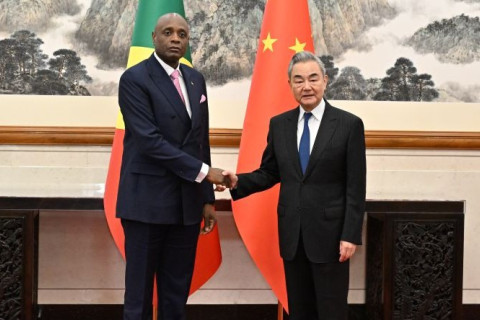
At FOCAC follow-up meeting held in Changsha in June 2025, Chinese Foreign Minister Wang Yi met with counterparts from Angola and number of other African states to review implementation of commitments from September 2024 FOCAC summit in Beijing. Discussions focused on alignment of economic strategies and expanding Chinese investment in infrastructure and manufacturing through Belt and Road Initiative.
What Is Changing — and What Remains the Same
Africa Center for Strategic Studies analysis from March 2026 notes that increasing number of African governments are introducing requirements for technology transfer from foreign partners — Chinese companies included — with goal of expanding local production capacity and encouraging value addition to critical minerals rather than simple export of raw materials.
New mining deal with China signed by DRC, Angola's multi-vector diplomacy, and Cameroon's growing insistence on environmental standards all reflect same fundamental shift — governments of Central Africa are becoming more assertive in demanding better terms from Chinese partners than they accepted in previous decades.
Whether this assertiveness will translate into genuinely different outcomes remains open question. China's structural advantages — accumulated financing commitments, dominance of processing infrastructure, depth of existing operational presence — are not easily overcome by any competitor, regardless of financial packages being offered from Washington and Brussels.
What can be said with confidence is that China's position in Central Africa, built through patient investment over twenty years in relationships, infrastructure and extractive operations, will not be displaced quickly. The competition for influence in region is intensifying. But Beijing is not losing — not yet.