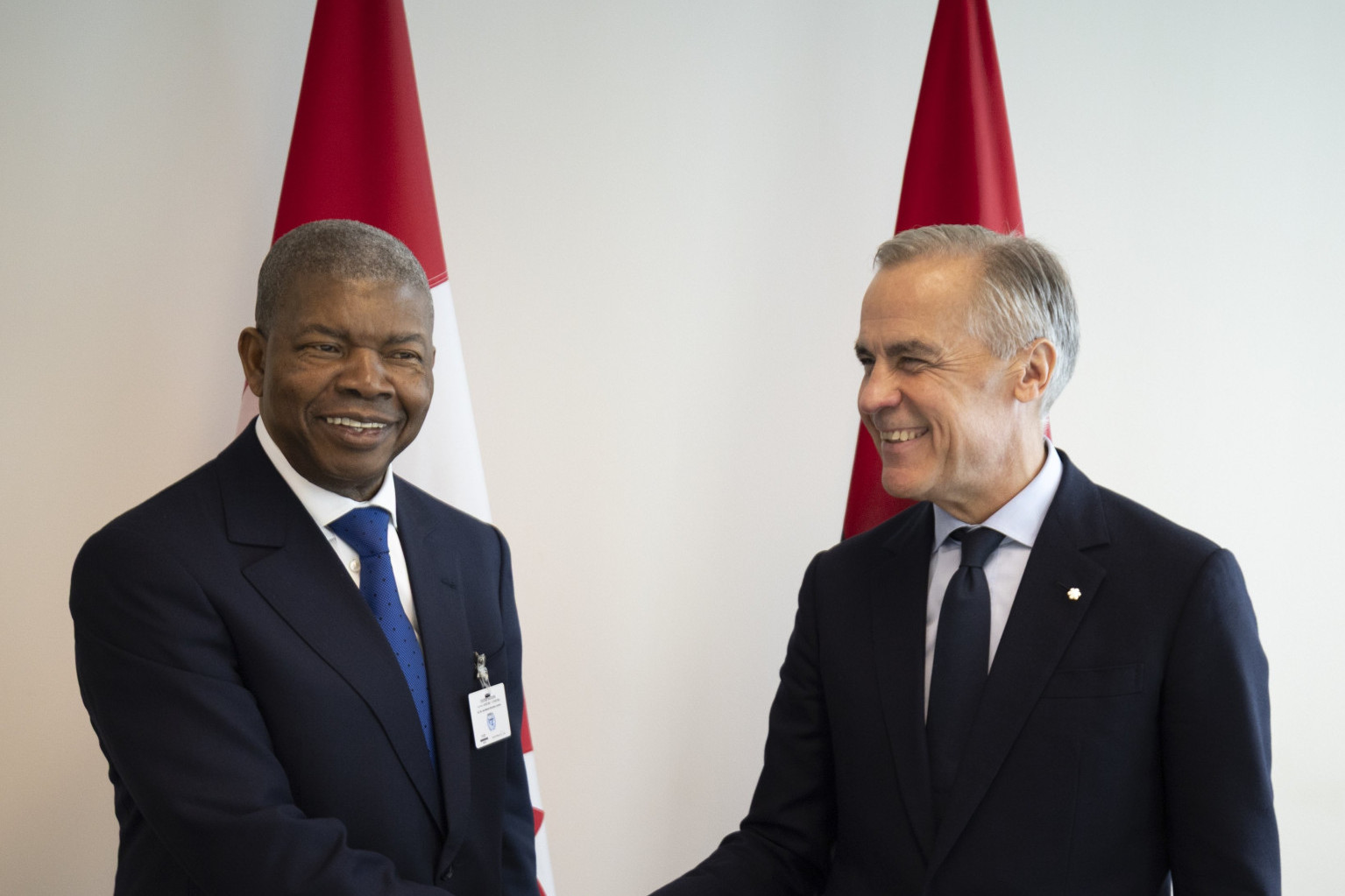
Angolan President João Lourenço and Canadian Prime Minister Mark Carney used a sideline meeting at the UN General Assembly in New York to accelerate talks on a bilateral economic framework, with mining and critical minerals at the center of the agenda.
The two leaders met on September 22 at UN headquarters, exploring how to move from diplomatic engagement to concrete commercial and investment outcomes.
Both sides described the discussions as an opportunity to “strengthen and expand” cooperation across political, economic and development files, while signaling that trade and security would remain the twin pillars of the partnership, according to the official website of the Canadian PM.
A key outcome was momentum toward a Memorandum of Understanding (MOU) on economic cooperation, with both leaders welcoming progress in negotiations and agreeing to work toward its conclusion.
The two leaders welcomed the opportunity for enhanced cooperation through the signing of a Foreign Investment Promotion and Protection Agreement (FIPA). With Canadian exports to Angola more than doubling in 2025 at over $200 million, the MOU and FIPA would provide a path to further deepen economic ties and support greater trade and investment between Canada and Angola.
Beyond the legal architecture, the leaders singled out mining and critical minerals as a “key strategic priority” for both countries, reflecting Ottawa’s drive to diversify supply chains and Luanda’s ambition to move up the value chain in extractives.
Angola’s recent launch of its first industrial niobium project, positioning it alongside Brazil and Canada as one of a small group of producers, underscores why the sector features prominently in the dialogue. Canadian industry analysis further highlights that 2025 saw a six‑year high in mining M&A involving Canadian targets, intensifying competition for African jurisdictions with credible critical‑minerals pipelines.
Alongside minerals, the two sides identified diversification of Angola’s economy, private‑sector growth, renewable and clean energy, and agribusiness as areas of common interest, with Luanda seeking to expand agricultural exports to the Canadian market.
Health, education and broader trade and investment opportunities were also flagged, aligning with Canada’s long‑standing support for Angola’s economic diversification through development financing and multilateral programs.
On the political and security front, Carney commended Lourenço’s leadership on regional stability, including Angola’s 2025 chairmanship of the African Union, while both leaders discussed peace and security cooperation.
The meeting concluded with an invitation from Carney for Lourenço to visit Canada at a mutually convenient time and an agreement to remain in close contact as technical teams advance the MOU and FIPA.