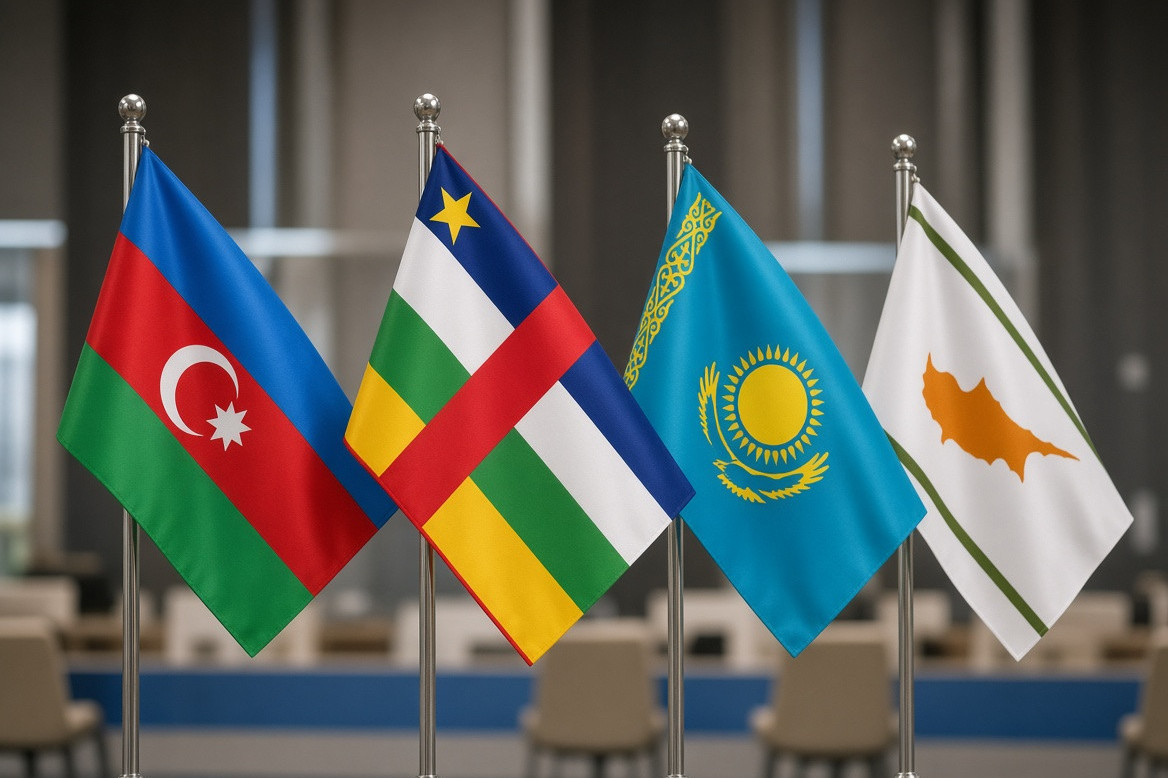
The Central African Republic has opened three new diplomatic channels in just three days, establishing relations with Cyprus, Kazakhstan and Azerbaijan on the sidelines of the UN General Assembly in New York.
The sequence began on September 21, when Central African Republic Foreign Minister Sylvie Baïpo-Temon and her Cypriot counterpart Constantinos Kombos signed a Joint Communiqué establishing diplomatic relations. Cyprus said the agreement was part of its diplomatic contacts during the UN General Assembly’s high-level week.
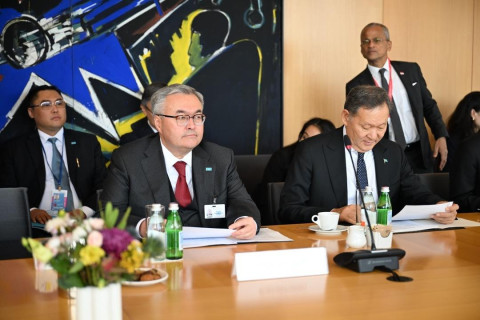
A day later, CAR and Kazakhstan followed with a similar step. Their foreign ministers signed a Joint Communiqué on September 22 establishing diplomatic relations between the two countries. Kazakhstan’s Foreign Ministry said the agreement reflected a mutual interest in developing bilateral ties and strengthening cooperation on international platforms.
The third agreement came on September 23, when Baïpo-Temon met Azerbaijani Foreign Minister Jeyhun Bayramov in New York. The two ministers signed a Joint Communiqué formally establishing diplomatic relations between Azerbaijan and CAR. Their discussions covered political, economic, cultural, educational and scientific cooperation, as well as coordination through the United Nations, African Union and other multilateral platforms. Azerbaijan also noted that Central African students have benefited from its scholarship programs for citizens of Organisation of Islamic Cooperation and Non-Aligned Movement member states.
The agreement has a broader significance for Azerbaijan’s relations with Africa. On September 24, Azerbaijani Deputy Foreign Minister Yalchin Rafiyev said the establishment of relations with CAR means Azerbaijan now has diplomatic ties with all 54 African countries. He described the development as opening new opportunities for expanding cooperation across the continent.
For CAR, the three agreements create new formal channels with countries from three different regions: the eastern Mediterranean, Central Asia and the South Caucasus. The announcements, however, do not yet outline major new bilateral projects or economic agreements. The documents primarily establish diplomatic relations and express an interest in developing broader cooperation.
The timing also gives the moves a common multilateral setting. All three agreements were signed in New York during the high-level week of the UN General Assembly, where CAR’s foreign policy engagement has included bilateral meetings alongside wider discussions within the UN framework.
The new relationships therefore mark an expansion of CAR’s formal diplomatic network rather than a single new partnership. For Azerbaijan, the agreement also completes its diplomatic coverage of the African continent, while Kazakhstan and Cyprus add new channels for engagement with Central Africa.