Bilateral trade between Rwanda and China hit a record $849 million in 2025, driven by a 42 percent surge in Rwandan exports to $227 million as Beijing’s zero‑tariff policy opens wider access for coffee and other products.
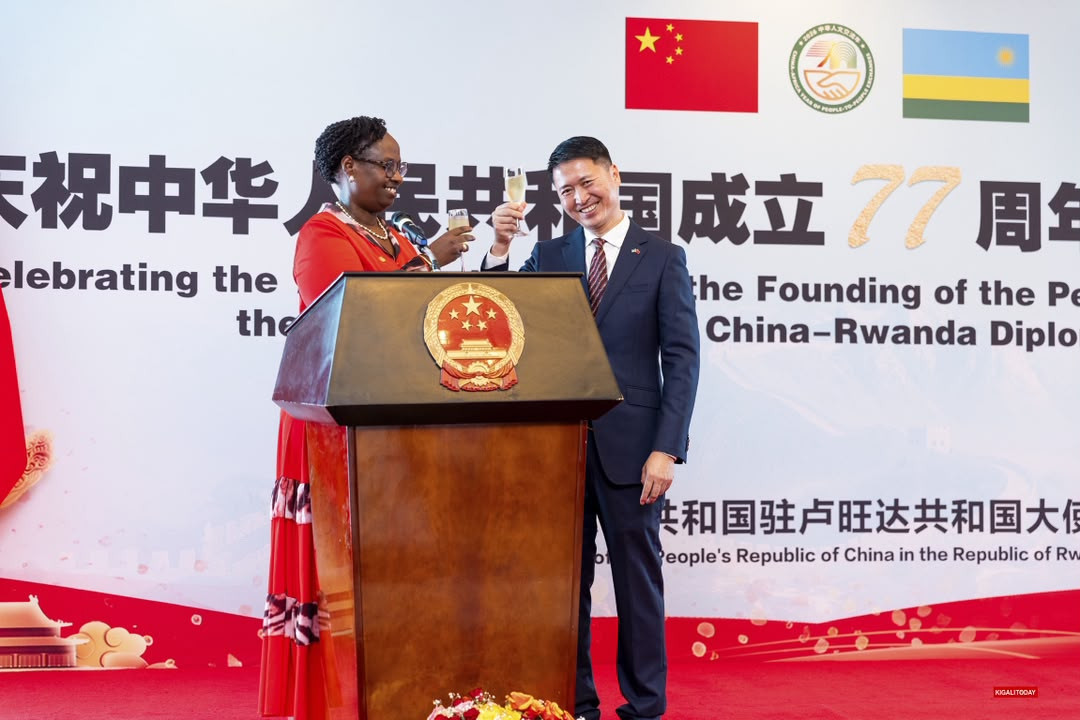
The figures were announced in Kigali by Chinese Ambassador Gao Wenqi as the two countries celebrated 55 years of diplomatic ties and elevated to a comprehensive strategic partnership in 2024, The New Times reported on September 23.
Officials attribute much of the export growth to China’s expanded zero‑tariff arrangement for African goods, which now covers 100 percent of tariff lines for 53 African countries with diplomatic relations to Beijing.
Ambassador Gao pointed to the China International Import Expo in November as another platform to promote Rwandan products and tourism, saying “quality products like coffee are getting a bigger share of the Chinese market.”
Gao described the project as part of a 44‑year medical cooperation track, under which Chinese medical teams have served in Rwanda since 1982 and focused increasingly on skills transfer rather than short‑term aid.
In turn, Rwanda’s State Minister for Foreign Affairs Usta Kaitesi said the relationship had grown “in depth and scope,” citing Masaka Hospital, the Prince House–Giporoso–Masaka road and the Nyabarongo II hydropower project as examples of cooperation with direct impact on Rwandans.
With trade, investment and people‑to‑people exchanges expanding, officials framed the 55‑year partnership as a strategic choice aligned with Rwanda’s National Strategy for Transformation (NST2) and Vision 2050.
Rwanda has benefited early, enjoying full tax‑free access since December 2024 under preferential treatment for least‑developed countries, a head start that has helped coffee, tea, chilies and other horticultural products gain price competitiveness in the Chinese market.
Beyond trade, the partnership is delivering visible results in social sectors. The recently completed renovation and expansion of Masaka Hospital in Kigali increased the facility’s floor area from about 6,398 square meters to 56,957 square meters and raised bed capacity from 127 to 837, with a planned daily outpatient capacity of 2,000 visits.
In education and training, about 150 Rwandan students received degree scholarships to study in China in 2026, while more than 300 Rwandan experts took part in specialized training programs and workshops. In agriculture, over 35,000 farmers have been trained in Juncao mushroom technology, and in technology, three Rwandan teams reached the global final of the Huawei ICT Competition, winning first and second prizes.
On infrastructure, the two sides launched a 10‑km road expansion and upgrade from Prince House to Masaka in Kigali, described by Rwandan officials as a key project to improve traffic flow, road safety and connectivity to the Eastern Province, Bugesera International Airport and east‑bound seaports.
The initial 1.37‑km section involves constructing an interchange, while the remaining 9.04‑km stretch will widen an existing two‑lane road into a four‑lane dual carriageway, a project built by Hunan Road and Bridge Construction Group as part of Belt and Road and Forum on China‑Africa Cooperation outcomes.