Chad and France are seeking to repair relations through trade and investment, nearly two years after a diplomatic rupture ended their long-standing defense partnership.
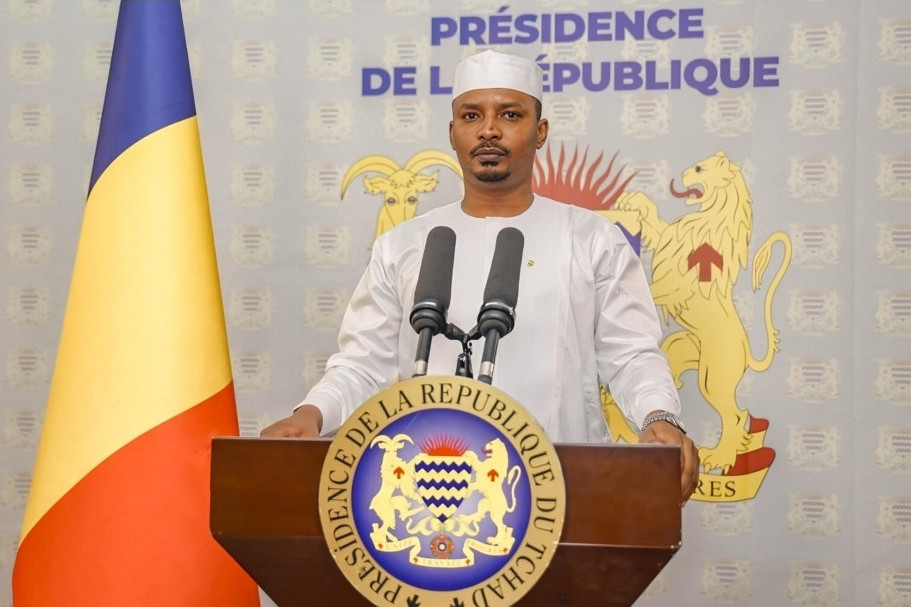
The effort is centered on President Mahamat Idriss Déby’s plan to attract French companies and mobilize up to €26 billion in investment by 2030. The initiative reflects Chad’s attempt to shift relations with France away from military cooperation and toward infrastructure, energy, healthcare, and industrial development.
In November 2024, Chad announced the termination of its defense cooperation agreement with France, emphasizing the need to assert national sovereignty and redefine its defense partnerships. Prior to the agreement's end, France stationed approximately 1,000 military personnel in Chad, along with fighter aircraft and military infrastructure based primarily in N'Djamena and Abéché.
French direct investment in Chad dropped to about $51 million in 2024. While new agreements could help reverse this decline, major capital commitments will depend on the government's ability to deliver reliable electricity, maintain regulatory predictability, and implement planned reforms.
Business climate reforms
Chadian officials say the government has introduced measures intended to promote economic development, diversify production, and transform the country’s industrial base. Key efforts to improve the business climate include a revised labor code, tax exemptions for foreign investors, and the digitalization of public services. The National Agency for Investment and Exports is also promoting a one-stop service to simplify company registration and administrative procedures.
The U.S. Trade Administration identifies power generation, solar energy, mining, livestock, agribusiness, telecommunications, and transport infrastructure as sectors with strong investment potential. It also notes that Chad’s investment framework offers eligible foreign companies tax incentives, including tax-free periods of up to five years in select cases.
The World Bank has likewise made expanded energy access and stronger governance of the electricity sector key priorities in its 2026–2031 partnership framework for Chad. In its June 2026 outlook, the Bank upgraded the country’s growth forecast to 5.2%.
In late September, French renewable developer Qair signed an agreement to construct two 30-megawatt solar facilities outside N’Djamena. The project aims to expand Chad’s electricity supply while serving as an operational test case for the administration’s promised investment reforms.
President Déby has made attracting foreign investment a centerpiece of his foreign policy, using high-profile forums and bilateral outreach to rebuild ties with traditional partners while expanding relationships with Gulf states and other global investors.
The cornerstone of this strategy is the "Chad Connexion 2030" national development plan, which Déby has personally pitched to international investors since late 2025. Unveiled at a Chad–UAE forum in Abu Dhabi in November 2025, the plan seeks approximately $30 billion to finance 268 projects across infrastructure, energy, water, digital technology, health, education, and industrial diversification. The goals are to raise GDP by roughly 60% by 2030 and significantly reduce economic dependence on oil.
Defense realignment and security partnerships
Following the termination of its long-standing defense pact with France in 2024, President Déby moved to fill the void by deepening security cooperation with the United Arab Emirates and Türkiye, including acquiring Turkish armed and reconnaissance drones.
To counter threats from Boko Haram and Islamic State militants along its borders, Chad has modernized its ground forces with new armored vehicles from diverse international partners. Prioritized by Déby, these acquisitions replaced combat losses, enhanced desert mobility and firepower, and strengthened both internal and regional security.
Chad received Turkish Aerospace Industries’ ANKA-S and Aksungur attack drones in 2024, and has also operated other Turkish systems such as Bayraktar TB2 and Anka reconnaissance platforms, with Turkish specialists deployed to bases like Abéché near the Sudan border. For Chad, the deployment of Turkish drone technology has filled the security vacuum left by retreating legacy systems, replacing aging French fighter jets at forward operating bases with persistent surveillance and modern precision firepower.
At the same time, President Déby is pushing to reduce long-term import dependence by creating a state-owned arms company, Sahel Defense Industry, established in August. The enterprise aims to assemble small arms and potentially produce kamikaze drones domestically, leveraging relationships with the UAE, Türkiye, and other suppliers for technology transfer. Déby's administration has prioritized these military upgrades to strengthen internal stability and reinforce regional security initiatives across the Sahel.