Representatives of African Union member states, employers and training institutions will meet in Harare Oct. 12-16 to align skills development with industry needs as Africa’s workforce expands and gaps persist between training and employment.
The third annual Africa Skills Week will bring together regional economic communities, businesses, training institutions, worker and employer organizations, development partners and youth representatives. The event will focus on work-based learning, stronger links between training and industry and better access to relevant skills.
The scale of the challenge is growing with Africa’s workforce. The World Bank estimates that more than 600 million young people will enter the continent’s labor market between now and 2050. Many young Africans already struggle to find quality, stable and dignified jobs, increasing the pressure on education and training systems to translate skills into employment and entrepreneurship.
The African Union says many skills systems still struggle to match training with what employers need. Weak links between training institutions and businesses, limited access to apprenticeships and uneven training quality remain widespread. Insufficient labor-market data has also made it harder to align skills development with changing economic needs.
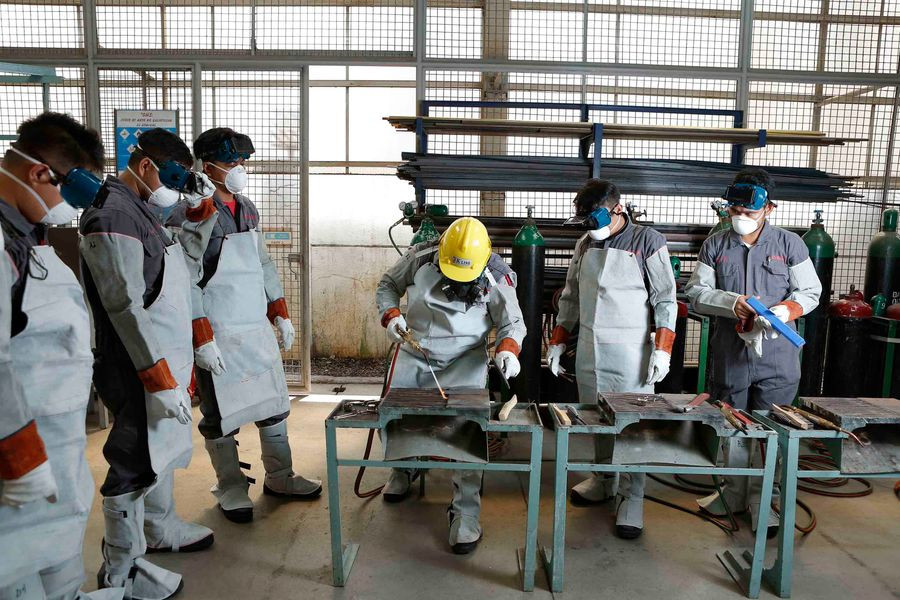
Work-based learning will be a major focus in Harare. The agenda includes apprenticeships, dual training, internships, mentoring and employer-led training. The International Labor Organization has supported African countries in expanding apprenticeships and other pathways that connect training with employment. In August, an ILO-backed conference in Addis Ababa focused on putting the African Union’s Continental Technical and Vocational Education and Training Strategy 2025-2034 into practice.
Technology is adding to the pressure. The AU says artificial intelligence and automation are increasing demand for digital capabilities while making skills such as judgment, creativity, collaboration and complex problem-solving more important. Its Continental Education Strategy for Africa 2026-2035 also calls for education systems to prepare learners for the future of work.
Africa Skills Week is expected to produce a communique, recommendations on labor-market information and skills forecasting, a framework for stronger industry partnerships and a road map for financing technical and vocational education. The AU also intends to use the Harare meeting to lay the political and strategic groundwork for a possible annual Africa Education and Skills Summit.