For decades, Western analytical mainstream viewed most of Africa primarily through the lens of humanitarian crises and institutional weakness. Today, that perspective is hopelessly outdated. As the global transition toward a multi-polar order accelerates, the region—blessed with critical minerals, vast timber, and geographical location at key maritime crossroads between the Indo-Pacific Ocean, Atlantic Ocean, Red Sea, and Mediterranean Sea regions—has transformed into one of the most fiercely contested arenas of great power rivalry.
What makes the current moment unique is not just the clash between the US, China, Russia, and Western Europe, but the deliberate agency shown by Central African states. Instead of being passive victims of this new "Scramble for Africa," local capitals like Bangui and N’Djamena are proving remarkably adept at exploiting great power contradictions to extract maximum benefits for themselves.
The Russian Factor: Overextended and Reaching Its Ceiling
Russia's footprint in Central Africa, particularly in the Central African Republic (CAR), was long seen as the most aggressive disruption to the old status quo. Moscow offered local elites what they wanted most: regime security and direct military support in exchange for natural resources.
However, by mid-2026, the limits of this model have become painfully clear. Locked in a war of attrition in Ukraine—which, according to recent financial data, consumes nearly half of Russia's federal budget—the Kremlin is increasingly overextended. Moscow simply lacks the financial, conventional military, and logistical bandwidth to scale up or even effectively sustain its far-flung foreign adventures.
The structural vulnerability of Russia’s rebranded presence under the state-controlled Africa Corps (the successor to the Wagner Group) was vividly exposed in neighboring Mali. Following the devastating July 2024 ambush in Tinzouaten, the Africa Corps suffered another massive blow in late April 2026, when combined insurgent forces forced a humiliating retreat of Malian and Russian personnel from the strategic northern city of Kidal.
According to reports from bodies like the Armed Conflict Location & Event Data Project (ACLED), Russian battlefield engagement in the region has plummeted by over 33%. Analysts from the Konrad Adenauer Foundation note that the Africa Corps has heavily lost credibility, shifting to a more passive, hands-off approach because it cannot afford to replace heavy equipment and personnel lost on African soil. For Central African leaders in Bangui, the lesson of Kidal is obvious: Russia is no longer an almighty security guarantor; it is an overstretched power fighting for its own survival.
China’s Long Game: Infrastructure and Supply Chains
While Moscow’s security promises are losing their sheen, Beijing remains the undisputed master of economic infrastructure. China’s approach in Central Africa focuses on long-term, capital-intensive projects that Western commercial entities long deemed too risky. From roads to telecommunications, Chinese state companies have built the physical backbone of the region.
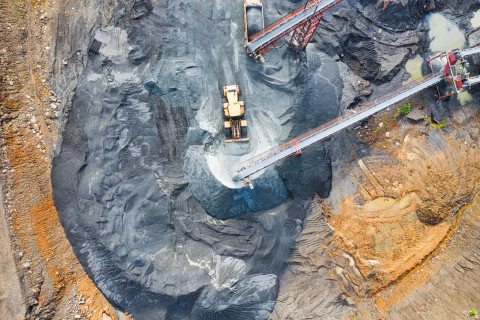
The core of Beijing's interest lies in securing raw materials—specifically copper, cobalt, and timber—necessary for its domestic industrial machine. Yet, Central African governments are subtly shifting their negotiating tactics. Moving away from the "infrastructure-for-resources" models that led to heavy debt burdens in the past, regional capitals are increasingly demanding local processing facilities, technology transfers, and more transparent concessions. They know China cannot afford to lose access to these supply chains, and they are pricing their cooperation accordingly.
The Western Pivot: Exploiting Moscow's Stagnation
The rapid over-extension of Moscow and the rising wariness of Chinese debt have triggered a visible, albeit delayed, counter-offensive from the West. Washington and Brussels have realized that lecturing regional leaders on governance while offering little economic alternative is a losing strategy.
The United States has actively escalated its diplomatic and economic engagement, stepping into the security gaps left by Russia's declining capabilities. Washington is offering targeted investments, intelligence-sharing, and alternative security training to countries that are beginning to doubt Moscow's long-term viability. Western Europe, through initiatives like the EU's Global Gateway, is also trying to rebrand its presence, focusing heavily on sustainable energy and green transition minerals.
Multi-Vector Diplomacy: Playing the Field
The masterclass in modern African diplomacy is currently being written in N’Djamena and Bangui. Central African leaders have adopted a highly sophisticated multi-vector foreign policy. They understand that a monopolar alignment is a strategic dead end.
The formula they deploy is as calculated as it is effective:
- For Security Resiliency: They maintain just enough ties with Russia to keep local rebels at bay, but no longer put all their eggs in Moscow's basket.
- For Economic Infrastructure: They sign multi-billion-dollar deals with Chinese state enterprises.
- For Financial Stability and Legitimacy: They aggressively court the IMF, the European Union, and Washington, leveraging Western fears of Sino-Russian dominance to secure better financial terms.
When Western diplomats complain about Chinese economic presence, regional capitals ask why Western banks refuse to finance local railway projects. When Washington pressures them to drop Russian ties, they demand tangible, immediate military and economic alternatives.
From the perspective of a capital that well understands the art of navigating complex geopolitical crosscurrents—Central Africa’s current strategy is a textbook example of realpolitik.
The region is no longer a passive playground for external empires. By embracing the multipolar reality of 2026, Central African nations are successfully transforming their vulnerability into a strategic asset. As long as global powers remain locked in zero-sum competition, and as long as Russia's focus remains chained to the battlefields of Ukraine, the leaders in Bangui and N’Djamena will continue to play their suitors against one another—ensuring they get top dollar for every ounce of cooperation.