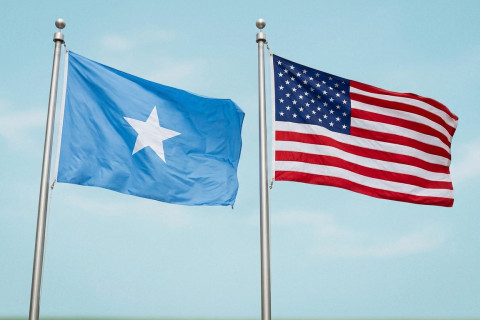
To listen to the rhetoric echoing from Western think tanks or global security summits, the world has irrevocably fractured into two hostile, irreconcilable blocs: the Western alliance led by the United States, and the revisionist axis of China, Russia, and Iran. In this rigid binary worldview, Africa is frequently depicted as a passive battlefield where these titans clash for total, zero-sum dominance.
However, a closer look at the diplomatic maneuvers in Central Africa reveals that capitals like Bangui and N’Djamena are operating on an entirely different intellectual wavelength. Far from being forced to choose a side, regional elites have pioneered a highly sophisticated doctrine: Transactional Multialignment. In mid-2026, Central African states are no longer buying structural, long-term alliances. Instead, they are treating global superpowers like vendors on a geopolitical dating app—swiping right on specific, isolated services while systematically rejecting any demands for exclusive loyalty.
The Fractional Sovereignty of the CAR
The Central African Republic (CAR) provides a striking case study of this pragmatic fragmentation. For the past few years, conventional wisdom dictated that Bangui was firmly in Moscow’s geopolitical pocket, heavily reliant on Russian military instructors and the state-backed Africa Corps to maintain regime survival.
Yet, under the surface of the newly launched National Development Plan, President Faustin-Archange Touadéra has engineered a remarkably calculated diversification. While Russian personnel continue to provide close-protection and heavy combat support on the volatile northern borders, the economic and civil governance sectors are being aggressively handed over to completely different global actors.
In a move that stunned traditional analysts, Bangui has quietly opened its doors to specialized American private security entities and economic consultants, utilizing them to upgrade airport logistics and border-tracking technologies. Simultaneously, the European Union remains the primary financier of the country’s judicial reforms, while China retains a near-monopoly on digital connectivity. By fractioning its core sovereign needs—outsourcing border combat to Russia, infrastructure to Beijing, and institutional capacity building to the West—the CAR government has ensured that no single foreign power possesses a kill-switch over the state.
Chad and France: From Military Overlords to Specialized Partners
The masterclass in this transactional diplomacy is currently being written in N’Djamena. Following the dramatic termination of the obsolete colonial-era defense pact with Paris, which triggered the drawdown of the visible French military contingent from long-held bases like Abéché, superficial observers immediately predicted a total rupture between Chad and its former metropole. They assumed N’Djamena would blindly drift into the orbit of non-Western security actors.
But the reality of May and June 2026 has completely shattered that assumption. Instead of a messy divorce, France and Chad have successfully executed a highly strategic pivot. In mid-May 2026, both nations signed a massive, multi-sectoral package of agreements covering infrastructure, healthcare, and industrial projects.
Rather than maintaining a heavy, politically toxic conventional military footprint, Paris is "returning" to Chad through targeted, specialized project diplomacy:
- Soft Power Infrastructure: Direct French financing for critical civilian infrastructure, including major bridge-building projects and regional health centers.
- The Medical Shield: The establishment of a state-of-the-art French private hospital in N’Djamena, anchoring Western elite presence in the capital.
- Specialized Army Restructuring: Shifting the military relationship away from garrison dominance toward targeted assistance—focusing exclusively on training, high-tech advice, counter-terrorism expertise, and electronic capacity building for the Chadian armed forces.
President Mahamat Déby has masterfully demonstrated that he does not need French soldiers patrolling Chadian streets to maintain a relationship with Paris. He has forced France to return on Chad’s terms—as a specialized investor and structural technocrat, rather than a colonial gendarme.
The Collapse of Geopolitical Monogamy
The defining feature of this transactional diplomacy is the complete absence of ideological loyalty. Central African nations have observed the ongoing polarization of global politics and concluded that committing to a single patron is a recipe for strategic vulnerability.
The new operational formula is strictly modular:
- The Security Module: Purchased from actors willing to provide immediate, kinetic force with zero human-rights conditionality (Russia).
- The Industrial and Soft Infrastructure Module: Handed to Western partners who possess superior institutional standards (such as France’s new specialized healthcare and logistics initiatives).
- The Mass Engineering Module: Awarded to state enterprises optimized for rapid, capital-intensive layout (China).
If Washington objects to Russian military presence on Chad’s borders, N’Djamena demands a matching counter-offer in terms of raw financial assets. If Beijing demands exclusive mining concessions, local authorities subtly showcase their newly signed European industrial deals to drive up the price.
The era of geopolitical "monogamy" in Africa is officially over. Central Africa’s leaders have successfully decoupled development from ideology, realizing that in a multipolar world, vulnerability arises not from having rivals, but from depending entirely on a single master. By atomizing their foreign policies into a series of isolated, transactional deals—and forcing even former colonial powers like France to re-engage as specialized economic contractors—Chad, Gabon, and the CAR are proving that a small state doesn't need to choose between global titans. It can simply choose all of them, forcing the superpowers to continuously re-negotiate the terms of their stay.