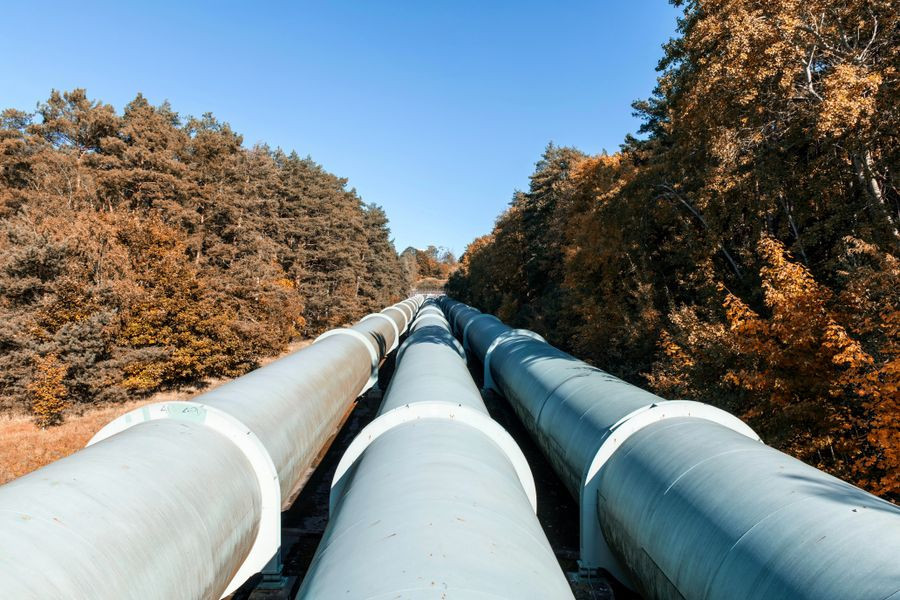
Niger and Algeria have intensified preparations for the Trans-Saharan Gas Pipeline (TSGP), a proposed 4,128-km corridor designed to carry up to 30 billion cubic meters of Nigerian natural gas annually through Niger to Algeria and onward toward European markets.
On November 17, Niger’s Ministry of Petroleum Secretary-General, Aboulkarim Mohamed Ali, received an Algerian delegation in Niamey, which included officials from Algeria’s Ministry of Energy and Mining, Sonatrach’s Pipeline Transport Division, and the National Pipeline Construction Company (ENAC).
Their visit focused on accelerating route studies across Niger and defining the operational steps needed before construction begins.
The talks also involved Niger’s Project Management Unit, the Inter-ministerial TSGP Committee, and SONIDEP, the national partner responsible for technical, logistical, and operational support. Niger views the project as a strategic investment that could raise public revenue, create jobs, strengthen local supply chains, and develop the country’s gas resources.
On June 4, officials from Algeria, Nigeria, and Niger launched construction in Aoulef, in southern Algeria’s Adrar province. The Algerian route will run along the Trans-Saharan Road corridor from the Niger border to Hassi R’Mel, Algeria’s major gas dispatching hub, where it will connect with existing national and export infrastructure.
The pipeline is jointly developed by Nigeria’s NNPC, Niger’s SONIDEP, and Algeria’s Sonatrach. Under the trilateral structure, Sonatrach and NNPC hold 90%, while SONIDEP holds 10%.
Niger is expected to start its construction phase in early 2027, with Nigeria’s phase also planned for 2027. The project remains a central element of Algeria-Niger energy cooperation, particularly as Algiers has deployed troops to protect shared energy facilities and investments in northern Niger.