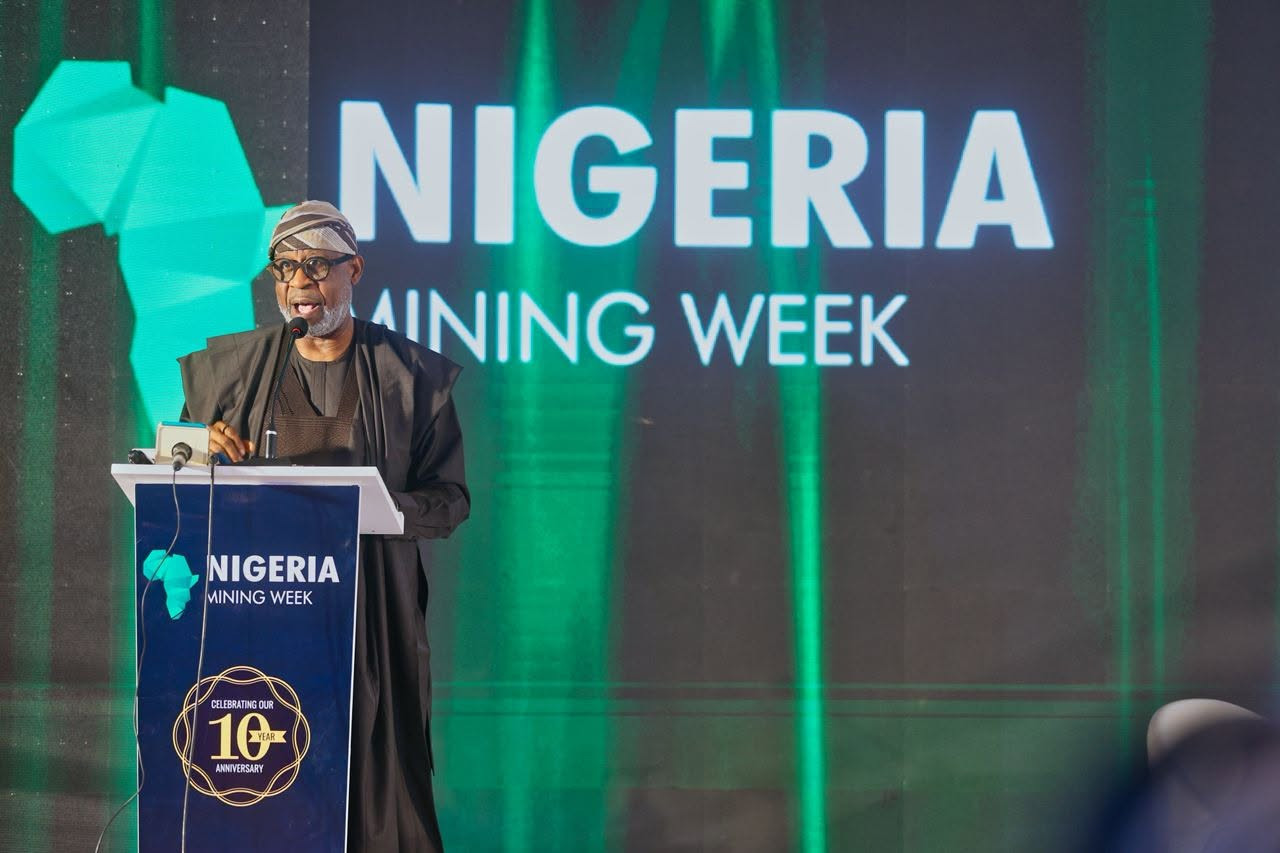
Nigeria Mining Week concluded on October 14 with a clear consensus among government officials, operators, and investors on the sector's future.
They emphasized that securing long-term capital depends on transforming raw mineral wealth into bankable projects supported by reliable data, predictable regulation, infrastructure, and local value addition, according to Africa Newsroom.
The 11th edition of Nigeria Mining Week ran from October 12 to 14 at the Abuja Continental Hotel under the theme “Unlocking Investment and Growth through Partnerships.” It was organised by the Miners Association of Nigeria with PwC Nigeria, while the Nigeria Extractive Industries Transparency Initiative served as transparency partner.
Speakers repeatedly argued that geological potential alone cannot finance a mine. Investors require dependable exploration data, consistent licensing and enforcement, secure operating conditions, financing channels and infrastructure capable of carrying projects from discovery to production.
At the official opening, Cyril Azobu, Partner and Mining Industry Leader at PwC Nigeria, urged the sector to develop projects that can attract serious investment while retaining more value in Nigeria instead of exporting largely unprocessed minerals.
Austin Menegbo, Country Manager of Segilola Resources Operating Limited, said at the event that the Segilola mine produced 91,910 ounces of gold in 2025 and that Nigerians accounted for 99 percent of its workforce, while also citing overlapping approvals, infrastructure gaps, security concerns and limited access to finance as persistent constraints.
In addition, Oba Ayandele Ayanleke, National President of the Miners Association of Nigeria, called for stronger regulatory certainty and deeper cooperation between government and industry. Stakeholders at the summit also pressed for reforms to reduce insecurity and regulatory conflicts that discourage long-term investment.
Professor Olusegun Ige, Director-General of the Nigerian Geological Survey Agency, emphasized the need to close Nigeria’s geological data gap and improve the flow of exploration information into the national geological knowledge base.
Pre-conference roundtables on October 12 addressed four practical barriers: geological data and exploration, financing for junior miners, compliance and enforcement, and power and infrastructure. The wider program also included a CEO roundtable, Deal Room, technical workshops and a Critical Minerals Forum examining Nigeria’s possible role in battery, electric-vehicle and magnet supply chains.
The closing program focused on value chains and infrastructure, addressing Nigeria’s gemstone industry, policy and governance, and the infrastructure needed for mining growth.
The Gold Forum explored links between production, refining, responsible sourcing, formal trade, finance and international markets. In parallel, the Steel Forum discussed iron-ore supply, beneficiation, power, logistics and the future of the Ajaokuta Steel Mill, positioning mining as a possible foundation for Nigeria’s wider industrial and manufacturing ambitions.