On June 3, US Secretary of State Marco Rubio told the House Foreign Affairs Committee something remarkable in its candour: the Washington Peace Accords are working, Rwanda is expected to withdraw its troops from eastern DRC by mid-July, and — in the same breath — the United States still needs to resolve "the M23 problem." It was, in a single statement, a precise summary of where six months of intensive American diplomacy has landed: a framework that is partly functioning and a war that is partly continuing, simultaneously.
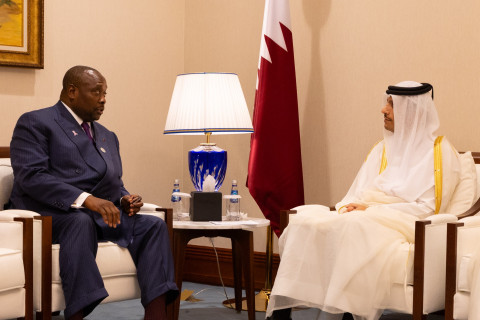
The Washington Peace Accords, signed on December 4, 2025, in a White House ceremony presided over by Donald Trump, were the most ambitious diplomatic intervention in the Congo crisis in over a decade. They brought together the DRC and Rwanda — the two state-level parties to the conflict — in a binding agreement on ceasefire, troop withdrawal, and economic integration. What they did not do, by design or by diplomatic necessity, was bring the March 23 Movement itself to the table. The M23, the rebel coalition whose fighters control Goma, Bukavu and large stretches of North and South Kivu, was left to a separate process — the Qatar-mediated Doha talks, now relocated to Switzerland after the US-Israeli military campaign against Iran disrupted operations in Doha.
That structural gap — a peace deal between governments, a separate track for the armed group those governments are fighting — has been the central vulnerability of the entire framework from the day it was signed. And six months in, it has not been resolved.
What has actually happened
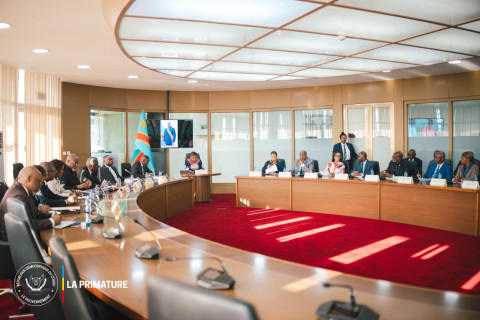
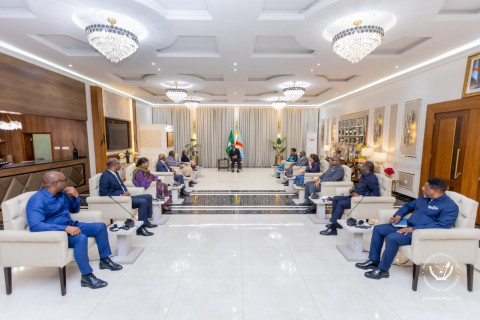
The picture on implementation is genuinely mixed, which is both better and worse than the headlines suggest. Under US pressure, M23 withdrew its fighters from Uvira in January 2026 — a significant concession from a group that had held the South Kivu city since late 2025. In April, DRC and M23 representatives met for five days in Montreux on the Swiss Riviera, agreeing to ease humanitarian aid deliveries and release prisoners — modest but concrete measures. A fifth Joint Oversight Committee meeting on April 23 brought together the DRC, Rwanda, the US, Qatar, Togo as African Union mediator, and the AU Commission to assess implementation, with parties expressing "a shared commitment to maintaining momentum."
On June 2, the US Treasury sanctioned M23's intelligence chief John Nzenze and FDLR special operations commander Gustave Kubwayo, with Treasury Secretary Scott Bessent framing the move as support for "a peaceful resolution" to the conflict. The sanctions were calibrated: targeted enough to signal seriousness, limited enough to preserve negotiating space.
Against that, set the battlefield reality. As of June 19, M23 was still clashing with pro-Congolese government forces in Masisi district in North Kivu and in the South Kivu highlands, where thousands of civilians remain caught between opposing forces. Rwanda has not withdrawn its estimated 3,000 to 4,000 troops from Congolese territory. The mid-July deadline Rubio referenced is the third such deadline the process has set — previous ones in August and late 2025 were missed without consequence.
The forum-shopping problem
A detailed analysis published by the International Crisis Group on June 10 identifies three structural reasons why African diplomacy has consistently failed to resolve the eastern DRC conflict. First, African powers followed existing alliances — some supporting Kinshasa, others Kigali — rather than forming a coherent mediating front. Second, the proliferation of parallel diplomatic tracks — AU, SADC, EAC, the Nairobi Process, the Luanda Process, and now the Washington-Doha-Geneva framework — has allowed both parties to shop for the forum most favourable to their position, delaying commitments indefinitely. Third, Western powers, whose deep security ties with Rwanda made them reluctant to apply pressure on Kigali, left Angola's mediation efforts without the international backing that would have given them real weight.
The Center on International Cooperation puts the core problem more directly: any sustainable deal requires "an initial agreement between the DRC and Rwanda on what an acceptable end state to the conflict can look like." That agreement does not yet exist. Kinshasa insists that no political group linked to M23 can participate in any national dialogue. M23's political umbrella, the AFC, led by former electoral commission head Corneille Nangaa, has publicly stated its aim to overthrow Tshisekedi's government. These are not negotiating positions that lend themselves to incremental compromise.
Rwanda's calibrated resistance
Kigali's response to mounting international pressure has been tactically sophisticated. Rwanda has highlighted its army's contributions to UN peacekeeping operations and EU-funded counter-terrorism deployments across Africa, presenting the Rwandan Defence Force as an indispensable security provider — and using that framing to head off further sanctions or isolation. The argument has worked in Brussels and in several African capitals. Rwanda's troops are simultaneously being sanctioned by the US Treasury for their presence in the DRC and praised by EU partners for their deployment in Mozambique. The contradiction has not yet been forced to a resolution.
The mid-July test
Rubio's mid-July deadline is now three weeks away. If Rwanda withdraws its troops — even partially — it would represent the most significant concrete implementation of the Washington Accords to date and would give the process a credibility it currently lacks. If the deadline passes like the previous ones, the question becomes whether Washington applies the kind of sustained, escalating pressure that has so far been notably absent, or whether the minerals-for-peace architecture quietly absorbs another missed milestone and moves the goalposts again.
The eastern DRC has accumulated enough missed deadlines that the populations living under them — in Goma, Bukavu, the South Kivu highlands — have largely stopped counting. What they are counting is something more immediate: the cost of bread in a city cut off from the national banking system, the distance to the nearest functioning health clinic, the night sounds that tell them whether the ceasefire is holding. For them, the distance between a framework and a fact has never been more visible.