When Russian Foreign Minister Sergey Lavrov met his Equatoguinean counterpart Simeon Oyono Esono Angue in Moscow on May 18, the official agenda appeared familiar. The two ministers reaffirmed plans to deepen defence cooperation, described bilateral ties as being based on equality and mutual respect, and criticised what Moscow characterises as the West's colonial approach to Africa. Angue, in turn, praised Russia's role in the Sahel and the Central African Republic as contributing to regional peace and stability. Lavrov also accepted an invitation to visit Malabo.
Viewed in isolation, the meeting looked like another routine diplomatic exchange. Taken together with developments over the past two years, however, it reflects a broader pattern of steadily expanding Russian political, military and cultural engagement in Equatorial Guinea.
That engagement has developed along two parallel tracks.
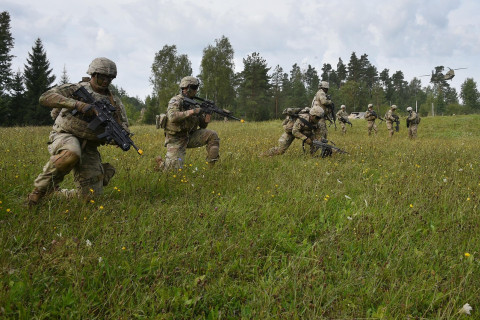
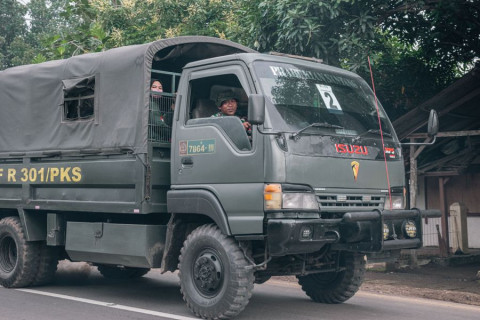
The first is military. According to multiple media reports and regional security analysts, more than 200 Africa Corps personnel have been deployed in Malabo and Bata, where they are involved in protecting President Teodoro Obiang Nguema Mbasogo and training elements of the country's Rapid Intervention Brigade. Obiang, who has been in power since 1979, is the world's longest-serving serving head of state.
Military cooperation has continued to deepen throughout 2026. Russian military officials visited Equatorial Guinea in January, coinciding with a port call by the Northern Fleet landing ship Alexander Otrakovsky. In April, Vice President Teodoro Nguema Obiang Mangue signed a defence cooperation agreement with Russian Deputy Defence Minister Yunus-Bek Yevkurov, who oversees Russia's Africa Corps operations. The agreement expands bilateral military cooperation, training programmes and Russia's security presence in the country. While it does not establish a formal Russian military base, analysts say it could provide the foundation for a more permanent military presence in the future.
The second track is less visible but equally significant.
Russia has opened a cultural centre in Malabo, adding to a growing network of Russian cultural institutions across Africa. The centre recently screened Blockade Diary, a film that several researchers and Western analysts have described as part of Russia's wartime information campaign related to Ukraine. In March 2025, Equatorial Guinea's Ministry of National Defence invited young citizens to apply for military training scholarships in Russia. The government has denied that any Equatoguinean citizens are participating in the war in Ukraine. According to Africa Defense Forum, similar recruitment initiatives elsewhere on the continent have in some cases resulted in recruits signing contracts they did not fully understand before being deployed to the front.
Why Equatorial Guinea?
The country's strategic importance has become increasingly evident.
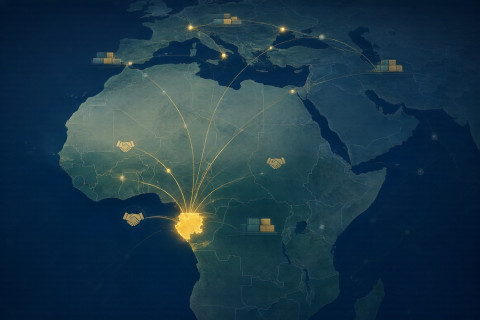
Located on the Atlantic coast of Central Africa, Equatorial Guinea combines deep-water ports, substantial offshore oil reserves and long-standing political continuity. For Moscow, it represents a strategically valuable partner in a region where Russia is seeking to expand its long-term presence. The country is also a member of OPEC+, while its voting record at the United Nations has generally avoided direct confrontation with Russia over the war in Ukraine. During the May meeting, Lavrov thanked Malabo for what he described as its "balanced and objective" position on the conflict.
Relations between the two countries have become increasingly institutionalised. President Obiang has visited Moscow on several occasions, while Yevkurov has travelled repeatedly to Malabo as Russia has expanded its security cooperation across Africa. The third Russia–Africa Summit, expected to take place in Moscow later this year, is also widely expected to include Equatorial Guinea among its participating states.
What It Means for Central Africa
Developments in Equatorial Guinea increasingly resemble a broader pattern seen elsewhere on the continent, where Russia has combined security cooperation with expanding diplomatic and cultural engagement. Similar approaches have been observed in the Central African Republic, Mali and Niger, although each case has evolved under different domestic and regional circumstances.
The implications extend beyond politics. The Gulf of Guinea remains one of Africa's most important energy-producing regions, hosting major investments by companies including ExxonMobil, Marathon Oil and other international operators. As Russia expands its security partnerships, the region is also becoming an arena of growing geopolitical competition among global powers.
For neighbouring governments in Cameroon, Gabon and the Republic of the Congo, Equatorial Guinea offers another example of the security partnerships Moscow is prepared to provide. Russia's model places particular emphasis on defence cooperation with relatively limited political conditionality compared with many Western assistance programmes.
Whether similar arrangements emerge elsewhere in Central Africa will depend not only on Russia's diplomacy but also on how effectively Western governments engage with regional partners in the years ahead. Equatorial Guinea may therefore represent less an isolated case than an indication of a broader shift in the continent's evolving geopolitical landscape.