For decades, diplomacy in Central Africa followed a familiar pattern. Governments often depended on a single dominant partner—usually a former colonial power or, later, a major global player—for investment, security, or political support.
That pattern is beginning to change.
Across the region, governments are becoming more selective about who they work with and what they expect in return. Rather than aligning themselves with one camp, they are building relationships with several, using competition among outside powers to strengthen their own negotiating position.
Gabon offers one of the clearest examples.
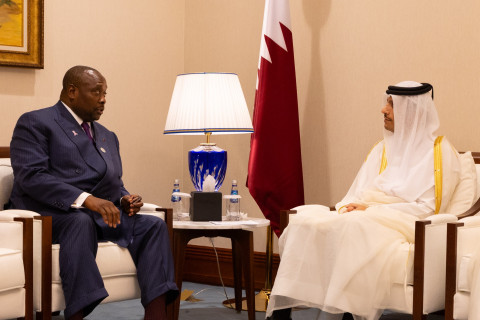
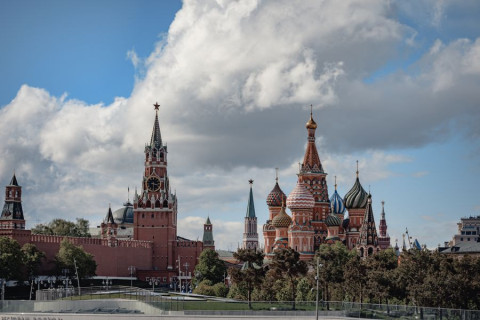
The country continues to work with Western investors in its oil and mining sectors while expanding economic ties with the United Arab Emirates through a Comprehensive Economic Partnership Agreement. At the same time, it is maintaining political dialogue with Russia and participating in the upcoming Russia-Africa Summit. None of those relationships automatically excludes the others.
The Republic of the Congo has taken a similar approach. European energy companies continue to expand offshore gas production, while Gulf investors, Chinese contractors, and African financial institutions are becoming increasingly active in infrastructure and industrial projects. Rather than relying on a single source of capital, Brazzaville is widening its options.
Cameroon has pursued its own balancing strategy. It maintains close economic ties with Europe while deepening cooperation with China on infrastructure, expanding trade with Türkiye and the Gulf, and strengthening regional partnerships across Central Africa. This is not a rejection of traditional partners. It is a change in negotiating strategy.
Instead of asking where support can be found, governments are increasingly asking which partner can deliver the best financing, technology, infrastructure, or market access.
That shift reflects broader changes in the global economy.
Competition among the United States, China, the European Union, Russia, the Gulf states, Türkiye, and India has created more choices for African governments than at any point in recent decades. For countries with strategic minerals, energy resources, growing consumer markets, or important transport corridors, those competing interests have become a source of leverage. Central Africa is beginning to recognize that leverage.
Infrastructure illustrates the trend. A railway financed by one group of partners does not necessarily prevent another country from investing in ports, power generation, or industrial zones. Governments are increasingly assembling development strategies from multiple sources rather than relying on a single sponsor. The same logic is becoming visible in diplomacy.
Countries across the region continue to participate in Western development initiatives while expanding relations with Gulf economies, strengthening ties with Asian partners, and maintaining dialogue with Russia. Foreign policy is becoming less about choosing sides and more about preserving room to maneuver. That approach also reflects practical realities. Central Africa still faces major infrastructure deficits, financing gaps, and governance challenges. No single partner has the resources—or the political influence—to solve all of them. Working with multiple partners reduces dependence while creating more opportunities to negotiate favorable terms.
This does not mean competition among global powers automatically benefits the region. Managing multiple partnerships requires stronger institutions, transparent procurement, and consistent economic policies. Without them, competition can produce fragmented projects rather than sustainable development.
Even so, the diplomatic landscape is changing.
Perhaps the most significant shift is not that Central Africa is choosing new partners. It is that governments are becoming increasingly willing to decline offers that no longer match their national priorities—and to wait for better ones.
That may prove to be one of the region's most important diplomatic developments of the decade.