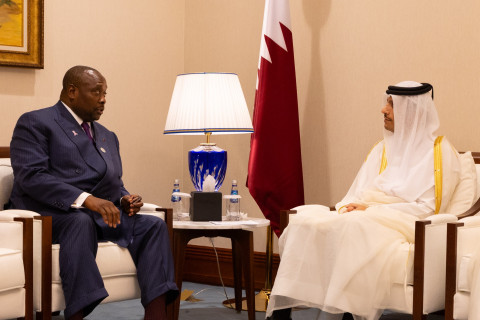
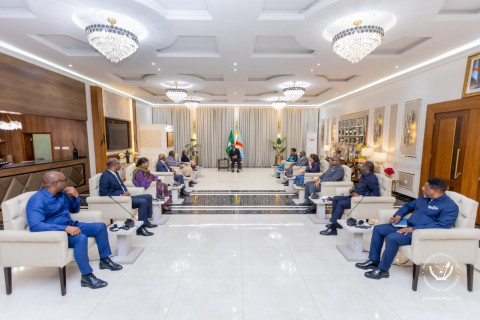
When Gabon welcomed its first resident ambassador from the United Arab Emirates on July 6, 2026, the appointment reflected the country's broadening foreign policy. Earlier in 2026, President Brice Clotaire Oligui Nguema met Chinese officials to discuss infrastructure investment, while holding separate talks with U.S. representatives on cooperation in the critical minerals sector.
Rather than relying on a single external partner, Libreville has chosen to strengthen relations with several major powers simultaneously. This balancing act is also evident in Gabon's handling of the proposed Chinese naval facility at Port-Gentil. The project, originally discussed under former President Ali Bongo before the 2023 military takeover, has neither been formally approved nor publicly abandoned. According to analysts at Model Diplomat, this cautious stance has allowed Gabon to preserve diplomatic flexibility while maintaining constructive engagement with multiple major partners.
Gabon is not alone. Across Central Africa, governments are actively pursuing what analysts describe as active non-alignment—a foreign policy course that seeks productive relations with multiple international players while avoiding excessive dependence on any single power. The logic behind this strategy is largely pragmatic. Close alignment with Western governments often comes with expectations related to governance, transparency, and institutional reforms. Heavy reliance on Russian security assistance can expose countries to diplomatic pressure and sanctions. Furthermore, excessive dependence on a single economic partner, including China, may increase financial and commercial risks during commodity downturns. By broadening their external partnerships, governments seek greater flexibility while attracting investment, security cooperation, and infrastructure financing from a wider range of international actors.
Voting patterns at the United Nations illustrate how this balancing strategy has evolved over time. During the UN General Assembly vote on Russia's invasion of Ukraine in February 2022, Cameroon, the Republic of the Congo, Equatorial Guinea, and the Central African Republic abstained, avoiding formal alignment with either side of the geopolitical divide. Chad and Gabon, by contrast, voted in favor of the resolution, reflecting their closer ties with Western partners at the time. Since then, several governments have adjusted their external relationships. Chad, for example, ended France's long-standing military presence in early 2025, illustrating how regional diplomacy has shifted as governments diversify their international partnerships.
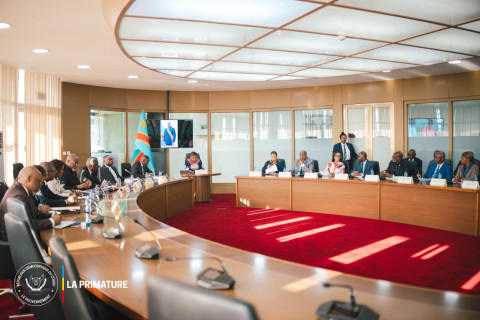
The Democratic Republic of the Congo presents perhaps the region's most complex example of this balancing strategy. Kinshasa continues to strengthen security cooperation with the United States and several European partners while hosting major Chinese mining investments and maintaining diplomatic engagement with a broad range of international actors. The DRC's election to the UN Security Council for the 2026-2027 term will test Kinshasa’s ability to maintain this delicate balance, placing the government in a more exposed diplomatic position as competition among major powers continues to intensify.
The economic effects of this policy are already visible on the ground. At the Port of Pointe-Noire in the Republic of the Congo, Türkiye's Albayrak Group operates the conventional cargo terminal, while UAE-based AD Ports is developing a new container terminal. In Cameroon, French engineering companies, Chinese-financed transport projects, and Gulf investors all participate in major infrastructure developments. Instead of concentrating strategic projects in the hands of a single foreign partner, governments are distributing investment opportunities among several international players.
Regional institutions also play an important supporting role. Within the Central African Economic and Monetary Community (CEMAC), the CFA franc remains pegged to the euro under long-standing monetary arrangements providing exchange-rate stability. At the same time, the Bank of Central African States (BEAC) has expanded regional payment infrastructure through initiatives such as GIMACPAY, making cross-border transactions faster and more efficient. These improvements strengthen regional financial integration, although they do not alter the CFA franc's underlying monetary framework or its institutional links with France.
Regional organizations provide an additional platform for diplomatic coordination. When confronted with sensitive geopolitical issues, member states of CEMAC and the Economic Community of Central African States (ECCAS) often emphasize regional consultation and African Union positions rather than acting independently. This positioning helps reduce bilateral political pressure while allowing governments to preserve constructive relations with multiple international partners.
The strategy, however, has clear limits. Regional coordination cannot always shield governments from major geopolitical disputes or difficult strategic choices. As competition among global powers intensifies—particularly in critical minerals, energy, and strategic infrastructure—the room for balancing relationships among competing partners may gradually narrow.
For Central African governments, active non-alignment has become less an ideological position than a practical foreign policy tool. As long as major powers continue competing for investment opportunities, infrastructure projects, and access to natural resources, countries across the region can benefit from diversified partnerships. The greater challenge may come if geopolitical rivalry evolves into more rigid political and economic blocs, leaving governments with less room for the flexible diplomacy that has shaped Central Africa's external relations in recent years.