The Democratic Republic of the Congo and Rwanda have already achieved what years of mediation struggled to deliver: a formal peace agreement backed by the United States, Qatar and the African Union. But more than a year after the deal was signed, the central challenge has shifted from diplomacy to implementation. Recent meetings show that Kinshasa and Kigali remain engaged, yet persistent violence and unresolved verification arrangements continue to expose the gap between commitments on paper and realities on the ground.
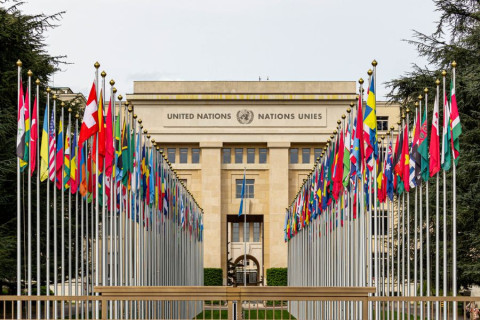
The latest signal came in mid-July, when the fifth meeting of the Joint Security Coordination Mechanism convened in Geneva on July 15–16 to assess implementation of the Washington Accords. The two sides reaffirmed their commitment to accelerate the process, including efforts to neutralize armed groups and address security concerns. They also agreed to continue work on verification mechanisms to help track compliance. That matters because verification is not a technical detail. It is becoming one of the central political questions in the peace process.
From signing a deal to proving compliance
The June 27, 2025, peace agreement established a framework for ending hostilities and addressing the security issues that have kept relations between Kinshasa and Kigali unstable. The United States and Qatar have remained closely involved, while the African Union has retained an oversight and mediation role. But implementation depends on both governments taking steps that directly affect their security calculations. Rwanda has faced pressure over its alleged support for the M23-linked armed movement, while Kinshasa has been expected to address the threat posed by the FDLR and other armed groups operating in eastern DRC. That makes the agreement fundamentally different from a conventional diplomatic accord. Each side is being asked to take security measures while remaining uncertain about whether the other side will fulfill its own commitments.
The result is a classic implementation dilemma: neither party wants to move first without credible evidence that the other will follow.
Violence remains the biggest obstacle
The problem is that developments on the ground continue to complicate the diplomatic process.
At the sixth Joint Oversight Committee meeting, held in London on June 24, representatives of the DRC, Rwanda, United States, Qatar and African Union expressed serious concern over escalating fighting, the impact of drone strikes on civilians and the peace process, and the deepening humanitarian situation in eastern DRC. They specifically called for immediate de-escalation around Minembwe. The parties also committed to full implementation of the peace agreement and backed proposals to expand the mandate of the Enhanced Joint Verification Mechanism Plus (EJVM+) to cover verification of commitments under the Washington Accords.
The UN had already warned in April that military operations by the parties, increased drone strikes and restrictions affecting ceasefire monitoring were undermining efforts to create conditions for a lasting ceasefire. It specifically called for the parties to bridge the gap between diplomatic initiatives and security dynamics on the ground.
That gap is now the defining problem for the peace process.
The M23 problem cannot be separated from the bilateral deal.
Another complication is that the DRC–Rwanda agreement does not operate in isolation from the parallel process involving the AFC/M23 movement.
Kinshasa can sign commitments with Kigali, but implementation on the ground depends heavily on armed actors whose interests are not identical to those of either government. An April 2026 agreement between the DRC government and AFC/M23 on expanded ceasefire monitoring, reached through the Doha process, was one attempt to address this problem, but the broader security environment remains fragile. This creates a three-level implementation challenge: Kinshasa must meet its commitments to Kigali, Kigali must meet its commitments to Kinshasa, and both must exercise enough influence over armed groups to prevent local developments from undermining the wider agreement.
Washington’s role is changing
For the United States, the next phase may be more demanding than the diplomacy that produced the agreement.
Washington helped bring Kinshasa and Kigali to the negotiating table and remains part of the oversight and security coordination mechanisms. But maintaining political momentum now requires sustained pressure, verification and diplomacy rather than a single high-profile signing ceremony. The United States also has a broader strategic interest in stability in the Great Lakes region. A durable settlement could reduce a major source of regional instability while creating conditions for economic engagement. A peace agreement that exists largely on paper would deliver neither objective. This gives Washington a reason to remain involved even as implementation becomes slower and more politically difficult.
The African Union faces its own test
The process is also a test for African diplomacy.
The African Union has been involved in the oversight structure and has worked alongside the United States, Qatar and other regional actors. Its continued participation gives the agreement an African institutional dimension rather than leaving the process entirely in the hands of external mediators. But the AU’s influence will ultimately be measured by whether it can help turn commitments into compliance. That means verification, de-escalation and coordination with existing regional mechanisms may prove more important than another round of political declarations.
What happens if implementation stalls?
The immediate danger is not necessarily the formal collapse of the agreement. A more likely risk is a prolonged period in which the diplomatic framework survives while implementation remains partial.
That would allow fighting, local disputes and competing security calculations to continue eroding confidence between Kinshasa and Kigali. It could also weaken the credibility of the mediators and make future negotiations harder.
For the DRC, the stakes are particularly high. Continued instability in the east carries humanitarian, economic and political costs. For Rwanda, persistent insecurity along its border with the DRC remains a central concern. For the United States and African Union, the credibility of the peace architecture is increasingly tied to whether the two governments can translate diplomatic commitments into verifiable actions.
The agreement has therefore entered a different phase. The question is no longer whether Kinshasa and Kigali can sign a peace deal. They already have. The harder question is whether they can verify, enforce and sustain what they signed.