The peace process in eastern Democratic Republic of Congo has reached a familiar but important stage: agreements have been signed, mechanisms have been discussed, but implementation remains the real test.
One of the clearest examples is the proposed prisoners swamp between the Congolese government and the AFC/M23 movement. The International Committee of the Red Cross has been prepared to facilitate the release and safe return of detainees held by both sides. The measure was intended not only as a humanitarian step, but also as a confidence-building mechanism for the wider peace process.
Yet implementation has proved difficult.
By late April, the technical arrangements for the exchange had reportedly been completed, but the ICRC was still waiting for the necessary authorization from the Congolese government. Disagreements over procedures, legal requirements and the number of detainees involved continued to delay the process. This matters because prisoner exchanges are among the simplest measures available to parties trying to build confidence. Unlike questions of territorial control, disarmament or political representation, they do not require an immediate settlement of the conflict's deepest political disputes. They can, however, demonstrate that commitments made at the negotiating table can be implemented on the ground.
That is precisely why delays are significant.
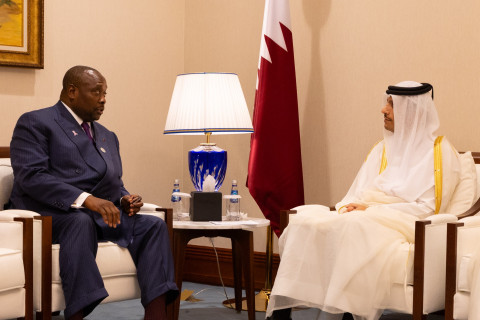
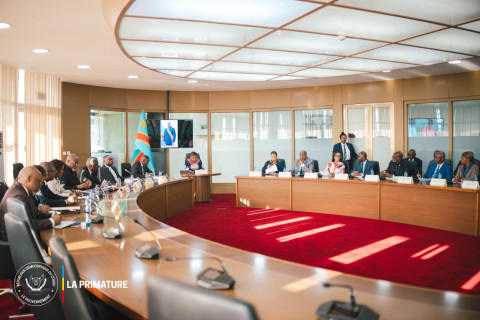
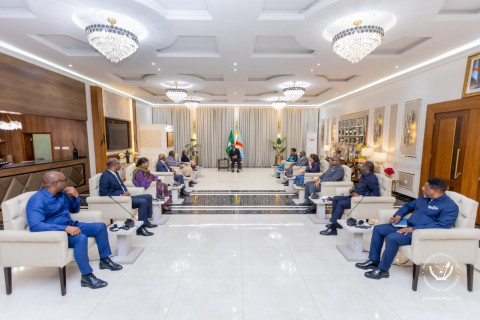
The DRC–M23 process already involves several diplomatic tracks and external mediators. The African Union has welcomed progress on humanitarian access, prisoner releases and ceasefire oversight, while Qatar has played a central role in the direct dialogue between Kinshasa and AFC/M23.
But multiple diplomatic mechanisms do not automatically translate into progress.
The central obstacle remains the lack of trust between the parties. Kinshasa continues to demand the restoration of state authority in areas controlled by M23, while the movement has sought political and security guarantees before making major concessions. At the same time, fighting and competing interpretations of ceasefire commitments continue to complicate negotiations.
The prisoner-exchange issue therefore offers a useful measure of the peace process itself. If the parties cannot implement a relatively concrete humanitarian commitment, more politically sensitive provisions will be considerably harder to deliver. The process should not, however, be dismissed as ineffective. The fact that both sides agreed to mechanisms for prisoner releases, humanitarian access and ceasefire oversight shows that diplomacy has created channels that did not previously exist.
The next question is whether those channels can produce tangible results.
For the DRC, the peace process is no longer being tested primarily by the agreements it can produce, but by its ability to implement them. A successful prisoner exchange would therefore be more than a humanitarian gesture: it would be an early indication that diplomacy is beginning to translate into trust on the ground.