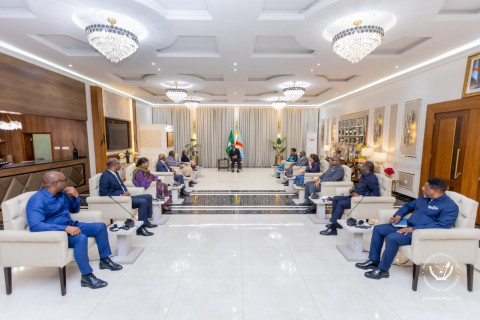
Félix Tshisekedi wants Congo's new national dialogue to do something previous political negotiations have often failed to do: deal with the problems that keep destabilizing the country rather than simply divide political power among competing elites.
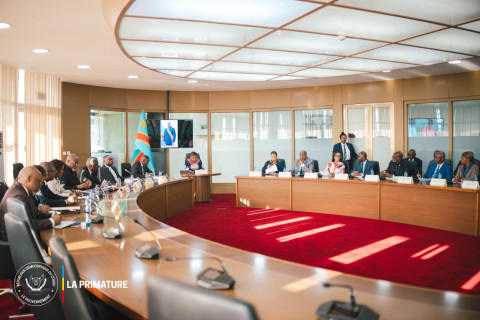
The process, launched on August 27, will last no more than three months. Consultations are due to begin across all 26 provinces before national discussions are held in Kinshasa. Tshisekedi says the goal is to address the structural causes of instability, strengthen national cohesion and rebuild state institutions. He has also warned against repeating the pattern of earlier dialogues that produced political arrangements without fundamentally changing the institutions behind them. That ambition immediately runs into a difficult question: how can a national dialogue help settle Congo's crisis when one of the main armed actors in the country's conflict is not allowed to participate?
Kinshasa has deliberately drawn that line around the AFC/M23. Tshisekedi argues that political legitimacy cannot come from controlling territory by force. Groups that are fighting the constitutional order, occupying Congolese territory, illegally administering state entities or, according to Kinshasa, acting in the interests of a foreign power will not participate as political components of the dialogue.
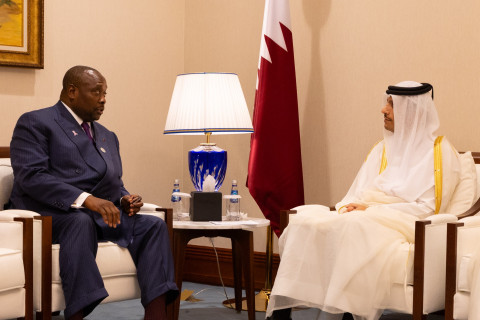
The government is also making a distinction between political reconciliation inside Congo and negotiations to end the war in the east. That is why Tshisekedi does not see the exclusion of AFC/M23 from the national dialogue as a refusal to negotiate with the movement altogether. The two sides already have a separate diplomatic channel in Doha, where the focus is on the armed conflict itself — including a ceasefire, disengagement, cantonment and disarmament.
That process is not theoretical. Representatives of Kinshasa and AFC/M23 met in Switzerland from August 17 to 21 and agreed on a roadmap for implementing the Doha framework, with Qatar, the US, Togo, Switzerland and the African Union involved in the process.
For Kinshasa, opening the national dialogue to AFC/M23 could therefore create a second negotiating table and, more importantly, give an armed movement political recognition before the conflict has been resolved. Tshisekedi has instead left a route back into national life for individual members who genuinely abandon the armed struggle and violence. At the same time, he has rejected the idea that a political compromise should erase responsibility for war crimes, crimes against humanity or other serious abuses.
That argument may make sense from the government's perspective. But it does not settle the political problem.
Martin Fayulu, one of Tshisekedi's main opponents, has already questioned why Kinshasa can negotiate with AFC/M23 in Doha while excluding it from a national dialogue in Kinshasa. His criticism goes to the heart of the debate: if the dialogue is supposed to address the causes of Congo's crisis, can it really do so without hearing from actors who are directly involved in one of the country's most serious conflicts?
There is an important distinction here. Including an armed group in a political dialogue does not necessarily mean legitimizing its military gains. But excluding it does not automatically make the resulting dialogue more credible either.
That is the dilemma Tshisekedi now faces.
His government wants the Doha and Washington processes to deal with the external and security dimensions of the eastern conflict while the national dialogue tackles Congo's internal political problems. In theory, the two tracks can complement each other. A ceasefire can create space for political reform, while stronger institutions can make a future peace agreement more durable.
In practice, however, the success of the national dialogue will depend on whether Congolese political forces see it as a genuine national process rather than a government-led consultation with predetermined limits. That may ultimately be a bigger test than the number of people sitting around the table. Tshisekedi has promised a dialogue aimed at changing how Congo responds to its recurring crises. Now he has to convince a deeply divided political class that this process can produce more than another agreement among political leaders — and that separating the country's political and military tracks will bring Congo closer to a lasting settlement rather than simply postpone the hardest questions.