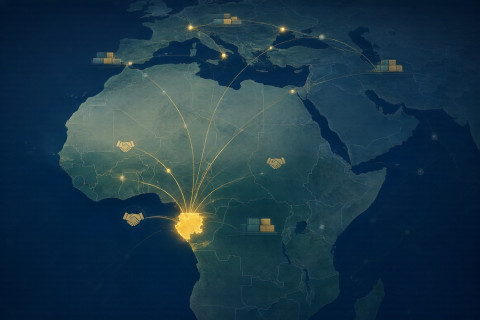
A long-running French court case involving members of the Bongo and Sassou-Nguesso families is now affecting relations between Gabon and the Republic of Congo, with Libreville sending a delegation to Brazzaville as the proceedings take on a diplomatic dimension.
On September 26, a Gabonese delegation traveled to Brazzaville in an effort to persuade Congolese President Denis Sassou-Nguesso to accept Libreville’s position in the French proceedings, according to Africa Intelligence. Gabonese lawyers have supported the referral of Antoinette Sassou-Nguesso, the Congolese president’s wife, and Omar-Denis Junior Bongo to the Paris Criminal Court for trial in the so-called “ill-gotten gains” case. Africa Intelligence reported that the delegation’s visit angered officials in Brazzaville.
The case, known in French as biens mal acquis, concerns allegations surrounding luxury assets acquired in France by African political elites and members of their families. The latest developments follow a September 8 submission by lawyers representing the Gabonese state. In their 53-page filing, they backed the referral of Antoinette Sassou-Nguesso and Omar-Denis Junior Bongo to the Paris Criminal Court.
The family connections make the case particularly sensitive. Omar-Denis Junior Bongo is the son of former Gabonese President Omar Bongo and Édith Lucie Bongo, the daughter of Denis and Antoinette Sassou-Nguesso. He is therefore the grandson of both the Congolese president and Antoinette Sassou-Nguesso. The French proceedings consequently involve members of both the Bongo and Sassou-Nguesso families.
Gabon has been a civil party to the case since the Paris Court of Appeal accepted its status in March 2023. The government has maintained that its participation allows the state to defend its financial and property interests in the proceedings.
The issue has also opened a new political debate inside Gabon. On September 28, the ruling Union démocratique des bâtisseurs (UDB), the party of President Brice Clotaire Oligui Nguema, called for a distinction between the judicial facts, institutional responsibilities and political considerations surrounding the case. The party defended Gabon’s continued participation as a civil party, arguing that the state has a responsibility to defend its interests.
That position followed a statement from the Gabonese Democratic Party (PDG), the country’s former ruling party, which defended the memory of former President Omar Bongo in the debate surrounding the French proceedings. The PDG has also acknowledged Gabon’s right to seek the recovery of assets belonging to the state. The case has therefore become part of a broader political debate in Libreville over how the government should handle the proceedings.
The proceedings are particularly sensitive because of the longstanding political and family connections between the Bongo and Sassou-Nguesso families. At the same time, the French case predates President Oligui Nguema’s government and was not initiated by his administration.
So far, there is no indication of a diplomatic rupture between Gabon and the Republic of Congo. The September 26 delegation instead points to an effort by Libreville to manage the issue directly with Brazzaville while maintaining its position in the French proceedings. Whether the dispute remains primarily judicial or becomes a broader bilateral issue will depend on how both governments handle the legal and political sensitivities surrounding the case.