Cameroon is courting French investors as Yaoundé seeks to rebuild its conflict-hit Anglophone regions and revive their economies.
A Cameroonian delegation is preparing to travel to France to promote investment opportunities in the Northwest and Southwest regions, including development of the deep-water port at Limbe, Africa Intelligence reported on Oct. 8.
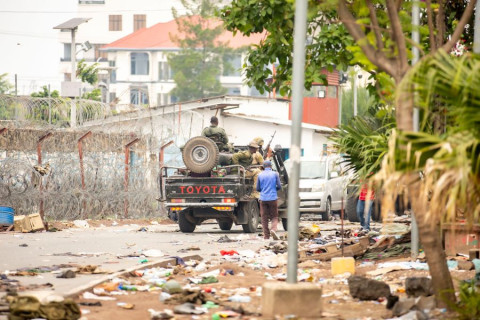
The push adds an economic track to the government’s efforts to rebuild the two regions, where separatist violence has disrupted infrastructure, public services, businesses, and livelihoods for years. Recent attacks underscore that security remains unsettled. In September, armed attackers killed a police officer and kidnapped five teachers in the Northwest Region, according to local authorities cited by AFP.
Rather than treating investment as separate from the conflict, Yaoundé is increasingly linking economic reconstruction to the longer-term recovery of the Anglophone regions.
The government’s Presidential Plan for Reconstruction and Development of the Northwest and Southwest regions already centers on restoring infrastructure and economic life. The United Nations Development Program says years of conflict damaged schools, hospitals, markets, roads, and bridges, while disrupting livelihoods and weakening local economies. The plan is funded by the Cameroonian government, international partners, and private-sector contributions.
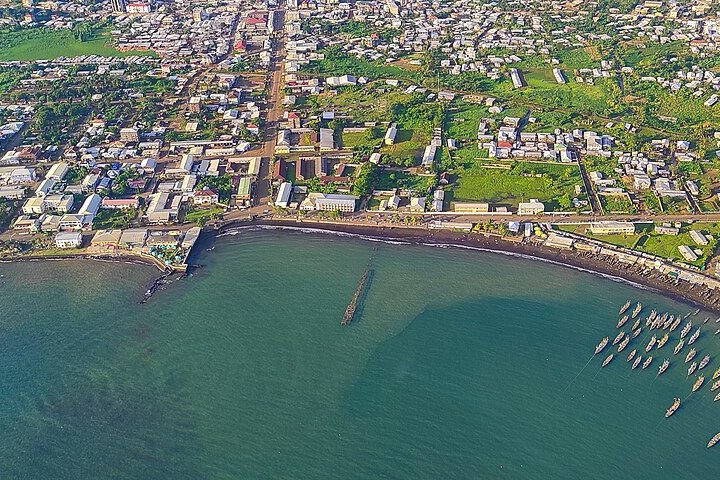
Limbe is central to that strategy. Cameroon’s 2026–2030 investment program lists construction of the Limbe deep-sea port as a public-private partnership with an estimated cost of 400 billion CFA francs, or about $700 million. The government’s planning document schedules the project for 2026–2033.
The port has already drawn interest from international companies. In July, Prime Minister Joseph Dion Ngute met with a delegation from Terminal Investment Limited (TIL), the port operator linked to Mediterranean Shipping Co., to discuss options for developing and operating the future Limbe deep-sea port.
The government is also courting private investment more broadly. In January, the Port Authority of Limbe discussed potential projects with CAFSHIP, while a separate meeting with Chinese investors focused on a proposed fish-unloading jetty at Tiko Port.
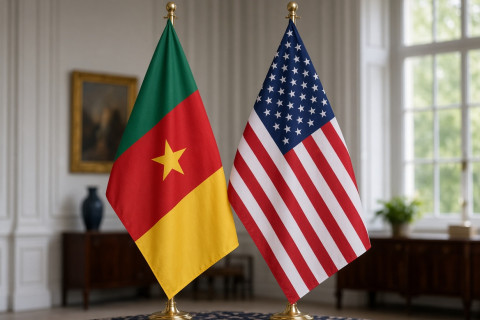
France is an natural focus for the campaign given its deep existing economic presence in Cameroon. According to France Diplomatie, French companies operate around 100 subsidiaries and about 200 French-owned businesses in the country, with interests spanning oil, agribusiness, public works, banking, insurance, transport, logistics, and retail. France’s stock of foreign direct investment in Cameroon stood at about €1.1 billion in 2020, the second-largest French FDI stock in Central Africa at the time.
The two governments have also worked together on infrastructure and economic projects. In September, Cameroon, France, and the European Union reviewed cooperation priorities covering energy, transport, digital infrastructure, value chains, and private-sector investment.
The planned French outreach thus fits Yaoundé’s broader effort to tie reconstruction to investment. The immediate obstacle is that the Northwest and Southwest remain affected by separatist violence. Attracting capital will depend not only on the availability of projects but also on whether business activity can expand in a more stable environment.
For Yaoundé, the goal is increasingly clear: rebuild the economic base of the Anglophone regions while reconnecting them to Cameroon’s wider investment and infrastructure network.