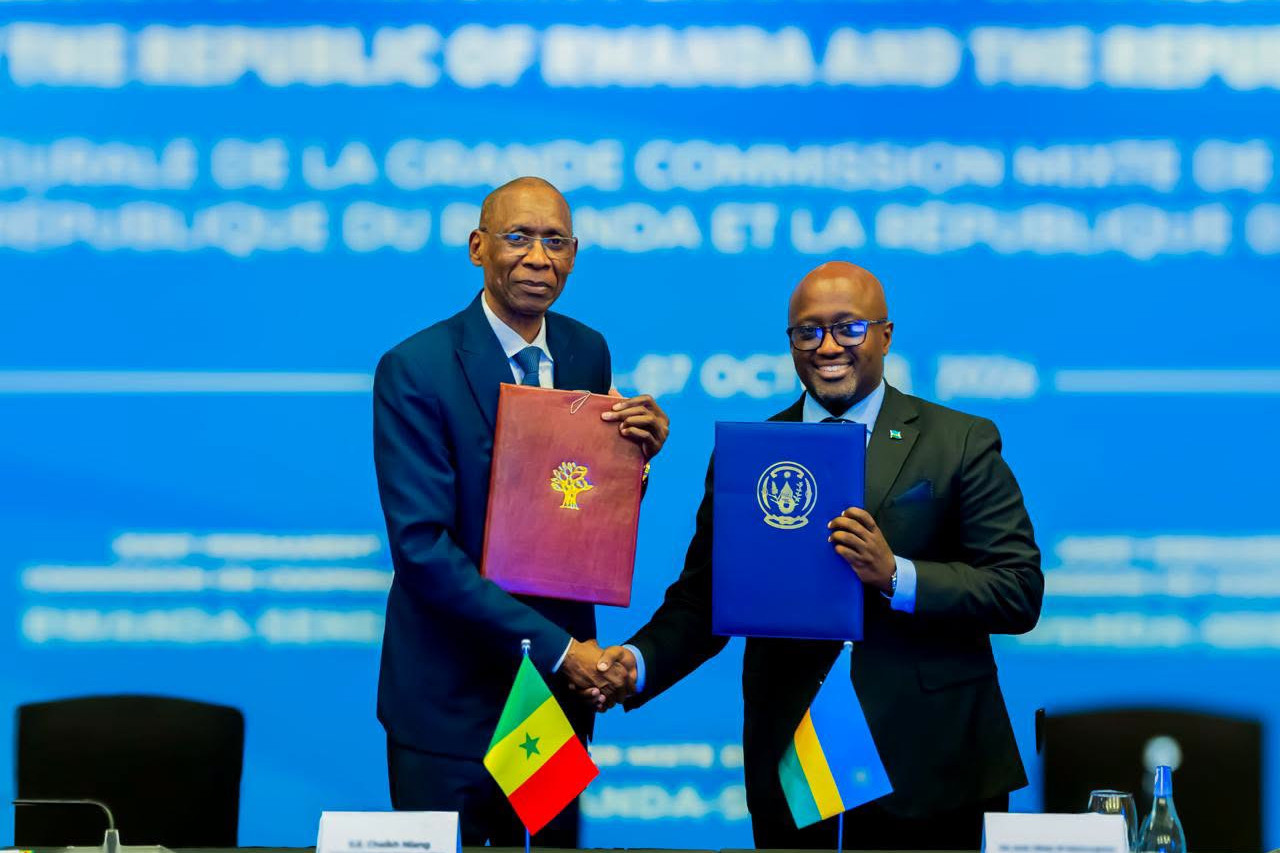
Rwanda and Senegal have signed 11 cooperation agreements and launched a joint investment framework as the two countries move to convert strong political ties into tangible economic and institutional collaboration.
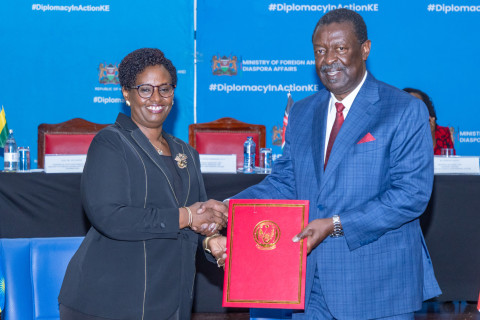
The accords were inked on October 7, in Kigali by Rwanda's Foreign Minister Olivier Nduhungirehe and his Senegalese counterpart Cheikh Niang during the inaugural session of the Joint Permanent Commission on Cooperation between the two countries, according to Rwanda's Ministry of Foreign Affairs and International Cooperation's official Facebook page.
The commission convened alongside the Rwanda–Senegal Investment Forum, designed to link businesses and investors from both sides.
The Rwandan minister said at the ceremony that the agreements were intended to turn the political commitment of the two heads of state into practical cooperation that delivers visible results for citizens.
He stressed that the value of the accords lay not in their number but in their relevance and implementation, adding that both countries could leverage the African Continental Free Trade Area (AfCFTA) to expand intra‑African trade and investment.
In turn, the Senegalese minister pointed to President Bassirou Diomaye Faye's three‑day state visit to Rwanda in October 2025, where several agreements covering mobility, agriculture and livestock, health, the development of strategic programs and correctional services were signed between the two countries.
Niang said that the task now was to ensure follow‑up and concrete implementation, noting that a bilateral relationship reaches its full potential when diplomatic ties extend into exchanges among businesses, investors, universities and research centers.
In parallel, the Rwanda Development Board (RDB) and Senegal's investment promotion agency, APIX, signed a memorandum of understanding to identify cross‑border investment projects and connect enterprises from both countries. The MoU, sealed during the investment forum, will facilitate the exchange of investment opportunities, reciprocal economic missions and matchmaking between firms and potential partners.
RDB Deputy Chief Executive Julianna Muganza said the MoU provides a practical framework to connect businesses, share opportunities and follow up on partnerships emerging from the engagement.
She noted that Rwanda has already showcased products such as specialty coffee, agro‑processed goods, leather items, handicrafts, jewelry and cosmetics at platforms like the Dakar International Fair, and that the next step is to convert those introductions into sustained commercial relationships.
Priority sectors identified for partnership include logistics, construction and real estate, leather and fashion, agriculture and agro‑processing, trade facilitation and other services.
APIX Deputy General Director Moustapha Cissé said bilateral trade stood at about $216,000 (131 million CFA) in 2025, down from $347,000 (211 million CFA) in 2022, with only one recorded Rwandan investment project in Senegal, in water and sanitation.
He described the gap between intense political dialogue and limited trade and investment flows as a key challenge the new cooperation seeks to address.