For the past two years, the Economic Community of Central African States (ECCAS) operated in a state of suspended animation. The 2023 palace coup in Gabon, which toppled the long-standing Bongo dynasty, fundamentally disrupted the traditional diplomatic balance of power in the region.
But as mid-2026 arrived, what began as a temporary suspension of Gabon from subregional bodies has escalated into an aggressive, no-holds-barred diplomatic turf war between Luanda and Libreville. Behind the sterile communiqués of regional summits lies a raw struggle for geopolitical dominance: Angola is moving fast to permanently anchor itself as the sole political and security heavyweight of Central Africa, while Gabon’s military transition government is weaponizing old alliances to block Luanda’s power grab.
Luanda’s Play for Total Dominance
Angolan President João Lourenço has never hidden his desire to project power beyond the Lusophone sphere. With the Democratic Republic of the Congo perpetually unstable and the Sahel fractured, Luanda sees a historic window to become the ultimate diplomatic gatekeeper for Central Africa.
By utilizing ECCAS as a foreign policy tool, Angola has consistently pushed to maintain harsh institutional mechanisms against Gabon, arguing that military-led regimes cannot hold the regional gavel.
However, local diplomats see right through the democratic rhetoric. By keeping Libreville politically isolated, Luanda has successfully positioned itself as the primary interlocutor for Western capitals and international financial institutions looking for a stable partner in a chaotic neighborhood. Angola’s strategy is simple: institutionalize Gabon's isolation to ensure that every major regional security, economic, or logistical roadmap must be signed off in Luanda first.
The Libreville Counter-Offensive
If Luanda expected General Brice Oligui Nguema to quietly accept Gabon's demotion, they severely miscalculated. Libreville has launched a sophisticated diplomatic counter-offensive, exploiting a deep-seated, quiet anxiety shared by smaller Central African capitals: the fear of absolute Angolan hegemony.
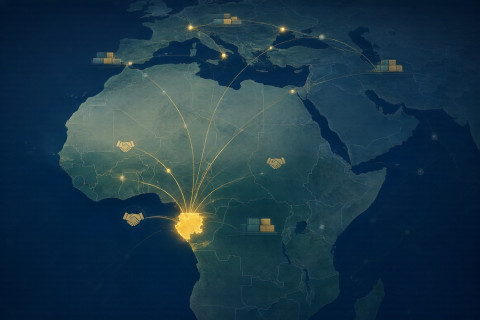
Gabonese envoys have been quietly crisscrossing the region, cutting bilateral deals with Equatorial Guinea, the Republic of Congo, and Cameroon. Libreville’s pitch to its neighbors is highly effective: if you let Luanda permanently dictate terms to Gabon today, they will dictate terms to you tomorrow.
By framing itself as a bulwark against Angolan expansionism, Gabon has managed to normalize its transitional government without making major domestic political concessions. Trade corridors remain open, intelligence sharing continues behind closed doors, and Angola's attempts to enforce a strict subregional embargo have effectively collapsed into a series of meaningless, formal declarations.
The illusion of a unified Central African political bloc is dead. Regional integration is no longer about shared economic goals; it has been reduced to a zero-sum game of diplomatic containment.
As Angola and Gabon lock horns over the institutional steering wheel, the real casualty is the subregion's ability to speak with a single voice on the global stage. For external powers looking to invest or build security partnerships in Central Africa, the message is clear: the era of dealing with cohesive regional blocs is over. Success in this landscape requires ditching the grand institutional summits and learning to play Luanda and Libreville against each other.