Executive Assessment
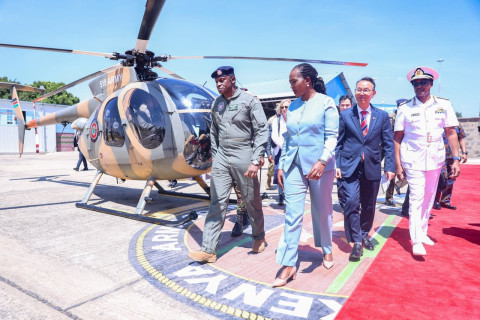
African security sources indicate that President Cyril Ramaphosa’s decision to transfer the investigation into Iran’s participation in Exercise Will of Peace from the Ministry of Defence to the Presidency has taken on greater significance since the outbreak of war involving Iran on 28 February 2026. The core issue remains whether the South African National Defence Force (SANDF) failed to implement a direct presidential instruction concerning Iranian participation in the January exercise. The war has not changed that underlying question, but it has sharply increased the diplomatic, economic and reputational costs attached to it.
The inquiry is being chaired by retired Justice Bernard Ngoepe, supported by Justices Kathy Satchwell and Mashangu Leeuw, together with retired Rear Admiral (JG) Patrick Duze. The panel reports directly to the President, can summon SANDF personnel, and can access classified material. That structure reflects a deliberate effort to place the matter beyond routine internal military handling.
This is no longer simply a controversy about an Iranian naval presence in South African waters. It is a test of whether civilian command authority remains enforceable when domestic governance and geopolitical risk collide.
Command Authority: Constitutional Control Under Test
Under South Africa’s constitutional framework, the President is Commander-in-Chief of the armed forces. If senior military officers failed to carry out a direct presidential instruction, the issue goes well beyond procedural error. It would point to a structural breach in civilian oversight.
The Presidency’s intervention suggests concern that internal defence mechanisms were either unwilling or unable to resolve the matter with sufficient speed and credibility. The earlier SANDF inquiry reportedly failed to produce findings within the time initially expected deepening concern that the problem extends beyond administrative delay.
Since 28 February, the surrounding context has shifted. What may once have appeared to be an internal command dispute now carries wider strategic consequences. Past military contact with Iran is being reassessed against a backdrop of active regional war, sanctions pressure, maritime insecurity and heightened scrutiny of state alignment.
The central analytical question remains unchanged: did the SANDF act autonomously, misread presidential intent, or respond to conflicting institutional cues? What has changed is the cost of leaving that question unresolved.
Diplomatic Context: From Bilateral Friction to Regional Sensitivity
Before the war, Iran’s role in a Chinese-led naval exercise in South African waters had already added strain to Pretoria’s relationship with Washington. Since the outbreak of conflict, that diplomatic environment has become significantly less forgiving.
On 6 March 2026, South Africa’s Department of International Relations and Cooperation stated that it was deeply concerned by the escalating Gulf crisis, condemned the U.S. and Israeli use of force against Iran as unlawful, and also condemned Iranian attacks on Gulf Cooperation Council states as violations of their sovereignty. That wording places Pretoria in a more exposed balancing position: critical of U.S. and Israeli action, but not supportive of Iranian retaliation against regional states.
That matters directly to this case. The naval inquiry now sits within a broader contest over how South Africa is viewed by Washington, Gulf capitals and non-Western partners. The question is no longer only whether the military followed orders. It is whether South Africa can demonstrate consistency between presidential authority, military conduct and declared foreign policy in a live regional crisis.