Source Note
This assessment is based primarily on exclusive field reporting received through ASA’s direct ground sources operating in the area of operations. Some of the information contained in this report has not yet been independently verified through secondary or official channels and should therefore be treated as sensitive source-based reporting. ASA has clearly distinguished between confirmed field observations and preliminary intelligence where appropriate.
Operational Situation
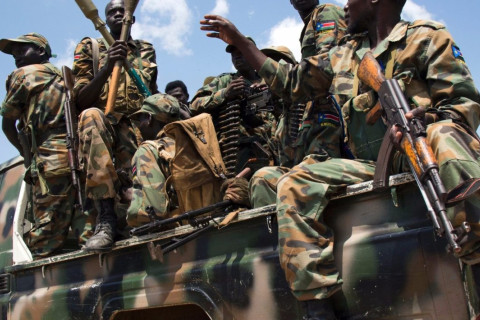
Joint FARDC–UPDF operations conducted on 22 February 2026 reportedly led to the destruction of a strategically significant camp assessed to have been linked to the leadership and logistics structure of the Allied Democratic Forces / Islamic State Central Africa Province (ADF/ISCAP).
The site was later secured and exploited on 05 March 2026 at approximately 08:00 by FARDC elements operating from Lofotayi, situated roughly 26 km from Mambasa centre along the Mambasa–Nduye axis, in Andifele Groupement, Walesse Karo Chiefdom, Mambasa Territory, Ituri Province.
Geographically, the site lies within the wider Nduye–Apodo–Mungamba operational corridor, an area long assessed as a rear logistics and command zone used by ADF elements. Apodo is estimated to be approximately 40 km north of Nduye in the direction of Isiro–Mungbere, while remaining administratively within Mambasa Territory.
Material Recovered
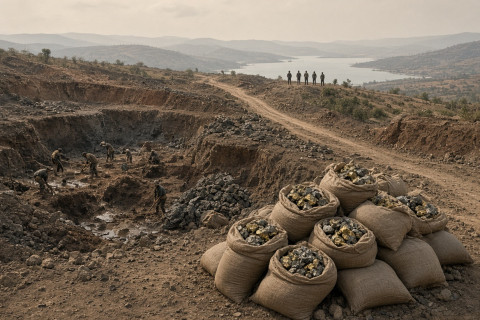
According to ASA’s direct field-source reporting, exploitation of the destroyed camp revealed a significant quantity of military, technical, and logistical materiel, indicating that the site likely functioned as both a weapons storage point and a support hub.
Recovered items reportedly include:
Weapons and ammunition
Multiple AK-pattern assault rifles, including AK-47/AKM variants
One PKM-type machine gun with ammunition belt
Several rifle magazines
Large quantities of 7.62 mm ammunition
Explosive and sabotage-related materials
A substantial stockpile of industrial explosive sticks, described as dynamite-type material
Electric detonators
Ignition cables and detonation wiring
Red electrical cords consistent with components commonly used in IED construction
Technical and logistical equipment
Portable electrical generator
Solar panels, indicating autonomous power-generation capability
Precision weighing scales, potentially used for explosive calibration or mineral weighing
Crushing and grinding machinery, possibly associated with artisanal mineral processing
Fuel containers
Assorted cabling and electronic components
The combination of explosives, detonators, and wiring strongly suggests that the site may also have served as a fabrication point for improvised explosive devices (IEDs), in addition to its likely role as a logistics and storage facility.
The reported presence of mineral-processing equipment may also point to ADF involvement in localized resource extraction, taxation, or coercive exploitation networks, a pattern previously observed in several conflict-affected areas of eastern DRC.
Leadership Status – Musa Baluku
Parallel reporting received by ASA from field sources, supported by unconfirmed local intelligence, suggests that Musa Baluku, the current leader of ADF/ISCAP, may have been critically wounded or killed during recent FARDC–UPDF strikes against militant positions in the Mungamba area last week.
Preliminary reporting further indicates that the body of Baluku’s personal medical attendant may have been recovered, which, if accurate, would suggest that senior leadership elements were present at or near the targeted positions during the operation.
At the time of writing, there is no independent confirmation of Baluku’s death, and no formal statement has been issued by military authorities or through ADF-linked communication channels. Given the group’s long-established practice of concealing leadership losses and maintaining strict operational secrecy, any assessment regarding Baluku’s status remains preliminary.