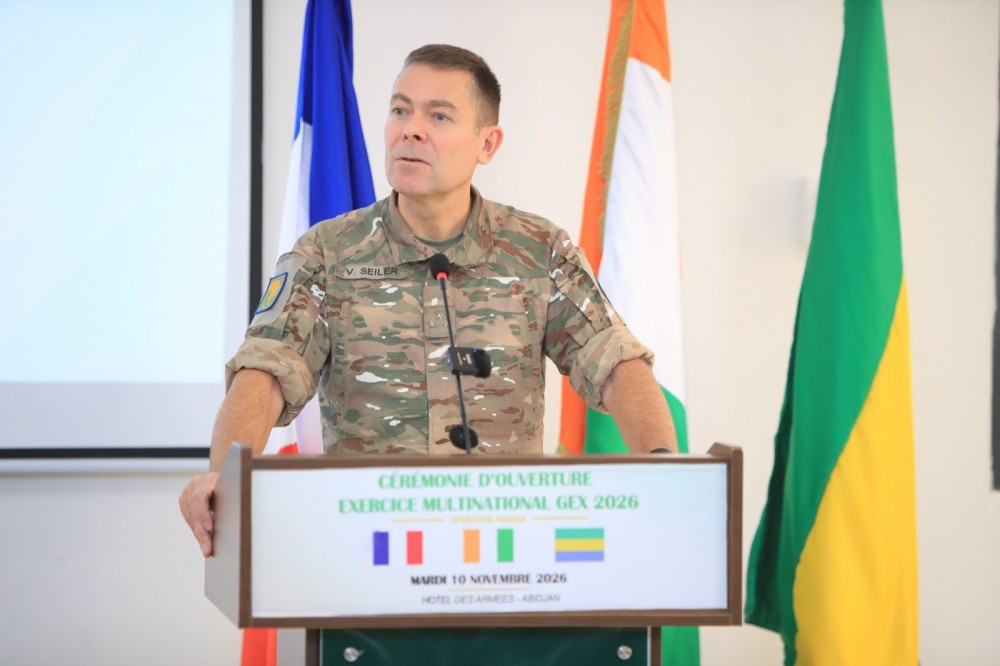
The commander of French forces in Africa, Maj Gen Valentin Seiler, has praised joint military exercises involving France, Côte d’Ivoire and Gabon as evidence of a “renewed, balanced and mutually beneficial” partnership.
He made the remarks on November 10 in Abidjan during the official launch of the Ivorian phase of the Grand Multinational Exercise 2026, known as Operation FANGHA, according to Koaci.
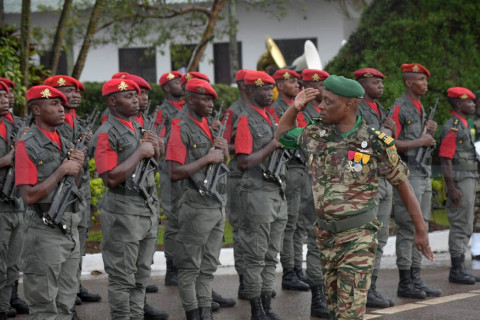
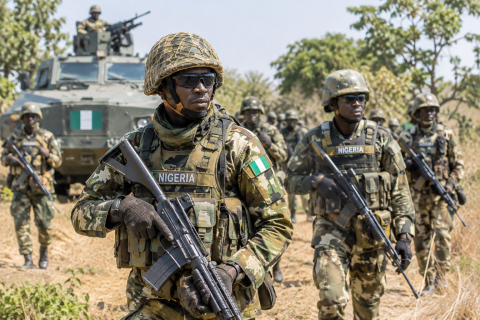
The FANGHA exercise began on November 7 and runs until November 14 in Jacqueville, Yamoussoukro and Bouaké, bringing together Ivorian, French and Gabonese land, air, naval and special forces to rehearse complex operations and improve interoperability.
The Ivorian phase is part of the broader GEX 2026 program, which France says was organized at the request of Ivorian and Gabonese authorities. It is scheduled to continue in Gabon from 24 to 29 November, with exercises in Libreville and Lambaréné.
The drills focus on “hybrid” security challenges, including terrorism, illicit trafficking, environmental plunder and cross-border criminal networks. The exercise includes hostage-rescue, forest-combat and difficult-terrain scenarios, alongside amphibious and air operations.
French General Valentin Seiler said such threats do not respect borders and require shared understanding and coordinated responses.
He also said that the partnership rests on respect for each country’s sovereignty and interests, trust and reciprocity.
The general’s comments come as France seeks to redefine its military presence in Africa after closing permanent bases in much of the continent and shifting towards cooperation arranged case by case at African governments’ request.
France has deployed Mirage 2000 fighter aircraft and the amphibious helicopter carrier Mistral, while Ivorian forces form the largest contingent.
Ivorian army chief Gen Lassina Doumbia said the operation was designed to build operational trust before a crisis, allowing commanders and troops to test procedures under realistic conditions.
He also warned that terrorism, criminal networks and information manipulation exploit weaknesses in regional security responses.