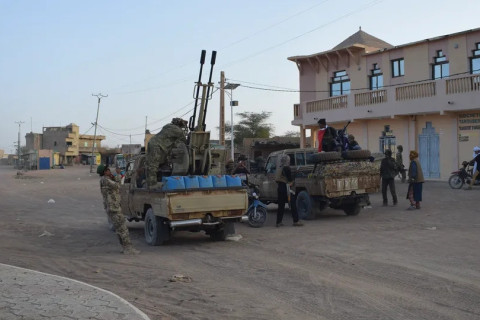
The peace agreement between the Democratic Republic of Congo (DRC) and Rwanda was widely hailed as a potential turning point for one of Africa’s longest-running security crises. Naturally, most of the debate that followed boiled down to a simple, familiar question: will this deal actually hold? But that might be the wrong question to ask. On the ground, very little has changed. Armed groups are still active in eastern Congo, the M23 rebel movement still controls key territories, and Kinshasa and Kigali continue to trade bitter accusations. Yet, behind the scenes, something subtle but highly significant has shifted. The conflict is no longer being treated as one massive, single problem. Instead, diplomacy is breaking it down into separate, independent negotiation tracks—each with its own mediators, goals, and political logic.
This is a major departure from how things used to be done.
For years, diplomats tried to solve the eastern Congo crisis with all-in-one, comprehensive packages. The Luanda Process, led by Angola, tried to ease direct tensions between the DRC and Rwanda. The Nairobi Process, backed by East African nations, focused on talking to the various local militias. Both of these efforts shared a common belief that African regional players should be the ones solving the crisis. Today, that diplomatic map looks completely different. Now, Washington has taken the lead in pushing for direct talks between Kinshasa and Kigali, viewing regional stability as a key to securing critical minerals and long-term investments. Meanwhile, Doha has become the main, quiet meeting place for indirect talks between the Congolese government and the M23, leveraging Qatar’s growing role as a trusted global mediator. These new diplomatic tracks aren't replacing the old African-led initiatives; they are overlapping with them. The result is a layered system where different international players are trying to manage different pieces of the same puzzle. Disputes between countries, talks with rebel groups, regional security, and trade agreements are all being handled at completely different tables.
This fragmentation isn't an accident, nor is it a failure.
The crisis in eastern Congo has long ceased to be about just one dispute or one rebel group. It is a complex security ecosystem fed by regional rivalries, local militias, cross-border smuggling networks, and global scramble for minerals. Expecting a single peace conference to solve all of this at once has simply become unrealistic. Breaking the conflict into smaller, more focused diplomatic tracks is a pragmatic admission that modern, tangled conflicts require parallel solutions rather than one grand bargain. Of course, this approach comes with its own major risks. When you have too many cooks in the kitchen—regional bodies, Western powers, Gulf states, and the UN—their priorities can easily clash. Without some level of coordination, diplomacy itself becomes chaotic, and parties to the conflict can play mediators off against one another. Furthermore, this diplomatic flurry hasn't translated into safety for ordinary people. The fighting continues, the humanitarian crisis remains devastating, and trust is still virtually non-existent. The negotiations are moving much faster than any actual peace on the ground. Yet, dismissing the latest peace agreement just because the violence hasn't stopped would be a mistake. Its real value might not be an overnight ceasefire, but a fundamental redesign of how we manage the conflict. Instead of chasing a single, fragile "grand peace deal," international diplomacy is building a web of smaller, complementary processes.
For decades, we judged efforts in eastern Congo by a simple metric: did the shooting stop? Increasingly, we will have to judge them by a different standard: can we keep dialogue alive on multiple fronts at the exact same time? The war is far from over—but the machinery built to contain it has changed for good.