The United Nations Security Council has unanimously adopted Resolution 2827 (2026), extending for another year the sanctions regime targeting armed groups and associated individuals operating in the Central African Republic (CAR), while renewing the mandate of the UN Panel of Experts responsible for monitoring compliance.
Under the resolution, the sanctions—including an arms embargo on non-state armed groups, travel bans and asset freezes on designated individuals and entities linked to them—will remain in force until 31 July 2027. The mandate of the Panel of Experts has been extended until 31 August 2027. The sanctions framework was originally established under Resolution 2127 (2013) following the outbreak of conflict in the Central African Republic. Since then, the Security Council has renewed the measures annually in an effort to restrict the activities of armed groups and individuals who continue to undermine peace, security and political stability in the country.
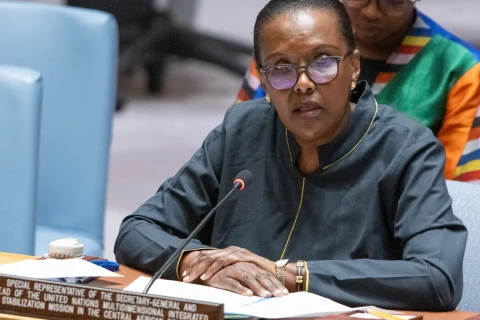
The Council said the measures are intended to prevent the illicit flow of weapons to armed groups, disrupt financial and logistical support networks, and reinforce implementation of the 2019 Political Agreement for Peace and Reconciliation. During the Security Council meeting, CAR's Permanent Representative to the United Nations, Marius Aristide Hoja Nzessioue, welcomed the renewal of the sanctions but urged the international community to place greater emphasis on dismantling the broader networks that continue to finance and arm illegal groups. He argued that the challenge extends beyond the armed factions themselves, pointing to the individuals and transnational networks that facilitate the movement of weapons, funding and other forms of support.
Council members also stressed the importance of stronger border controls, regional cooperation and efforts to combat the illicit trafficking of arms and natural resources, which continue to fuel insecurity across parts of the country.
Although the Central African Republic has made progress in restoring state authority and improving security in recent years, the Security Council concluded that armed groups remain a serious threat and that the sanctions regime continues to be an essential tool for limiting their operational capabilities and supporting the country's stabilization efforts.