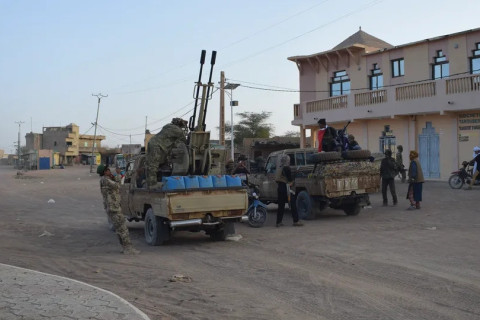
Sudan’s war is increasingly spilling beyond the country’s borders. The growing involvement of foreign combatants, cross-border supply networks and armed groups operating across national boundaries is turning a domestic power struggle into a wider regional security problem. For neighboring Chad, the consequences are becoming particularly difficult to contain.
The conflict between the Sudanese Armed Forces (SAF) and the Rapid Support Forces (RSF) has produced one of the world’s largest displacement crises. But the Chad-Sudan border is also becoming a conduit for fighters, weapons and logistical support, allowing networks linked to the war to extend beyond Sudan.
When foreign combatants become involved, a domestic power struggle acquires additional actors and interests whose objectives may not align with those of the Sudanese factions themselves. That makes the conflict harder to contain and increases the number of stakeholders with an interest in its outcome.
A conflict with increasingly regional dimensions
Foreign involvement is not new to Sudan’s war. Both the SAF and RSF have been linked to external networks providing varying forms of political, military or logistical support. The growing presence of foreign fighters adds another layer by bringing personnel from outside Sudan directly into the fighting.
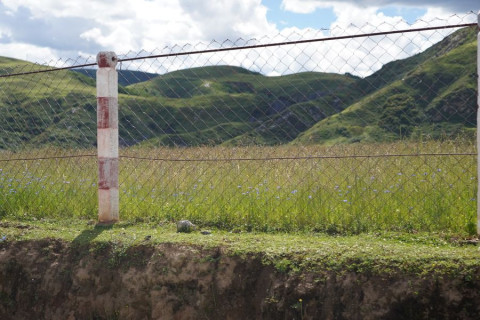
For Chad, this is particularly sensitive. The country shares a long and difficult-to-monitor border with Sudan, while eastern Chad has absorbed large numbers of Sudanese refugees. The combination of displacement and armed activity is putting additional pressure on an area where state control is limited and security resources are stretched.
The result is a security problem that cannot be separated neatly from the war next door.
Why foreign fighters make peace harder
The internationalization of Sudan’s conflict matters not only for regional security but also for the prospects of a political settlement. Foreign combatants can strengthen the factions they support, while external supply networks can help the warring parties sustain operations even when domestic resources are under pressure.
More importantly, foreign actors add interests that may not be represented at the negotiating table. A ceasefire between Sudanese parties can be undermined if armed networks outside the formal process continue to provide personnel, weapons or logistical support.
The more deeply these networks become embedded in the conflict, the harder it becomes to separate Sudan’s internal political struggle from the wider competition surrounding it. What begins as external support can gradually become part of the conflict’s internal structure.
Chad is increasingly part of the security equation
For N’Djamena, the challenge is to prevent Sudan’s war from becoming a permanent security burden. That requires more than managing refugee flows: Chad must also monitor its eastern frontier, prevent armed groups from using its territory and limit the movement of weapons and combatants across the border.
The immediate danger is not that Chad will be formally drawn into Sudan’s war. It is gradual entanglement through border incidents, armed networks, refugee movements and pressure from competing regional actors.
That could force Chad to devote increasing resources to a conflict it does not control and cannot resolve. The same dynamic matters for other countries bordering Sudan, as cross-border armed networks can push neighboring states to strengthen their military positions, tighten border controls or become involved in local security arrangements.
A war that is harder to contain
Sudan’s war was already difficult to resolve because of the deep political and military rivalry between the SAF and RSF. Its growing internationalization adds a different challenge: the conflict is developing networks and security consequences that can outlast the fighting itself.
For Chad, the priority is therefore no longer simply to keep Sudan’s war from crossing the border physically. It is to prevent the conflict’s armed networks from becoming permanently embedded in the region’s security environment.
If that happens, the distinction between Sudan’s internal war and a broader regional security conflict will become increasingly difficult to sustain.