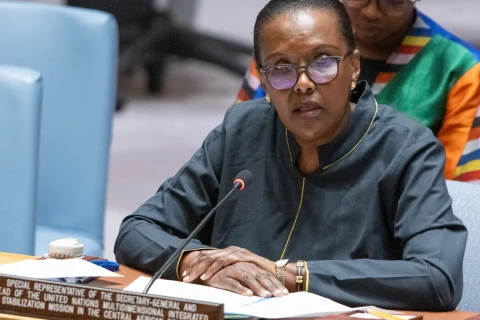
United Nations Secretary-General António Guterres has tasked former Ethiopian President Sahle-Work Zewde with assessing the organization’s role in West Africa and identifying ways to restore its regional influence, as the UN faces a more difficult political and security environment across the Sahel. The assignment reflects growing concern that the organization’s ability to shape regional affairs has weakened as governments have become more skeptical of external involvement and security partnerships have shifted.
Sahle-Work Zewde is expected to conduct a strategic review of the UN Office for West Africa and the Sahel (UNOWAS), examining how the organization can adapt its engagement to changing regional conditions. Her diplomatic background and previous experience within the UN system give her a strong understanding of both the region’s political dynamics and the organization’s institutional constraints. The review is expected to produce recommendations on how the UN can strengthen its relevance and effectiveness in West Africa.
UNOWAS has traditionally played a role in conflict prevention, political dialogue, mediation and support for constitutional governance, while also working with regional organizations and national governments on peace and security. Its influence, however, has come under pressure as several Sahel governments have distanced themselves from traditional Western and multilateral partners and sought alternative security and political arrangements. That shift has complicated the UN’s ability to maintain the same level of access and political leverage it once enjoyed.
Rebuilding that influence will require more than maintaining an institutional presence. The UN will need to demonstrate that its regional engagement can respond to the priorities of governments while retaining its capacity to address conflicts, support political dialogue and prevent instability from spreading across borders. The challenge is particularly difficult in an environment where regional governments increasingly emphasize sovereignty and security cooperation outside traditional international frameworks.
The implications extend beyond West Africa. Insecurity in the Sahel does not stop at regional borders, with armed groups and illicit networks operating across porous frontiers and affecting neighboring countries in Central Africa, particularly Chad and Cameroon. Population displacement and cross-border criminal activity can further amplify these pressures, making developments in the Sahel relevant to the broader security environment of Central Africa.
A stronger UN role in West Africa could therefore have wider regional significance. Effective conflict prevention, political mediation and cross-border cooperation in the Sahel can help limit the spread of instability toward Central Africa, while a weaker international presence could leave more space for armed groups and illicit networks to exploit fragile border areas.
Sahle-Work Zewde’s review will ultimately test whether the UN can adjust its approach to a region where its traditional influence has declined. Rebuilding credibility will depend on whether the organization can offer practical political and security engagement rather than simply preserve existing structures. For the UN, the task is no longer only to remain present in West Africa, but to regain enough regional relevance to influence the security and political dynamics shaping the continent’s western and central corridors.