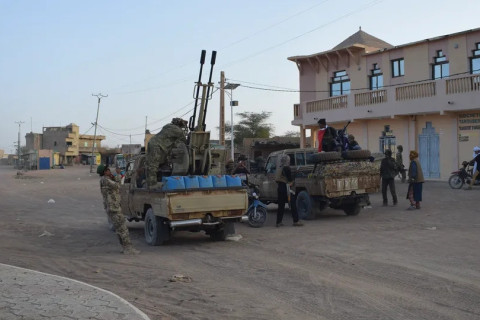
Washington is taking a new look at security in the Sahel as Russia strengthens its military partnerships with Mali, Niger and Burkina Faso. A bipartisan bill introduced in the U.S. House of Representatives recently formally targets the expansion of al-Qaeda-linked groups in Mali, but its broader provisions point to a second concern: the growing role of Russia in a region where Western influence has sharply declined.
The Mali Security Partnership and Counterterrorism Act, introduced by Representatives Jimmy Panetta, a Democrat, and Joe Wilson, a Republican, would require the State Department to develop a comprehensive diplomatic strategy for countering al-Qaeda and affiliated organizations in Mali. The bill would also assess terrorist financing, regional security dynamics and the links between militant groups operating across Mali, Niger and Burkina Faso.
Russia is explicitly part of that assessment. The legislation calls for an examination of Russia’s expanding influence in Mali and its implications for Western security partnerships, governance, transparency and regional stability. That provision is significant because Moscow has moved into the security space previously occupied by France and other Western partners.
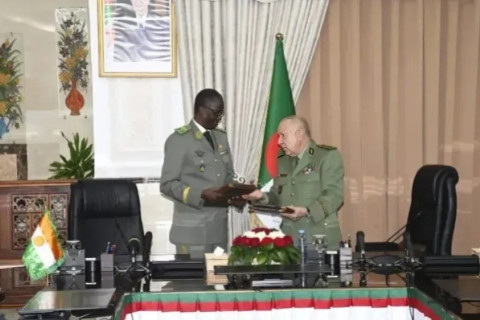
Mali, Niger and Burkina Faso have all broken with traditional Western security partners and turned toward Moscow. In July, Russia and the three countries agreed to strengthen military and military-technical cooperation, including continued assistance from Russia’s Africa Corps to their armed forces and theUnified Force of the Alliance of Sahel States.
Recent events in Niger have provided an especially clear demonstration of what that relationship now means. On August 29, mutinous soldiers attacked military and government sites in Niamey, including a strategic airbase. Niger’s forces subsequently regained control with assistance from Russia’s Africa Corps. Reuters reported that Russian personnel played a direct role in the operation, including the use of drones during fighting at the airbase.
The episode matters beyond Niger’s domestic politics. It showed that Moscow is no longer simply supplying military equipment or training local forces. Its personnel can become directly involved when a partner government faces a serious security crisis. That makes Russia’s presence increasingly relevant to the wider balance of power in the Sahel.
Yet the expansion of Russian security partnerships has not resolved the region’s underlying militant threat. Mali continues to face attacks by Jama’at Nusrat al-Islam wal-Muslimin (JNIM), an al-Qaeda affiliate that also operates in Burkina Faso and Niger. Russia’s growing involvement has therefore produced a complicated picture: Moscow has strengthened its position as a security partner while the jihadist threat remains persistent.
For Washington, that creates a difficult strategic problem. The United States is now considering how to respond to terrorism in a part of Africa where its former security partners have moved closer to Russia. The bipartisan nature of the new legislation is also notable, suggesting that concern over the Sahel is not confined to one political party.
The bill does not represent a return of U.S. forces to the Sahel, nor does it establish a new military operation. At this stage, it is a proposal for a broader diplomatic strategy. Its significance lies elsewhere. Washington appears to be recognizing that the security crisis in the Sahel is no longer only a counterterrorism problem. It is also becoming a contest over who shapes the region’s future security architecture.