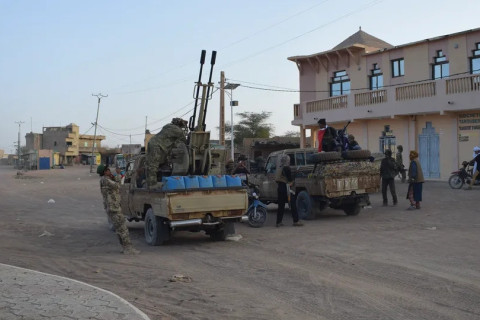
Fighting across eastern Democratic Republic of Congo (DRC) has surged in early September, with M23 rebels and government forces launching simultaneous offensives in North and South Kivu provinces despite ongoing ceasefire monitoring efforts.
The military deadlock has reignited political controversy, as opposition leaders press President Félix Tshisekedi to include the M23 in planned national dialogue talks.
The Congo River Alliance/M23 rebel coalition has intensified military pressure across several axes in North Kivu, capturing localities including Ngululu, Humura and Kazinga in Masisi Territory while reinforcing positions further south toward Walikale.
Additional rebel troops and ammunition have been deployed east of Walikale centre, raising fears of an imminent assault on the town itself. The fighting has worsened the humanitarian situation, with civilians displaced multiple times as clashes spread and villages that once hosted refugees are now being abandoned.
In South Kivu, combat has continued unabated despite the August deployment of the first ceasefire verification mission to Minembwe. Clashes have been reported across Fizi, Uvira and Mwenga territories as the Congolese army (FARDC) and allied Wazalendo militias pursue offensives against M23 and Twirwaneho forces.
On September 1, the FARDC announced it had killed 23 rebels and received 11 surrenders during operations in the Uvira Highlands, while also discovering a mass grave in Masango. In addition, Sud Kivu provincial authorities accused M23 fighters of executing five civilians pulled from their homes in the Kanyola grouping on September 6–7, describing the killings as a "massacre".
Thousands of residents fled villages including Kanguli, Masunga and Nakiehele as fierce fighting erupted. Persistent clashes have forced the closure of 1,270 schools in South Kivu, which already hosts over 2.4 million displaced people and has become the epicentre of DR Congo's humanitarian crisis.
Compounding the crisis, Islamic State-affiliated Allied Democratic Forces (ADF) militants killed at least 43 civilians between August 27 and September 1 in attacks across 15 villages in Mambasa Territory, Ituri Province. The violence burned at least 53 houses, looted property, and disrupted the start of the 2026-2027 school year as families fled to safer areas.
DRC President Tshisekedi, outlining terms for national dialogue on August 27, insisted that "the Doha process remains the appropriate framework" for addressing ceasefire and disarmament with the M23, effectively excluding the rebels from broader national talks.
Meanwhile, opposition leader Martin Fayulu has challenged this approach, arguing that Rwandan-backed rebels cannot be excluded from "a genuine, inclusive and sovereign national dialogue". He also described the Doha process as a "diversion" from the need for inclusive Congolese-led political negotiations.