In April, Pope Leo XIV visited Cameroon as part of a wider tour of Central Africa — Algeria, Cameroon, Angola and Equatorial Guinea — that ran from April 13 to 23, and called for dialogue to end the Anglophone crisis. It was a rare moment of international attention for a conflict that human rights organisations consistently rank among the world's most neglected. Within days, separatist fighters resumed attacks in the Northwest. Government forces responded. The ceasefire observed during the papal visit lasted roughly as long as the visit itself.
The Anglophone crisis began in late 2016 as lawyers and teachers protesting the imposition of French-speaking judges in English-speaking courts. It has since killed more than 6,500 people, displaced over 580,000 inside Cameroon, and pushed more than 76,000 across the border into Nigeria. It is now in its tenth year. There is no peace process. There is no negotiating table. President Biya — 92, increasingly absent, his succession unresolved — has never agreed to substantive dialogue with Anglophone representatives.
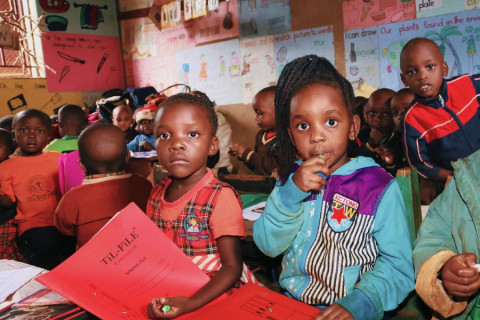
The number that captures the human cost most clearly is this: 45% of schools in the Northwest and Southwest regions remain non-functional. An entire generation of children in English-speaking Cameroon has grown up with the school calendar dictated by armed groups enforcing boycotts and by fear of attacks. In 2020, separatists abducted students from a school in Kumba, killing eight of them. The Kumba massacre produced international headlines for a week, then faded. The schools remained closed, or open only intermittently, or guarded by soldiers — none of which is a normal condition for learning.
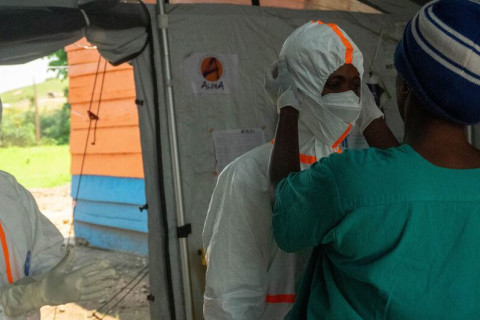
The wider humanitarian picture is grim. Some 2.9 million people across Cameroon need humanitarian assistance in 2026. Between 1.5 and 2 million face food insecurity in conflict-affected regions during the current lean season, which runs through August. In the Far North, where Boko Haram spillover from Nigeria compounds an already fragile situation, some households have deteriorated to emergency food conditions. The EU has allocated €17 million in humanitarian assistance to Cameroon for 2026 — a figure that covers a fraction of the need in a country where funding consistently runs at around 17% of what aid organisations say is required.
What makes the Anglophone crisis particularly stubborn is that it has no clean solution on offer. The separatist movement is deeply fractured — multiple armed factions with incompatible agendas, some targeting civilians as readily as government forces do. The government in Yaoundé has granted "special status" to Anglophone regions on paper while doing nothing structural to address the marginalisation that started the protests a decade ago. The international community has largely accepted that this is an internal Cameroonian matter, and the UN Security Council has held exactly one formal meeting on the crisis — in 2019.
The children who were in primary school when the protests began in 2016 are in their late teens now. Many of them have never completed a full, uninterrupted school year. That is not a statistic. It is a cohort — a generation that will carry the weight of this conflict into whatever Cameroon becomes next.