More than 223,000 children in Cameroon’s North-West and South-West regions are completely out of school, while 2,463 schools remain non-operational amid a decade-long crisis that has disrupted education and displaced families. UNICEF is supporting accelerated learning programs to help some children recover missed lessons and prepare to return to formal education, but the figures highlight the scale of the challenge facing the country’s education system.
According to figures from Cameroon’s Regional Delegations of Basic Education cited by UNICEF on September 11, 2026, 223,749 children are out of school. The North-West region accounts for 2,005 non-operational schools, while another 458 are in the South-West. The crisis in the two English-speaking regions began in 2016 and has disrupted communities, displaced families and restricted access to education.
Lost Learning and Uncertain Futures
The consequences extend beyond missed classes. Children who spend long periods outside the education system risk falling behind their peers and facing greater barriers to continuing their studies. Displacement can also separate them from familiar communities and support networks, while insecurity and financial pressures make it harder for families to maintain access to education.
Prolonged interruptions can undermine children’s future opportunities, limiting their ability to pursue further education and eventually enter the workforce. Those who return to school after years away may need additional support to rebuild foundational skills, including reading, writing and mathematics.
Building a Path Back to School
To address part of the problem, UNICEF, with support from European Union Humanitarian Aid, is backing the Accelerated Curriculum for the Reintegration of Dropout Children (CARED). The program provides focused lessons during school holidays to help children who have missed substantial periods of education strengthen their reading, writing, mathematics, science, technology and environmental education skills.
The initiative is designed as a bridge back to formal schooling rather than a permanent alternative to the regular education system. Trained teachers use multigrade approaches to support children at different learning levels, while parents are encouraged to enroll their children when the new school year begins.
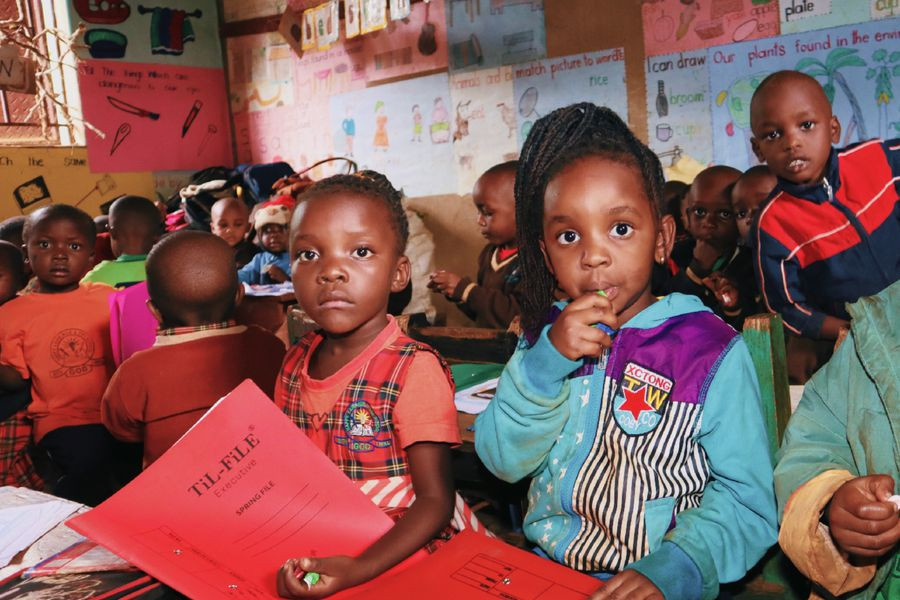
UNICEF’s September report highlighted children displaced by the crisis who were attending CARED classes in Kumba, in the South-West region. Their experiences illustrate both the disruption families have endured and the support needed to resume learning.
The program offers a route back to education for participating children, but it cannot resolve the wider shortage of functioning schools on its own. Restoring access to classrooms and ensuring that children can attend school safely remain essential to reversing the damage.
With hundreds of thousands of children still excluded from education, the challenge is not simply to help them catch up on lessons. It is to restore their access to learning and protect their opportunities for the future.