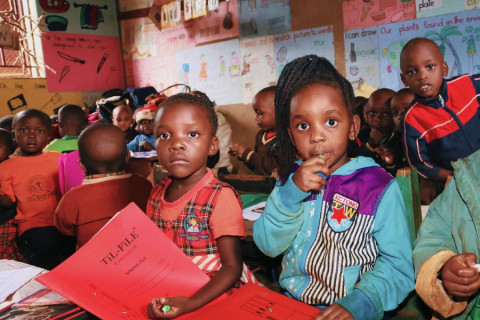
Central Africa is often measured by what lies beneath its soil—oil, cobalt, copper, timber, or lithium. But the region's most valuable resource cannot be mined. It is its people. More than 60% of the population across much of Central Africa is under the age of 25, making it one of the youngest regions in the world. That demographic reality is reshaping labor markets, education systems, consumer demand, and economic development. Whether it becomes the region's greatest advantage—or its biggest challenge—will depend on what happens over the next decade.
Every year, millions of young people enter the labor market across Central Africa, but formal job creation continues to lag far behind population growth. In several countries across the region, between 80% and 90% of young workers earn their living in the informal economy, where employment is often unstable, incomes are low, and access to social protection is limited.
Education has expanded significantly over the past two decades, yet many employers continue to report shortages of workers with technical, vocational, and digital skills. At the same time, sectors expected to drive future growth—including mining, logistics, renewable energy, manufacturing, and information technology—are struggling to recruit qualified employees.
The economic implications are only part of the story. Limited employment opportunities, particularly in conflict-affected areas, increase the risk that young people become vulnerable to recruitment by armed groups, organized crime, or irregular migration. In countries such as the Democratic Republic of the Congo and the Central African Republic, youth unemployment has long been identified as one of the factors contributing to prolonged instability.
The same demographic trend, however, also presents one of the region's greatest opportunities.
A young population means a growing workforce, expanding consumer markets, and greater potential for entrepreneurship and innovation. Mobile technology has already enabled thousands of small businesses to emerge in sectors ranging from digital payments and e-commerce to transport, agriculture, and professional services.
Realizing that potential will require sustained investment in people as well as infrastructure. Roads, railways, and power plants remain essential, but so do vocational education, technical training, digital skills, healthcare, and access to finance for young entrepreneurs. Without a workforce prepared to take advantage of new economic opportunities, infrastructure alone is unlikely to deliver lasting transformation.
Governments across the region have begun expanding vocational training programs and youth entrepreneurship initiatives, while institutions such as the African Development Bank and the World Bank continue to support projects aimed at improving skills development and employment. Results have been mixed, however, and implementation remains uneven across countries. The challenge facing Central Africa is therefore not simply demographic.
It is whether the region can transform one of the world's youngest populations into one of its strongest economic assets. Success will depend not only on economic growth, but also on creating enough quality jobs, improving education, and giving millions of young people a realistic path into the formal economy.
The region's greatest resource is already here. The next chapter will depend on how well it is developed.