The Democratic Republic of the Congo is confronting its most severe Ebola emergency in years, with the outbreak now responsible for more than 1,700 deaths and continuing to spread beyond its original epicentre in the country's northeast.
Health authorities have recorded 3,802 infections and 1,707 fatalities since the outbreak was officially declared on 15 May. More than 17,000 people who may have been exposed to the virus are under monitoring, making contact tracing one of the largest public health operations currently underway in Africa.
What distinguishes the current epidemic is the virus itself. The outbreak is caused by the Bundibugyo strain of Ebola, for which no licensed vaccines or approved treatments currently exist. That has pushed the World Health Organization to fast-track clinical trials of experimental medicines and vaccines that, until now, had remained largely in the research phase. WHO officials say years of preparedness have allowed scientists to move from laboratory research to field trials far more quickly than during previous Ebola emergencies. While early scientific evidence appears encouraging, researchers caution that only ongoing clinical studies will determine whether the experimental therapies are effective.
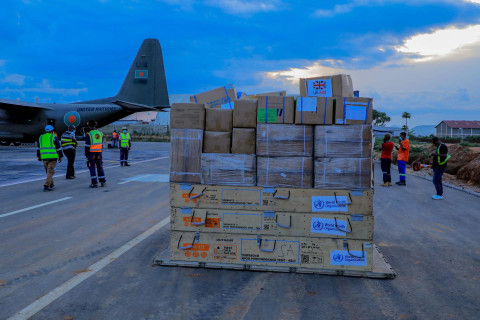
The epidemic remains concentrated in Ituri Province, which accounts for nearly 90 percent of all reported cases. However, infections have now been confirmed in five additional provinces, including the major city of Kisangani, raising concerns that the outbreak could become more geographically dispersed if containment efforts weaken. Containing the virus has proved increasingly difficult. Armed violence, attacks on health facilities, restricted access to remote communities, and public distrust of health authorities continue to complicate response efforts. At the same time, international health agencies warn that funding shortages are limiting the scale of emergency operations.
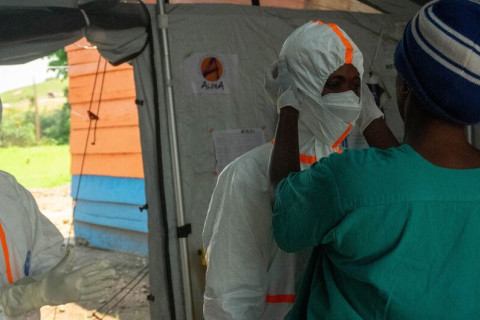
The outbreak is also placing growing pressure on an already overstretched healthcare system. More than 100 healthcare workers have been infected, while medical staff in several affected towns have protested delayed salary payments and deteriorating working conditions. In Mongbwalu, health workers have threatened to expand industrial action unless outstanding wages are paid.
The current outbreak is expanding at an unusually rapid pace. During the 2014–2016 West Africa Ebola epidemic—the deadliest in history—it took around eight months for fatalities to exceed 1,000. In the DRC, that threshold has been passed in less than three months.
Senior international health officials, including WHO Director-General Tedros Adhanom Ghebreyesus and Africa CDC Director-General Jean Kaseya, are visiting the country this week to assess the response and coordinate additional support. While neighbouring Uganda recently declared the end of its own Ebola outbreak, authorities warn that continued transmission in eastern Congo underscores how quickly the virus can overwhelm fragile health systems when insecurity and limited resources delay containment efforts.