The Democratic Republic of Congo is becoming increasingly central to the global energy transition. Its copper and cobalt are essential to electric vehicles, batteries, power infrastructure and other technologies designed to reduce dependence on fossil fuels. Yet the same expansion that makes the country strategically important to a cleaner global energy system is placing growing pressure on its own environment. Across the copper-cobalt belt, rising extraction is affecting forests, water resources, land and communities, creating a contradiction at the heart of the mineral boom: the country is helping the world build a cleaner energy system while bearing part of its environmental cost at home.
The Copper-Cobalt Belt
The environmental consequences are concentrated most heavily in Lualaba and Haut-Katanga, the provinces that form the core of the DRC’s copper-cobalt belt. Industrial mining has expanded rapidly as global demand for copper and cobalt has increased, bringing new mines, roads, processing facilities and supporting infrastructure into areas that also contain forests, agricultural land and freshwater ecosystems. The importance of these provinces extends far beyond the DRC because their mineral output feeds international supply chains linked to batteries, electrification and renewable-energy infrastructure. This makes the environmental footprint of extraction a global issue rather than a purely domestic one. The mineral leaves the country and becomes part of products marketed as essential to decarbonization, while much of the immediate environmental disturbance remains concentrated around the communities and ecosystems where it was extracted.
Water Under Pressure
Water is among the most sensitive parts of this equation. Large mining operations require significant volumes of water for processing and other industrial activities, increasing pressure on local resources in areas where communities also depend on rivers, streams and groundwater for agriculture, fishing and household use. Mining waste and tailings can create additional risks if contaminants enter surface water or groundwater. The issue is therefore not limited to whether a particular river is visibly polluted. It is also about competition for water and the ability of local communities to maintain reliable access to clean sources as industrial activity expands. Where monitoring and enforcement are weak, environmental damage can persist long after the economic value of a particular extraction project has been realized.
Forests and Land
Mining expansion also changes the physical landscape. Forests can be cleared directly for mining sites and indirectly through roads, power infrastructure, processing facilities and settlements that develop around new projects. The resulting fragmentation of natural habitats can affect biodiversity and reduce the availability of land and forest resources used by surrounding communities. The cumulative effect matters. A single mine may occupy a limited area, but a growing mining corridor can create a much wider footprint as transport routes, auxiliary infrastructure and new economic activity spread outward. This is particularly important in a country where forests remain an essential source of livelihoods and ecological services.
Communities and Health
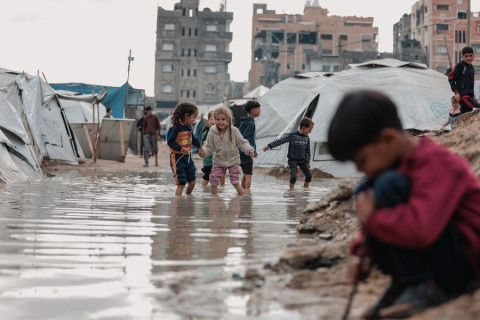
For communities living near mining areas, these changes are not abstract environmental indicators. Reduced access to clean water can affect drinking supplies, farming and fishing. Land degradation can reduce agricultural productivity, while pollution can increase exposure to substances that pose health risks. The economic benefits of mining may create jobs and government revenue, but those gains do not necessarily reach communities in proportion to the environmental pressures they face. This creates one of the central social questions surrounding the DRC’s mineral boom: how should the benefits of global demand be balanced against the local costs of extraction?
Industrial and Artisanal Mining
The environmental risks also differ between industrial and artisanal mining. Large-scale operations can generate extensive land disturbance, substantial water demand and significant volumes of waste, making environmental management, monitoring and rehabilitation critical. Artisanal and small-scale mining creates different challenges, including uncontrolled excavation, localized land degradation and pollution where operations take place outside formal regulatory systems. Treating both sectors as one environmental problem would therefore miss important differences. The scale and nature of the risks vary, as do the mechanisms available to governments and companies to control them.
Who Pays for Cleanup?
This raises a difficult question about responsibility. Mining companies are expected to comply with environmental regulations and rehabilitate affected areas, while the government is responsible for setting standards, monitoring compliance and enforcing penalties. But the international buyers of copper and cobalt are also part of the chain. If global demand and downstream industries benefit from the minerals, environmental responsibility cannot end when the raw material leaves the mine. Greater supply-chain transparency could make it easier to identify where environmental standards are being met and where the costs of extraction are being externalized. For the DRC, stronger domestic processing could also allow more economic value to remain in the country, although processing itself must be managed under credible environmental standards.
The Green Paradox
The DRC illustrates a broader contradiction in the global energy transition. The world is demanding more minerals to build electric vehicles, batteries, grids and renewable-energy systems, but the environmental consequences of producing those minerals are concentrated in a relatively small number of supplier countries. The question is therefore not whether the energy transition should continue. It is whether its environmental costs are being distributed fairly. Can the energy transition truly be considered sustainable if its environmental costs are concentrated in the countries that supply its critical minerals?
Outlook
For the DRC, the answer will depend on whether mineral expansion is accompanied by stronger environmental enforcement, transparent supply chains and more effective rehabilitation of damaged land and water systems. Greater domestic processing can increase the country’s share of the value created by its resources, but it should also come with higher environmental accountability.
The DRC is supplying materials that the world needs for a cleaner energy future. The challenge is ensuring that the communities and ecosystems producing those materials are not left to absorb the cost of making that future possible.