Africa’s relationship with the outside world is gradually moving beyond the traditional donor-recipient model. Development assistance remains important, but an increasing share of international engagement is built around investment, infrastructure, technology, strategic resources and access to markets. The shift is changing not only what external actors offer Africa, but also what African governments expect in return.
The European Union’s Global Gateway illustrates this transition. Its Africa-Europe Investment Package aims to mobilize €150 billion for projects covering transport, energy, digital connectivity, health, education and private investment. Rather than treating development as a collection of individual aid projects, the approach increasingly links infrastructure with trade, production and regional integration.
From projects to productive systems
This reflects a broader change in African priorities. Governments are increasingly looking for investment that can generate jobs, strengthen domestic value chains and connect local companies to regional and global markets. Building a road or power plant remains important, but its value rises when it supports manufacturing, trade or access to strategic resources.
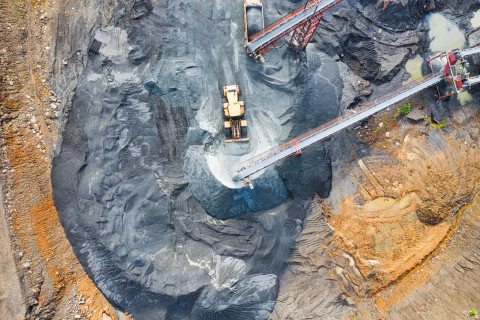
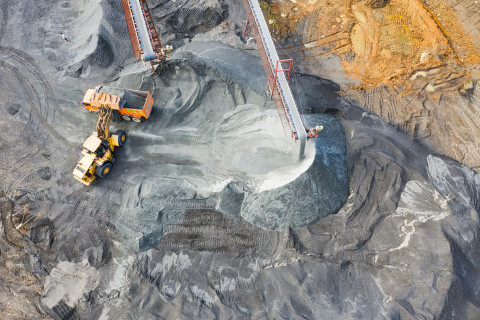
The Democratic Republic of the Congo provides a clear example. As the world's leading cobalt producer and a major copper producer, the country is seeking to capture more value from its mineral wealth rather than relying on exports of relatively unprocessed materials. Its strategic agreement with the United States links critical minerals with investment, infrastructure and development, reflecting a growing expectation that access to strategic resources should bring wider benefits to the domestic economy. This creates a more complex relationship than traditional development assistance. External actors want reliable access to resources and markets, while African governments seek capital, technology, infrastructure and greater domestic value creation. Their interests overlap, but neither side is simply providing assistance to the other.
Infrastructure becomes part of the deal
Transport and energy systems are increasingly being developed as components of broader commercial corridors and supply chains. A railway connecting a mining region to a port, for example, becomes more valuable when it also supports processing facilities, agricultural exports and regional trade. Reliable electricity can similarly become a foundation for manufacturing rather than simply a social-development objective. This is particularly important for resource-rich and landlocked economies. Without efficient connections between production sites, cities, ports and regional markets, foreign investment can remain concentrated in isolated extraction projects with limited links to the wider economy.
From raw materials to industrial capacity
The same logic is now visible beyond the mineral-rich economies of Central Africa. Morocco, for example, is seeking to use its access to minerals, energy and international markets to move further into advanced manufacturing. In 2026, the African Development Bank approved $110 million in financing for an integrated lithium-iron-phosphate battery plant, with additional development financing potentially taking total external support above $270 million.
The Moroccan case illustrates why the new approach matters across the continent: the objective is not simply to attract foreign capital, but to secure a position within global value chains. More processing, technology, skills and employment remain inside the country instead of being created elsewhere. That is becoming an increasingly important measure of international engagement: not simply how much capital enters a country, but how much productive capacity remains after the investment is made.
More options, greater bargaining power
Africa is also broadening its external relationships. India, Japan, the Gulf states, Europe, the United States and China are pursuing different combinations of trade, investment, infrastructure, technology and strategic cooperation. This gives African governments more options and potentially greater room to negotiate terms that reflect national development priorities. But diversification of external relationships does not automatically mean greater independence. African states still face significant dependence on foreign capital, technology and markets, while outside powers continue to pursue their own strategic interests. The outcome therefore depends heavily on the quality of agreements negotiated by African governments. Local processing requirements, technology transfer, workforce development, domestic supplier participation and transparent contracts can determine whether foreign investment builds lasting productive capacity or simply creates another export enclave.
A more demanding relationship
Africa’s engagement with the outside world is becoming more strategic and increasingly focused on mutual interests. The central question is no longer simply how much the world is prepared to give Africa, but what each side can gain from arrangements built around resources, markets, production and technology.
For external powers, Africa offers resources, consumers, investment opportunities and strategic value. For African governments, the challenge is to turn those interests into stronger production, better connectivity, technology and jobs. The transition from donors to partners is therefore more than a change in terminology. It is a test of whether Africa can use growing international competition for its resources and markets to negotiate relationships that strengthen its own productive foundations. The real measure of the new model will be whether African economies emerge with greater capacity to produce, trade and grow — rather than simply another generation of dependence on external capital.