Angola and Brazil have signed a memorandum of understanding to expand agricultural production, attract Brazilian investment, and transfer technology to Angola’s farming sector.
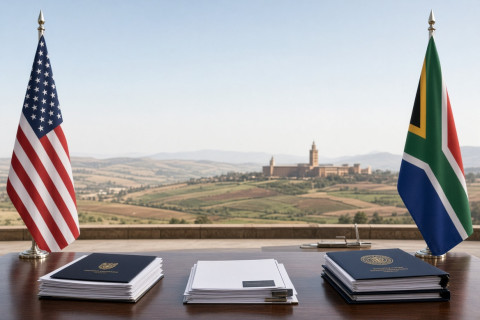
The agreement, signed in Luanda on September 15 by Angola’s Minister of Agriculture and Forests Isaac dos Anjos and Brazil’s Minister of Agriculture and Livestock André de Paula, focuses on cereals and grains, livestock, genetic improvement, farm machinery, storage infrastructure, bio-inputs and scientific cooperation, according to Brazil’s Agência Estado.
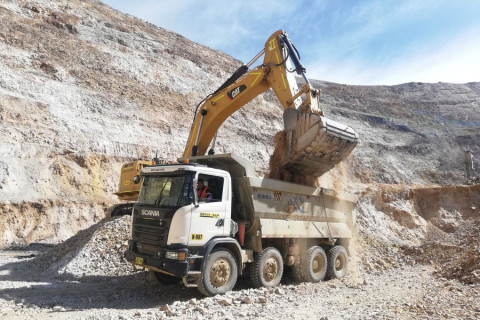
The initial program includes Terra Lunda, a pilot project expected to establish 20,000 hectares of grain production in Lunda Norte province in northeastern Angola. The project is scheduled to support the transfer of technologies and expertise developed through Brazil’s tropical agriculture, while involving Brazilian producers, companies and investors.
The memorandum is expected to facilitate the arrival of Brazilian businesspeople in Angola from 2027 and provide a framework for improving access to financing from Brazilian state institutions.
The Angolan minister said the partnership could help transform the country’s agricultural sector by applying Brazilian experience to local production. The Brazilian minister, meanwhile, emphasized that cooperation would require coordinated participation from both governments, the private sector and financial institutions to turn the agreement into operational projects.
On September 15, Angolan Secretary of State for Industry Carlos Rodrigues visited units of Brazil’s Agricultural Research Corporation, Embrapa, in Brasília during a study mission conducted with the African Development Bank. The delegation examined Brazilian work in agricultural research, biotechnology, genetic resources, agroenergy and agro-industrial processing.
More than 100 Brazilian companies have reportedly expressed interest in investing in Angola, indicating that agriculture could become a major channel for diversifying bilateral trade. Earlier, the two sides discussed agricultural development covering as much as 800,000 hectares, although the larger land-use framework remains separate from the newly signed memorandum.
At the Brazil-Angola Economic Forum in Luanda earlier this month, Brazilian Ambassador Eugénia Barthelmess said annual trade between the two countries averaged about $1.3 billion. Angolan exports to Brazil account for roughly $1 billion, largely through oil, while Brazilian exports to Angola amount to approximately $300 million and are concentrated mainly in animal protein.