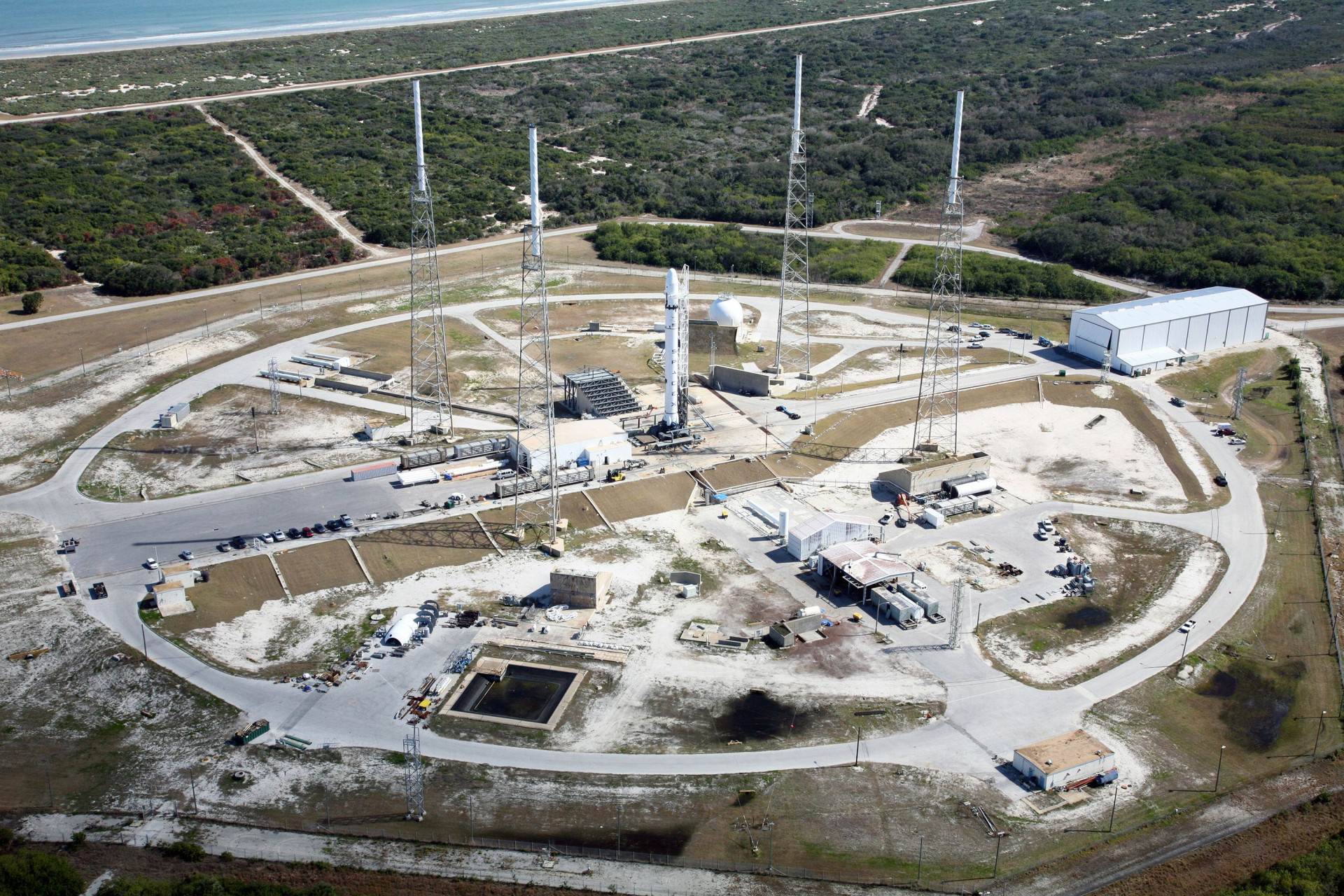
A senior Turkish delegation has visited Somalia’s under-construction spaceport in the southern region, as Ankara moves to establish an independent satellite-launch capability in this area.
The delegation was led by Türkiye’s ambassador to Somalia, Ferhat Alkan, and Maj-Gen Sebahattin Kalkan, commander of the Turkish Task Force in Somalia, on October 6, according to the state-owned Somali National News Agency (SONNA).
During the tour, Ahmed Semi Isler, general manager of Albayrak Group Somalia and chair of the Turkey-Somalia Business Council, briefed the officials on progress at the Warsheikh site, in the southern Middle Shabelle region.
Türkiye’s embassy in Mogadishu said the project is intended to help make Somalia "one of the world’s leading centers for space studies".
The visit follows Turkish President Recep Tayyip Erdogan’s announcement that construction of the Somali spaceport has begun, and Türkiye intends to launch satellites from the Somali site.
Addressing the 77th International Astronautical Congress (IAC) on October 5, Erdogan said that Türkiye and Somalia had signed an agreement for the facility and described it as part of Ankara’s effort to gain direct access to space.
Meanwhile, Turkish Space Agency board member Arif Karabeyoglu said that the Somali location offers technical advantages, including proximity to the equator, range-safety controls and favourable atmospheric conditions for launches by Turkish and international operators.
The spaceport is the latest element in an expanding Türkiye-Somalia partnership covering defense, infrastructure, development and advanced technology. For Somalia, the project could bring investment, technical training and a role in the global space economy. For Türkiye, it would provide an overseas launch site supporting its national space program, which includes satellite development, regional positioning services and lunar exploration goals.
Türkiye’s Aselsan has earlier revealed plans to launch the first satellite of its state-of-the-art Astralink (Gokbagi) low-Earth-orbit (LEO) constellation within two years as part of a broader 198-satellite communications network. The project was initiated late last year to serve Türkiye and its allies, while the planned orbital network is expected to integrate over 1 million terrestrial user terminals deployed across operational fields.