Russia has signed separate media cooperation agreements with the Central African Republic (CAR) and Mali, deepening Moscow’s growing presence in African state media as the third Russia-Africa Summit opens in Moscow.
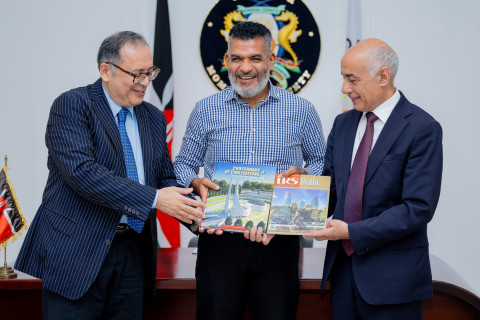
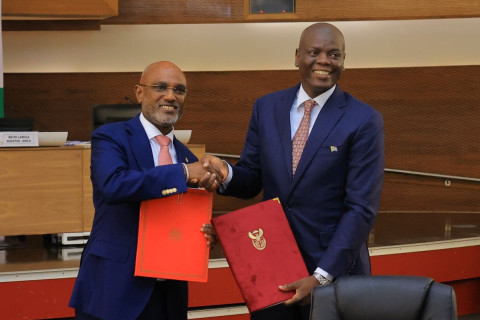
The CAR agreement was signed on October 26 between Communication Minister and government spokesperson Evariste Ngamana and RT Director General Vera Karina, according to pro-government outlet Ndjoni Sango.
The deal is intended to modernise CAR’s public broadcasters, including national television and radio, through audiovisual equipment, professional training and technical cooperation. It also provides for knowledge-sharing between RT technicians and their CAR counterparts, with support expected to strengthen production capacity and technical skills in Bangui’s state media.
Ngamana said during the ceremony that the country’s audiovisual sector needs greater digitalization, upgraded equipment and specialized training.
On the same day, the state-run Malian Press and Advertising Agency (AMAP) signed a parallel agreement with Russia’s TASS news agency during the Russia-Africa Media Forum in Moscow. The partnership covers editorial support, technical assistance and continuous training, including adaptation to artificial intelligence and social media.
AMAP head Alassane Souleymane described the deal as a milestone in relations between the two organisations. AMAP, established in 1979, publishes the state newspaper L’Essor.
The agreements were concluded on the margins of a four-day forum organized by RT, Sputnik and TASS, which has brought together more than 200 media professionals from 46 African countries. Its program prioritizes “strengthening the media sovereignty of African countries,” content production, resource-sharing and journalist exchanges.
Discussions focused on creating direct information channels between Africa and Russia, bypassing Western outlets and improving both regions’ digital presence. Russian officials framed the initiative as part of a broader effort to counter Western narratives and support a multipolar information order.
The moves fit a wider pattern of Russian media expansion in the Sahel. In July, RT signed a content-sharing agreement with Tafouk TV, a new channel backed by the military governments of Mali, Niger and Burkina Faso. The channel began broadcasting from Bamako in September.