There is a number that should worry every finance minister in Central Africa right now, and it has nothing to do with cobalt or copper prices.
Fifteen Days. That's All Most Countries Have.
Prolonged disruption of the Strait of Hormuz has triggered a continent-wide fuel shock, exposing Africa's structural dependence on imported refined petroleum products and critically low reserve capacity. Most African countries hold only 15 to 25 days of fuel reserves — far below the 90-day international benchmark. What started as a supply disruption is rapidly evolving into a systemic economic risk.
For oil producers like Angola, this sounds like it should be irrelevant — surely a country pumping its own crude doesn't need to worry about an Hormuz blockade. But Angola, like most African oil producers, exports crude and imports refined fuel, because domestic refining capacity has never matched extraction capacity. The Strait of Hormuz doesn't care whether you produce oil. It cares whether you can refine it. Most of the region can't, at scale.
Angola: Betting Big That Gas Solves What Oil Couldn't
While the Gulf situation rattles import-dependent economies, Angola is trying to position itself as something different — a country that exports solutions, not just raw barrels.
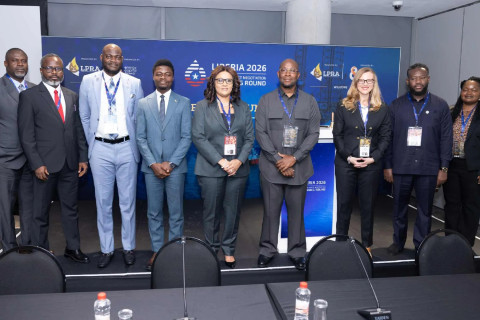
International engagement around Angola's gas sector is expected to accelerate further at African Energy Week 2026, set for Cape Town in October. "Angola's gas push is more than an upstream success story — it is a lifeline in the fight against energy poverty," said NJ Ayuk, Executive Chairman of the African Energy Chamber. "Projects like the National Gas Consortium show what is possible when policymakers and industry work together to unlock resources, build infrastructure and put African energy to work for African development."
It's a generous framing, and not an entirely false one. But it's also worth noting that "lifeline" language tends to surface whenever an oil-dependent economy needs a new growth narrative for investors who have heard the old one too many times already.
Angola-DRC: 1,450 Kilometres of Wire That Could Matter More Than Any Pipeline
If gas is Angola's headline story, the real structural shift might be happening underground — or rather, overhead, on transmission towers.
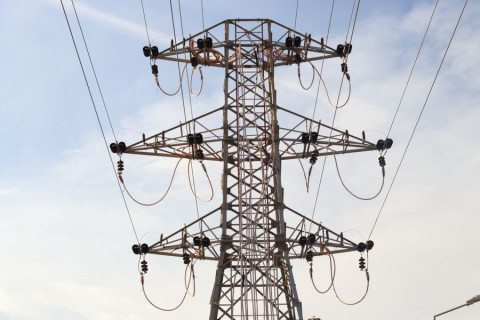
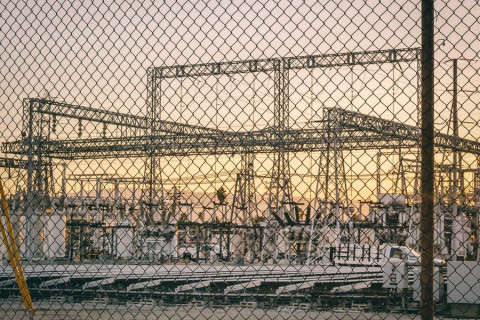
The Democratic Republic of Congo and Angola are moving forward with construction of an approximately 1,450 kilometre electricity interconnection line linking the two countries' grids.
There is a clear strategic logic here beyond simple power-sharing. Reliable electricity in DRC's mining regions directly supports global supply chains for critical minerals — copper, cobalt and lithium. The Powering Africa Summit in Washington underscored the policy shifts being implemented through 2025 and 2026, and the growing role US investors are expected to play in projects like this one. This interconnection is described as the first of a series of similar investments already planned elsewhere on the continent.
Translation: this isn't simply Angola sharing surplus electricity with a neighbour out of regional solidarity. It's American capital betting that keeping Congolese mines powered is now a matter of supply chain security for the entire Western battery and EV industry.
Cameroon: The Hydropower Win That's Quietly Beating Forecasts
Buried in development bank paperwork is one of the better economic stories in the region this year, and almost nobody outside specialist circles has noticed.
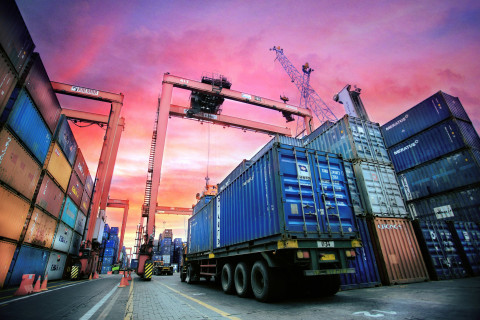
Cameroon's economic growth reached 3.7 percent in 2025, up from 3.5 percent in 2024. Growth was driven by the non-oil sector, up 4.1 percent, supported specifically by energy production from the new Nachtigal dam — which added 420 additional megawatts — alongside construction, agrifood industries, and a 333.3 percent jump in container traffic at the Port of Kribi's new wharf.
That last figure is worth sitting with. A 333 percent increase in container traffic at one port is not a rounding error — it's a sign that trade infrastructure investment is actually translating into measurable economic activity, which is rarer in this region than announcement after announcement might suggest.
Oil tells a very different story. Oil production contracted 8.82 percent in 2025 due to a lack of new investment projects — and the country's financing needs are projected to reach CFAF 3,104.2 billion in 2026, a sum the country has limited capacity to mobilize on its own. Tax revenue sits at just 13.3 percent of GDP, well below the 17 percent floor it needs.
There is also a geopolitical wrinkle nobody saw coming this spring — a European Union envoy publicly accused Russia of using Cameroon's flag to evade oil sanctions, a charge that puts Yaoundé in an uncomfortable position regardless of how the allegation is ultimately resolved.
The Pattern Underneath All of This
Strip away the country-specific details and a single thread runs through all of it: every government in the region is trying to build something that reduces dependence on a single point of failure — Angola on gas instead of just oil, DRC and Angola on shared power infrastructure instead of isolated grids, Cameroon on hydropower and port capacity instead of oil revenue alone.
None of this changes the fact that, this week, most of the continent is sitting on roughly two weeks of fuel reserves while a strait six thousand kilometres away determines how nervous everyone should be. Diversification strategies take years. Fuel shocks take days.