Hydrologists say there is a river in the Democratic Republic of Congo that has more power potential than any other place on Earth. The Congo River sits precisely on the equator, fed by two hemispheres that alternate rainy seasons, which means its flow is constant year-round in a way that most hydropower rivers are not. Its drop in the lower reaches is steep enough, and its volume enormous enough, that a single site — Inga, roughly 150 kilometres from the Atlantic — holds an estimated 40,000 megawatts of developable hydroelectric capacity. To put that in perspective: that's more than the combined installed power generation of the United Kingdom and France.
For most of the past century, essentially all of it has flowed into the ocean.
The DRC currently generates just under 3,000 megawatts of installed capacity for a country of more than 100 million people — one of the lowest per-capita electricity ratios on the planet. Fewer than one in five Congolese has reliable access to electricity. And in the ultimate expression of resource irony, the country's vast mining sector — which produces more than 70% of the world's cobalt, along with enormous quantities of copper and coltan — is chronically short of power, forcing mining operators to import electricity from Zambia and Tanzania because the DRC cannot generate enough to run the mines extracting the minerals that power the world's clean energy transition.
On June 12, 2026, the DRC's Council of Ministers formally adopted a revised National Energy Policy that sets out, for the first time in concrete terms, how the country intends to close this gap. The target: raise electricity access from the current 21.5% to 62.5% of the population by 2030. The price tag: approximately $36 billion.
Why now — and why this time might be different
The DRC has had energy ambitions before. Grand Inga, the mega-project that would eventually make the site the world's largest power installation, has been discussed since the 1950s and has consumed decades of feasibility studies, financing negotiations and collapsed agreements. What's changed in 2026 is less the ambition and more the surrounding context that makes the ambition bankable.
Three things are happening simultaneously that weren't true in previous cycles. First, the World Bank approved a $250 million financing package in 2025 specifically for Inga III — the next phase, projected at around 11,000 megawatts — breaking a years-long institutional stalemate on the project. Second, the DRC issued its first-ever sovereign Eurobond in late 2025, raising $1.25 billion and, more importantly, demonstrating to international capital markets that the country is buildable credit. Third, the minerals-for-security dynamic with Washington has created a new class of stakeholder — American companies and their government — with a direct financial interest in seeing the DRC's power infrastructure work. Mining operators who can't run their own processing plants without importing electricity from neighbours are a natural constituency for domestic generation investment.
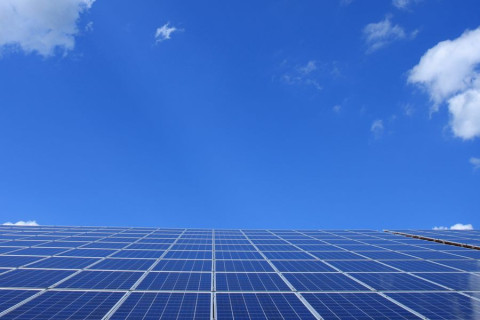
The revised policy also takes a notably more pragmatic approach than previous iterations. Rather than betting everything on mega-dams that take decades to deliver, it builds in a parallel track of distributed solutions: off-grid solar, mini-grids, and mid-scale hydropower near demand centres. In February 2026, the EU launched Electrifi RDC, a $17.4 million programme specifically to finance small-scale renewable projects in underserved communities — modest in absolute terms, but emblematic of a changed approach. In the same month, the electricity regulator approved CrossBoundary Energy's 233-megawatt solar installation with battery storage to supply the Kamoa-Kakula mining complex in Lualaba province — the first large-scale private renewable concession of its kind in the country.
The honest accounting
None of this should be mistaken for a solved problem. The $36 billion target requires roughly $19.5 billion from private sources — and private capital of that scale does not follow policy documents. It follows regulatory clarity, enforceable contracts, transparent tariff-setting and credible dispute resolution. The DRC's track record on all four is, to be charitable, mixed. The country's electricity regulator has been genuinely reformed in recent years, but the underlying legal and institutional framework is still being rebuilt from a low base. The Kinsuka hydropower project — a $2.8 billion plant approved for development west of Kinshasa, which could be transformative for the capital's chronic blackouts — has cleared all regulatory hurdles on paper but has not yet broken ground.
The deeper structural problem is one the new policy acknowledges but cannot on its own resolve: energy poverty in the DRC is not primarily a generation problem. It's a transmission and distribution problem. Even where electricity exists, the grid cannot reach most of the country. The DRC is roughly the size of Western Europe. Building centralised infrastructure across jungle, river systems and contested territory at that scale, within a four-year window, is not a planning challenge. It is closer to a civilisational one.
What the revised National Energy Policy does, then, is less solve the problem than establish — for perhaps the first time with institutional credibility — that Kinshasa has made a decision to take it seriously. That sounds like a low bar. In the DRC's energy history, it isn't. For a country whose greatest natural asset has been draining into the Atlantic for a century while its people bought candles, a government that finally frames the question correctly is at least a precondition for eventually answering it.
The Congo River isn't going anywhere. The question is whether, this time, the political will and the capital will arrive before the next decade of feasibility reports does.