Reliable electricity is not a utility issue; it is the foundation of economic sovereignty. While policy papers across Central Africa promote domestic industrialization and mineral value-addition, the reality is throttled by a structural blackout. The region's chronic power deficits function as an aggressive, invisible tax on productivity, diluting its geopolitical leverage and locking its economies into the low-value tier of global supply chains.
The Diesel Trap: Inside Douala's Manufacturing Hub
Cameroon possesses the second-largest hydropower potential in Sub-Saharan Africa, yet its primary industrial engines operate in a state of permanent energy insecurity. In Douala, the country’s commercial capital, diesel generators are no longer emergency backups—they are a permanent, structural component of the baseline manufacturing process. For a factory owner in Douala's industrial zones, relying on self-generation fundamentally breaks market competitiveness. The combined cost of diesel fuel, logistical delays, and generator maintenance inflates operational expenditures by up to 30% compared to markets with stable national grids. Consequently, locally manufactured consumer goods are systematically priced out by cheaper imports. This micro-level vulnerability completely neutralizes state strategies aimed at import substitution; a state cannot replace foreign imports if its own factories are financially suffocated by the price of fuel.
The Macro-Economic Ceiling: Stranded Minerals
The structural dynamic observed in Douala’s factories mirrors a much larger crisis in the region's heavy industry, most acutely felt in the Central African Copperbelt. The Democratic Republic of the Congo (DRC) and neighboring Zambia are central to the global green transition, yet their mining operations face a severe power ceiling. Smelting and refining critical minerals like copper and cobalt are hyper-intensive energy processes. Because national utilities cannot guarantee uninterrupted voltage, mining conglomerates are forced to cap their domestic refining capacity. Instead of exporting high-margin, fully refined cathode metals, they are compelled to ship low-value, bulk concentrates overseas—primarily to China. The lack of reliable power directly prevents host governments from capturing the most lucrative segments of the battery supply chain, turning geological abundance into a missed industrial opportunity.
The Institutional Short-Circuit
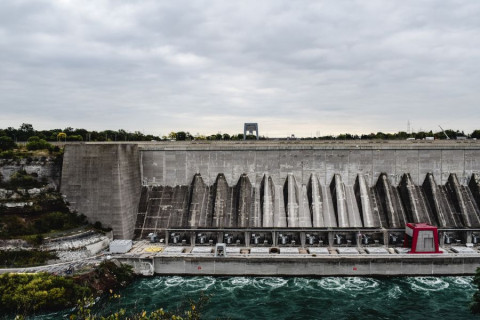
Resolving this crisis requires shifting focus from building new generation capacity to reforming the institutional framework. Constructing multi-megawatt dams is a technocratic illusion if the state-owned utilities managing them remain financially insolvent, transmission grids lose over 20% of generated power due to obsolete infrastructure, and cross-border energy trading protocols remain bogged down in bureaucratic inertia. Capital investment without structural, anti-corruption, and regulatory overhauls simply builds stranded assets.
Beyond Infrastructure
For international investors, energy reliability has bypassed tax incentives as the primary metric of sovereign risk. If a state cannot guarantee stable voltage, it cannot sustain modern manufacturing, heavy industry, or digital infrastructure. Central Africa does not lack energy resources; it lacks the institutional mechanism to deploy them efficiently. Until the software of governance matches the hardware of its rivers and gas reserves, the region's industrial ambitions will remain in the dark. Natural resources can attract capital, but only reliable power can industrialize a continent.