Russia is seeking to expand its political and economic ties with Africa, but an initiative to establish closer links between Crimea and African capitals could create a delicate diplomatic question for governments across the continent. While Moscow presents cooperation with Africa as mutually beneficial, its efforts to promote relations with the Russian-controlled peninsula may require African partners to consider the political implications of such engagement.
On October 28, Moscow organized a meeting focused on developing closer ties between Crimea and African capitals, according to Africa Intelligence. The publication reported that the initiative was intended to strengthen the international standing of the Russian-installed authorities on the peninsula by mobilizing the Kremlin’s networks across the continent. However, details of the participating countries and any concrete agreements have not been independently established.
The meeting followed a Ukrainian diplomatic initiative aimed at strengthening engagement with countries of the Global South. On October 19, Kyiv hosted the fourth international conference, “Crimea Global: Understanding Ukraine through the South,” bringing together representatives from Africa, Asia and Latin America, as well as human rights advocates, academics and journalists. The conference addressed the consequences of Russia’s occupation of Crimea and the broader implications of its aggression against Ukraine. Ukraine’s Deputy Foreign Minister Yevhen Perebyinis emphasized the importance of international law, sovereignty and territorial integrity.
For African governments, these issues touch on principles that underpin the continent’s political and security framework. On September 23, the African Union’s Peace and Security Council reaffirmed its commitment to state sovereignty, territorial integrity and the inviolability of borders inherited at independence. These principles remain particularly important for countries dealing with separatist movements, armed insurgencies and disputes over state authority.
This does not mean African governments would necessarily reject every form of engagement with Crimea, or that commercial contacts would automatically amount to formal recognition of Russia’s annexation. Their responses could vary. Some governments may prefer to keep their distance from the initiative, while others could consider limited economic or cultural contacts without taking a position on the peninsula’s status. Countries with closer political and security ties to Moscow may be more receptive, but would still have to weigh the potential diplomatic consequences.
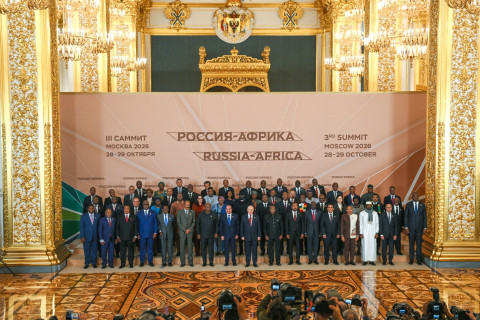
The economic dimension raises another question: how much can Moscow realistically deliver on its promises of closer cooperation? At the first Russia-Africa summit in 2019, President Vladimir Putin set a target of doubling bilateral trade to $40 billion within five years. That goal was not achieved. At the latest summit, Putin said trade had reached just over $27 billion in 2025 — a substantial increase from previous years, but still well below the target.
Russia’s ability to finance new commitments also faces pressure from the war in Ukraine. The Stockholm International Peace Research Institute estimates that Russian military expenditure reached approximately 16 trillion rubles (about $196,1 billion) in 2025, equivalent to 7.5% of GDP and 38% of planned government spending. These figures do not mean Moscow is unable to finance individual projects in Africa, but they highlight the competing demands on its public resources and raise questions about the scale of new commitments it can sustain.
African governments may therefore have to assess both the political implications and the practical value of closer engagement with Crimea. The key question is whether Moscow’s broader promises of economic cooperation can translate into funded projects and lasting investment — and whether the potential benefits would justify the diplomatic sensitivities involved.
Ultimately, the response to Russia’s initiative may depend on how individual governments balance their relations with Moscow against their own foreign policy principles, regional security concerns and economic priorities. For countries facing separatist challenges at home, the question of how to engage with a territory annexed by force may be especially sensitive, even if they have no intention of changing their broader relationship with Russia.