In Central Africa, distance is a financial metric rather than a geographical one. Global investors and regional miners rarely ask how many kilometers separate an extraction site from the coast; they ask how much each of those kilometers will cost in transit fees, bribes, and delays. This distinction explains why some of the world's richest resource zones remain economically isolated, why domestic consumer prices stay artificially elevated, and why logistics infrastructure has transformed into the continent's most critical geopolitical battleground. In Central Africa, geography alone is not the bottleneck; the prohibitive cost of overcoming it is.
The Landlocked Toll: The Ripple Effect of Douala
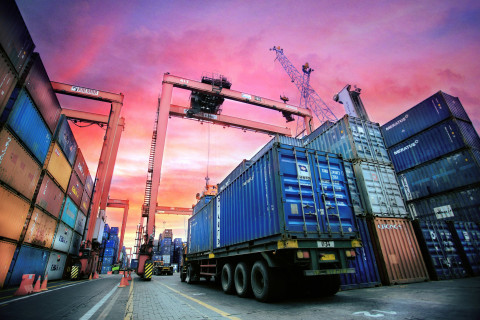
Moving freight across the Central African interior is an asymmetric logistical nightmare where transport costs accumulate not through fuel consumption, but through structural friction: deteriorating roads, unpredictable border protocols, seasonal floods, and predatory informal checkpoints. Consequently, logistics often account for up to 40% of the final retail price of everyday commodities and industrial equipment across the region. This systemic vulnerability is best illustrated by the Port of Douala. Serving as the primary maritime gateway not only for Cameroon but also for landlocked Chad and the Central African Republic (CAR), Douala's operational inefficiencies act as a regional economic choke point. A multi-day delay in cargo handling or customs clearance in Cameroon instantly triggers fuel shortages, inflates construction material costs, and stalls public works projects hundreds of kilometers away in Bangui and N'Djamena. In this environment, infrastructure cannot be managed as a purely national asset; it is an interconnected regional lifeline where one domestic administrative failure penalizes three sovereign economies simultaneously.
The Geopolitical Corridor: Software vs. Hardware
This systemic vulnerability is precisely why multi-billion-dollar infrastructure initiatives like the Lobito Corridor—the strategic railway linking the Congolese copperbelt and Zambia to Angola’s Atlantic port—have ignited an intense financing war between Washington, Brussels, and Beijing. While Western and Chinese backing for these mega-projects is heavily focused on secure access to copper and cobalt, the real macroeconomic transformation lies in structural cost-reduction. Shifting bulk freight from slow, carbon-intensive trans-continental trucking routes to high-capacity rail lines slashes transit times from weeks to days. However, building the physical track is merely the hardware phase. The real multi-sector multiplier—which could unlock regional agriculture, light manufacturing, and intra-African trade—depends entirely on the "institutional software." If modern rail corridors remain bogged down by non-tariff barriers, inconsistent cross-border customs integration, and bureaucratic inertia at national frontiers, the financial cost of distance will remain unchanged, turning massive capital investments into underutilized, stranded assets.
Multimodal Realities: The Congo River Arteries
Where physical roads and rails fail, natural geography still dictates the baseline economy. The Congo River and its vast network of tributaries remain the most resilient commercial arteries for the central African interior. For dozens of isolated riverine communities and industrial timber concessions, waterways are not a choice; they are the only viable transport network connecting remote production zones to urban markets like Kinshasa and Brazzaville. When functioning effectively, river barges offer a fraction of the per-ton logistics cost of long-distance trucking through difficult tropical terrain. This enduring reality explains why modern investments are shifting toward multimodal integration—linking upgraded river terminals, specialized barge fleets, and short-line railways—rather than relying solely on high-maintenance highway networks that are rapidly swallowed by the equatorial climate.
Beyond the Horizon
Logistics capacity has officially bypassed fiscal incentives as the primary driver of foreign direct investment in Central Africa. A world-class mineral deposit or a highly fertile agricultural zone is commercially non-viable if the cost of moving the output to a global port obliterates the profit margin. Central Africa cannot alter its geography, but it must aggressively dismantle the artificial, human-made costs imposed upon it. The region’s ultimate economic hurdle is not the vast number of kilometers separating its markets from the global economy. It is the administrative and physical price required to cross them.