The African Development Bank estimates that Africa loses approximately $48 billion worth of food annually to post-harvest spoilage — not at the farm, not from drought, not from poor seeds, but from the absence of the cold storage infrastructure required to keep harvested crops from decomposing before they reach a buyer. Sub-Saharan Africa loses more than 37% of its food production between harvest and market, equivalent to 120 to 170 kilograms per person every year, according to Prof. Toby Peters, founding director of the Africa Centre of Excellence for Sustainable Cooling and Cold-Chains. Cold chain infrastructure across Sub-Saharan Africa represents less than 5% of the equivalent capacity in India — a country with comparable agricultural output. The continent is not failing to grow enough food. It is failing to keep the food it grows. For Central Africa specifically, this failure has a specific geography and a specific economic logic. In Cameroon, a truck carrying tomatoes from the western highlands to Douala — a journey that should take hours — can spend twelve hours idling at military checkpoints or caught in mud, in tropical heat, with no refrigeration. A tomato that survived cultivation, harvesting, and loading does not survive that journey. The crop loss is not a farming problem. It is a logistics and infrastructure problem, and it falls disproportionately on the smallholder farmers who cannot afford to absorb it.
Why the standard policy response has not worked
Governments and development agencies have spent decades addressing Africa's food security challenge through the production side: better seeds, more fertilizer, training in modern farming techniques. The AfDB's BOH Infrastructure analysis, published in April 2026, is direct about the implications: "The post-harvest loss problem in Africa is primarily a cold chain problem: it is not that African farmers cannot grow food, but that insufficient infrastructure exists to preserve and move it safely from where it is produced to where it is needed." Improving yields without improving preservation infrastructure produces more food that spoils faster.
The structural failure operates through three compounding points. Smallholder farmers — who generate the vast majority of Central Africa's agricultural output — lack access to primary cooling facilities at or near the farm gate. Without the ability to remove field heat from harvested crops immediately, chemical degradation begins within hours, not days. Under pressure from rapidly spoiling stock, farmers are forced into distress sales: dumping their entire harvest simultaneously onto local markets, collapsing wholesale prices, and leaving surplus to rot in open-air depots. Even where produce survives the farm, it then enters a transport system with no refrigerated vehicles, unpredictable transit times, and roads that add hours to journeys that should take minutes. And even where produce survives transport, the destination markets lack secondary cold storage that would extend shelf life at the point of sale. Each failure point is individually survivable. The combination is fatal to the product.
The business model that is changing the investment case
What has shifted in 2025 and 2026 is less the technology than the business model around it. Solar-powered decentralized cold rooms are not new. What is new is the pay-per-use pricing structure that makes them accessible to smallholders who cannot afford to buy or maintain cooling equipment — and commercially viable for private operators who can aggregate demand across multiple farming communities.
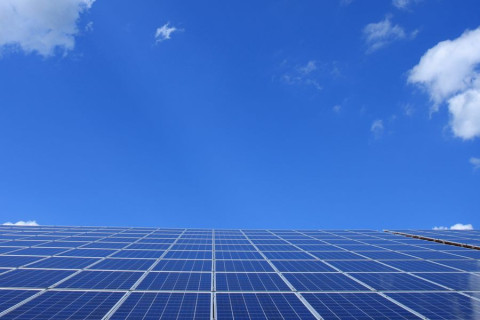
The Cooling-as-a-Service model — CaaS — installs solar-powered walk-in cold rooms at farm-gate collection points and rural market hubs, charging farmers a per-crate, per-day storage fee of approximately $0.50. The economics for the farmer are straightforward: paying for storage extends the shelf life of tomatoes or leafy greens from two days to three weeks, eliminates the pressure of distress sales, and allows the farmer to hold produce until prices stabilize. InspiraFarms, which builds hybrid-powered cold rooms designed for real African operating conditions — running on combinations of grid electricity, solar, and backup power to handle the unreliable power supply that standard refrigeration systems cannot manage — documents losses reduction from 40-50% without cold chain to approximately 10% with it. That is a measurable, commercially verified transformation in farm economics. For investors, the CaaS model produces the kind of revenue profile that infrastructure capital markets respond to: predictable, recurring cash flows tied to agricultural production cycles, low operational overhead once infrastructure is deployed, and demand that is structurally growing as urbanization drives more food through formal distribution channels. Africa's cold chain market was valued at $10.88 billion in 2024 and is projected to reach $14.85 billion by 2029, growing at 8.28% annually, according to the Global Cold Chain Alliance's March 2026 assessment.
Where the capital is moving
Development finance institutions have identified cold chain as a priority precisely because the market failure is severe enough to require catalytic public capital, but the commercial fundamentals are strong enough to attract private capital once the risk profile is de-risked. The IFC's Global Food Security Platform is deploying equity and debt packages to scale cold chain logistics companies across Africa. The AfDB has integrated cold storage requirements into its Special Agro-Industrial Processing Zones programme — the same SAPZ structure that the Nigerian government funded with $538 million to boost agricultural processing productivity. For Central Africa specifically, the investment gap is both more acute and less served than elsewhere on the continent. East Africa has Kenya's Cold Chain Accelerator, Rwanda's ACES centre, and a pipeline of facilities totalling 8,000 to 20,000 pallets coming online between 2026 and 2027. West Africa has a $307 million cold storage expansion underway in Senegal. Central Africa has neither comparable facilities nor a comparable investment pipeline. The DRC's 26.6 million food-insecure people, Cameroon's disrupted agricultural supply chains in the Anglophone regions, and Chad's chronic lean-season food crisis all share a common structural driver: food is produced but not preserved. The infrastructure gap is the investment opportunity.
There is one constraint the business models do not fully resolve: power. Solar cold rooms address the grid reliability problem for individual installations, but they depend on solar irradiance, require battery storage that adds capital cost, and face operational risks — component failure, panel theft, maintenance gaps — that are more severe in remote Central African deployments than in East African markets where cold chain investment is more established. The binding constraint on scaling CaaS in Central Africa is not the commercial model. It is the operational discipline required to maintain refrigeration systems at reliable temperatures in environments where that discipline has rarely been required before.
That is ultimately an argument for investment in training and local technical capacity alongside investment in hardware — the same lesson that the data center and off-grid solar sectors have already learned in the region. Cold chain infrastructure is only as durable as the people who maintain it. Central Africa has the food. It has the solar irradiance. It has the market demand from 100 million urban consumers who will increasingly expect food that doesn't rot before it reaches them. What it needs, and what private capital is now beginning to provide, is the infrastructure between the harvest and the shelf.