The Port Authority of Douala is about to do something that tells you everything you need to know about Cameroon's electricity crisis: it is building its own massive power plant. This is not just an installation of emergency backup generators. It is a standalone, 300-megawatt facility financed entirely by private investors without a single franc of government guarantees. The goal is simple: run the country's most critical economic gateway independently of the failing national grid, and eventually sell the surplus power directly to adjacent industrial zones and corporate off-takers.
Construction kicked off earlier this year at the Douala-Bonabéri port complex under a 25-year concession agreement with the newly formed Douala Port Power Corporation. The first phase—a 102-megawatt plant and a new gas pipeline running from Kribi to Douala—costs around $721 million. When the second phase is finished, the total price tag will hit $1.15 billion. A consortium of Chinese firms, including Genertec CMC and China Energy, is handling the construction, backed by loans arranged through CCA Bank and Chinese state funds.
The most telling detail is what is missing from the contract: any financial safety net from the Cameroonian government. The private developers are carrying the entire financial risk themselves. For a country whose state credit rating is under constant pressure, this ring-fencing is intentional. It proves to lenders that the port project can survive and pay back its debts on its own commercial merits, completely decoupled from the government's messy budget.
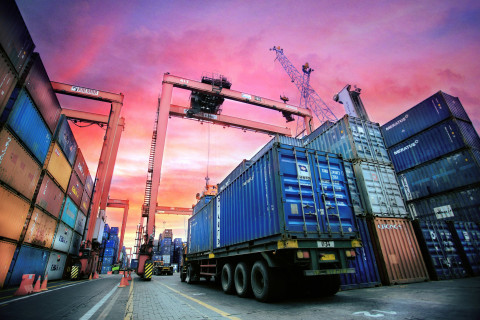
The stakes could not be higher. The Port of Douala handles roughly 95% of Cameroon's maritime trade and serves as the lifeline for landlocked neighbors like Chad and the Central African Republic. In a logistical hub of this size, blackouts are not just an inconvenience—they are an economic disaster. Modern cargo handling, automated systems, and massive cold-storage facilities all need a steady flow of electricity that the national utility, Eneo, has failed to deliver for years. Eneo's hands are tied by its own financial distress: the company was saddled with roughly $1.4 billion of total debt by the end of 2024, leaving it with zero cash to invest in the grid infrastructure the port desperately needs.
This project is part of a broader, chaotic rush for energy in Cameroon. The country has plenty of projects in the pipeline: the recently commissioned 420-megawatt Nachtigal hydro dam (backed by French and international investors), the existing Memve'ele plant, and the upcoming 600-megawatt Chollet project on the border with the Republic of the Congo. On paper, Cameroon is on track to add over 2,000 megawatts of new capacity in the next five years.
But this brings us to the fascinating paradox at the heart of the story. If Cameroon is building so many new power plants, why does its most important economic asset need to spend over a billion dollars on a private, standalone station?
The answer is simple: the problem isn't generating electricity; it's moving it. You can add hundreds of megawatts to a beautiful new dam on the Sanaga River, but those megawatts won't help a container terminal in Douala if the transmission lines connecting them are outdated and overloaded. Because a cash-strapped national utility cannot afford to upgrade the grid, the power stays stuck where it is made.
The port’s fix—building a captive power plant right next to the cranes and warehouses using private capital—is a logical response to a broken system. It also shows where big energy investment in Central Africa is actually going. Instead of waiting for centralized national grids that take decades to fix, heavy industries and logistics hubs are simply cutting the cord and building their own self-sufficient energy ecosystems. We are seeing the exact same trend in the mining camps of the DRC and adjacent manufacturing zones across Cameroon.
For the government, the port's decision to go independent is a practical fix for a painful operational problem. But it is also a quiet vote of no confidence. When a country's vital trade hub decides that spending over a billion dollars on its own power grid is safer than waiting for the state utility to get its act together, it says more about the reality of Cameroon’s energy sector than any official government statistic ever could.
Cameroon's Maritime Gateway to Build Its Own Power Plant
The Port Authority of Douala is about to do something that tells you everything you need to know about Cameroon's electricity crisis: it is building its own massive power plant. This is not just an installation of emergency backup generators.

Follow Africa Monitoring on Google: