For years, Angola has faced an unusual problem. Its expanding hydropower system is steadily producing more electricity than parts of the domestic grid can absorb, while just across the border the Democratic Republic of Congo's Copperbelt continues to struggle with unreliable power supplies despite sitting atop some of the world's richest copper and cobalt deposits. Angola's latest infrastructure project is designed to connect those two realities.
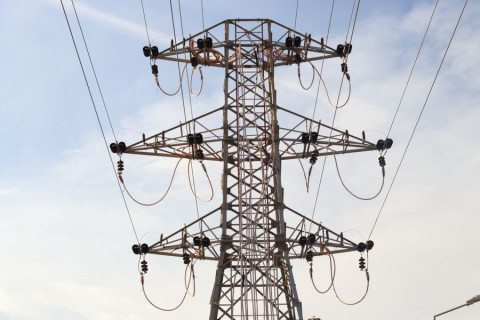
On July 2, Angola's presidency issued Presidential Decree No. 115/26, formally granting a 30-year concession to build what officials call the Northern Corridor—a high-voltage transmission line designed to export up to 1.2 gigawatts of Angolan hydropower directly into the DRC's power-hungry mining belt. The concession was awarded to Somagec Energy Holding Limited, whose Angolan subsidiary ENPOWER will finance, build, own, and operate the line for three decades before transferring it back to the state. The project carries a price tag of more than $1.3 billion, financed entirely through private capital and without sovereign guarantees.
The decree formalizes more than eighteen months of negotiations and technical planning while addressing one of Central Africa's clearest infrastructure imbalances: one country with surplus electricity and another with abundant mineral wealth but insufficient power to exploit it efficiently. Angola's generation capacity is approaching 3.5 gigawatts, driven largely by major investments in hydropower. The DRC's Copperbelt, meanwhile, remains one of the world's most strategically important mining regions, supplying copper and cobalt essential to the global energy transition. Yet reliable electricity continues to be one of its biggest constraints—a challenge we have examined repeatedly, from CrossBoundary Energy's dedicated solar plant for Kamoa-Kakula to the broader trend of mining companies investing in captive generation because public grids cannot consistently meet industrial demand.
Two transmission projects, one strategic objective
The Northern Corridor is actually the smaller of two major cross-border electricity projects that Angola and the DRC have been advancing together. The flagship project will eventually extend approximately 1,450 kilometres, linking Angola's Laúca Hydropower Plant in Malanje Province—a 2-gigawatt facility whose production already exceeds domestic demand in parts of the country—through Saurimo and Luau before crossing into the DRC at Dilolo and continuing toward the mining centers of Kolwezi and Fungurume. The strategic rationale has never been ambiguous. During negotiations in Luanda earlier this year, DRC Minister of Hydraulic Resources and Electricity Aimé Sakombi Molendo summarized his country's position succinctly:
"We turned to our sister Republic of Angola to acquire 2,000 megawatts."
A second, shorter interconnection will link Soyo, in Angola's Zaire Province, with the Inga hydroelectric complex in the DRC, creating a direct connection to what remains Africa's most ambitious—and most persistently delayed—hydropower development, the proposed 42-gigawatt Grand Inga project.
The July 2 decree specifically covers the Northern Corridor. Its first phase will strengthen electricity supply to Angola's Cabinda Province with 800 megawatts, before gradually expanding toward the full 1.2-gigawatt export capacity as construction progresses. The larger Malanje-Fungurume interconnection remains at an earlier stage, with financial structuring led by Averi Finance and engineering work carried out by Somagec's Meridia Energy subsidiary, supported by what both governments describe as a consortium of European, American, and African institutional investors. The financing model may prove just as important as the electricity. The project's most innovative feature may not be the electricity itself but the way the infrastructure will be financed.
Unlike many large African power projects, the Northern Corridor is being structured entirely through private project finance. Both Angolan and Congolese officials have consistently emphasized since February that the transmission lines will require no public funding and no sovereign guarantees from either government. That distinction matters, particularly for the DRC, whose increasingly constrained fiscal position and mounting debt obligations we have covered extensively. Expanding critical infrastructure without adding to sovereign liabilities represents a fundamentally different financing model from traditional state-backed borrowing. Angola, meanwhile, faces a different challenge. Rather than allowing expensive hydropower assets to remain partially underutilized, the government is attempting to transform surplus generation into a new source of export revenue. In effect, Angola is exporting not another barrel of crude oil but something equally valuable for industrial economies: reliable electricity. The strategy fits neatly within the broader trajectory we have observed throughout the year—from Angola's departure from OPEC in late 2023 to the accelerated development of the Kaminho offshore project. Together, these initiatives point toward a government seeking a more diversified role in regional energy markets, moving beyond the identity of a traditional hydrocarbon exporter.
Execution remains the real test
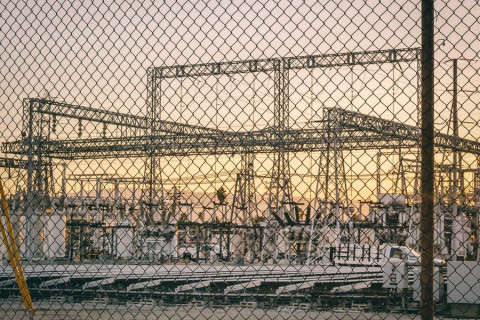
None of this electricity is flowing yet. Although the concession has now been formalized, the transmission infrastructure, substations, and cross-border interconnections still need to be constructed—a process likely to take several years even under optimistic assumptions. The larger Malanje-Fungurume connection remains in the feasibility and financial-structuring phase, while officials continue targeting an eighteen-month construction timeline for the shorter Soyo-Inga interconnection before focusing fully on the flagship route. Projects of this scale inevitably face the risks we have identified elsewhere across Central Africa's infrastructure pipeline, including permitting delays, currency volatility, financing uncertainties, and the familiar gap between ambitious political announcements and completed construction.
Yet the Northern Corridor deserves attention even before the first megawatt crosses the border because it represents a different way of thinking about infrastructure. Rather than two neighboring countries each pursuing expensive, nationally isolated solutions, Angola and the DRC are attempting to solve complementary problems through regional integration and private capital. One country has excess electricity. The other urgently needs it. Connecting those strengths may prove considerably more efficient than building parallel systems on each side of the border. If the Northern Corridor delivers its initial 800 megawatts anywhere close to schedule, its significance will extend well beyond Angola and the DRC. It could become an important demonstration that some of Central Africa's most pressing infrastructure challenges are best addressed not within national borders, but across them. In a region where energy deficits and investment gaps rarely stop at political boundaries, that lesson may ultimately prove as valuable as the electricity itself.