For decades, Pointe-Noire has served as the Republic of the Congo's principal maritime gateway. Nearly all of the country's international trade passes through its Atlantic coast, while the port also supports cargo flows linked to Gabon, the Central African Republic, and Chad. Yet its strategic importance today extends well beyond its traditional role as a commercial harbor. As new LNG capacity comes online, pipeline infrastructure expands, and hundreds of millions of dollars flow into port modernization, Pointe-Noire is steadily evolving into one of Central Africa's most important energy gateways.
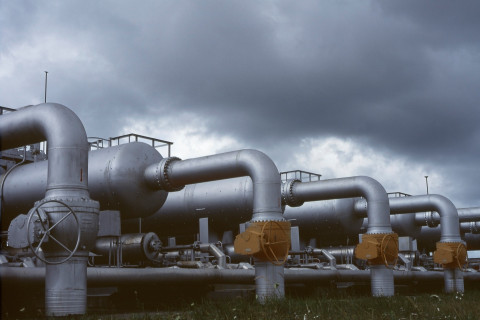
The foundation for that role was built long before the current investment cycle began. Pointe-Noire hosts the Djeno oil terminal, which handles much of the country's crude oil exports, while the nearby CORAF refinery, commissioned in 1982, remains one of the most established refining facilities in Central Africa, with a processing capacity of approximately 1 million tonnes per year (roughly 21,000 barrels per day). Offshore oil fields south of the port continue to provide the resource base that has long anchored the Republic of the Congo's petroleum exports.What is changing now is the diversity of the energy products moving through the port.
In February 2026, Phase Two of the Congo LNG project entered operation, increasing the country's liquefied natural gas export capacity to approximately 3 million tonnes per year, equivalent to roughly 4.5 billion cubic meters of natural gas annually. The expansion transformed Pointe-Noire from a traditional crude oil export terminal into a hub capable of simultaneously supporting crude oil, refined petroleum products, and large-scale LNG exports. That diversification matters because it reduces dependence on a single commodity while strengthening the port's role within regional energy supply chains. Supporting this transformation is one of the largest port modernization programs currently underway in Central Africa.
Congo Terminal has committed approximately €400 million (about $436 million) to develop the new Môle Est container terminal. Once completed, the facility will feature 750 meters of quay, a 17-meter draft, 16 electric gantry cranes, and an annual handling capacity of 2.5 million TEUs. Construction is already well advanced: by July 2026, roughly 400 meters of the planned quay had been completed, with work continuing toward full commissioning in the first half of 2027.
A second major investment is being led by Noatum Ports Pointe-Noire, backed by AD Ports Group and CMA CGM. Under a 30-year concession (extendable by 20 years), the consortium is investing approximately $200 million in new marine infrastructure, landside facilities, ship-to-shore cranes, and rubber-tyred gantry cranes capable of serving Patagonia-class container vessels, with a 420-meter quay and 16-meter draft. Construction contracts for the project were formally awarded in May 2026.
Additional improvements continue across the wider port complex. A €60 million (about $65 million) project financed by the Agence Française de Développement (AFD) delivered new multifunctional and bulk cargo quays with a 15-meter draft in 2025, while another €35 million (about $38 million) has been allocated for post-Panamax gantry cranes, automated gate systems, and digital terminal operating technologies. Taken together, these projects represent approximately $740 million in port modernization, excluding separate investments in LNG facilities and pipeline infrastructure. The port's influence also extends well beyond the Republic of the Congo itself.
One of the country's most ambitious downstream projects is the Pointe-Noire–Loutété–Maloukou–Tréchot petroleum products pipeline, developed with the participation of Russian companies. Designed with an annual capacity of 2.1 million tonnes and an expected operational life of 40 years, the pipeline will transport refined petroleum products from Pointe-Noire toward the northern regions of the country, including Brazzaville, while also supporting exports into the Democratic Republic of the Congo and the Central African Republic. Rather than functioning solely as an export terminal, Pointe-Noire is increasingly becoming a regional distribution platform for energy products moving across Central Africa. That broader regional role has attracted growing international attention. Kazakhstan (as reported in 2024), Russia, China, and several Gulf investors increasingly view Pointe-Noire not simply as the Republic of the Congo's principal seaport, but as one of the most practical logistics platforms for accessing Central African energy markets. As governments seek to diversify supply chains and strengthen commercial ties across the continent, reliable maritime infrastructure has become almost as strategically valuable as the natural resources themselves. Yet becoming a regional energy gateway requires more than investment alone.
The continued growth of LNG exports and larger commercial vessels places increasing pressure on existing maritime infrastructure. Navigation channels still require dredging and widening to safely accommodate larger ships, particularly along narrower sections of the approach channel. At the same time, Pointe-Noire's regional ambitions depend heavily on overland transport corridors extending toward the Central African Republic, Chad, and, eventually, the Democratic Republic of the Congo. Disruptions along those routes can reduce the port's ability to fully capitalize on its growing maritime capacity.
International investors also continue to pay close attention to governance standards, procurement transparency, and regulatory predictability when evaluating long-term infrastructure projects across Central Africa. As projects become larger and more internationally financed, operational efficiency alone is no longer sufficient to attract capital.
Environmental considerations are also becoming more prominent. European-supported development initiatives around Pointe-Noire increasingly emphasize sustainable fisheries, coastal management, and environmental protection. At the same time, large-scale LNG and pipeline developments require increasingly rigorous environmental impact assessments to address both ecological concerns and community expectations — standards that international lenders now treat as integral parts of project financing rather than optional additions.
Pointe-Noire already possesses many of the elements required to become one of Central Africa's principal energy gateways. Its combination of offshore oil production, refining capacity, LNG exports, modernizing port infrastructure, and expanding regional logistics networks gives it advantages few ports in the region can match. Whether it fully realizes that potential, however, will depend not only on continued investment, but also on its ability to remove long-standing infrastructure bottlenecks, strengthen regional connectivity, and meet the increasingly demanding operational, regulatory, and environmental standards shaping the global energy industry.